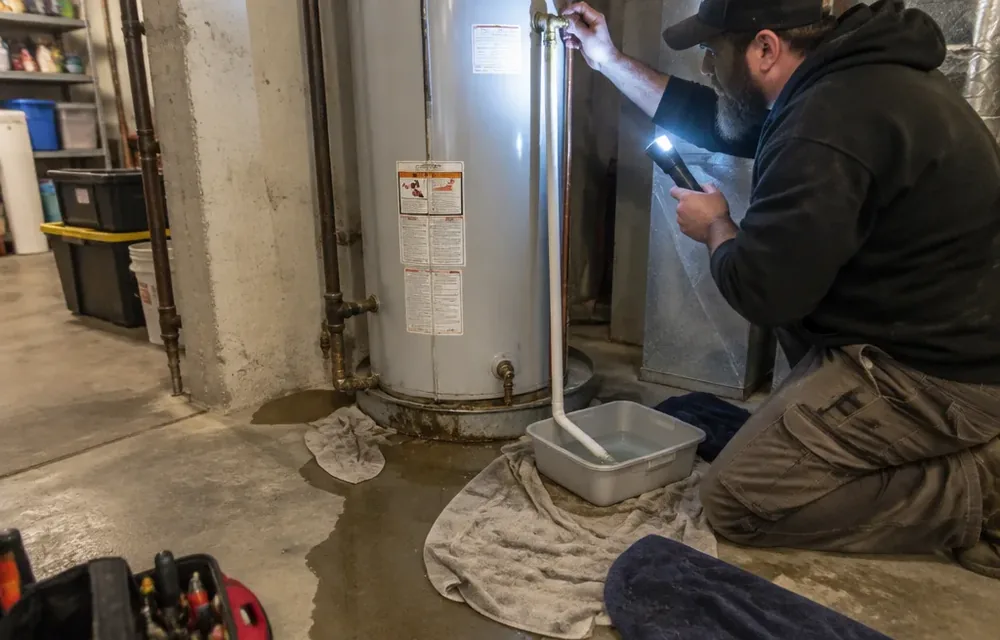
Signs
Pool at the base without overhead drip
Water spreading from under the jacket with dry piping above often means a seam weep or base corrosion rather than a top fitting.
Drip at relief tube or drain valve
A relief line that stays damp or a drain valve that beads points to pressure behavior, a tired valve, or sediment holding the seal open.
Wet top fittings with dry base
Moisture only at the cold and hot connections, expansion path, or flue hood edge often traces to a fitting rather than the vessel.
Rust trails with warm damp
Orange streaks below fittings, at the relief mouth, or along the jacket edge mark paths where water has traveled repeatedly.
A heater leak is vessel, fitting, or safety-device water
Short answer: a water heater leak is any unintended water at the tank, and the location decides whether a part or a new vessel is needed. A leaking water heater can be a loose top connection that reseals with correct work, a relief valve doing its job under strain, or a tank seam that will not reseal once it weeps. Drying and rechecking after still hours separates active paths from old spills.
What you are seeing: top fittings weep after thermal movement, relief tubes drip when pressure or temperature behavior lifts the valve, and drain valves bead when sediment holds the seat ajar. Seam weeps start as faint damp along the jacket edge and grow into a steady pool that returns after mopping. Flue and draft-hood areas that show rust plus damp deserve attention before heat is restored.
Why feed position matters: the cold feed controls makeup to the tank, so closing it slows most tank-side pools while leaving house cold taps usable. The relief path should never be capped or plugged, because discharge signals behavior that needs testing rather than blocking. Note whether pooling pauses with the feed closed, because that response separates tank water from nearby plumbing or groundwater.
Fittings, pressure behavior, and tank wear cause most pools
Short answer: most pools come from weeping connections, relief activity, and lining wear fed by sediment. Thermal movement works top unions and dielectric paths loose over time, and hard, mineral-bearing town water bakes sediment that forces hotter burns and pits the lining. Each leaves a distinct trail at the fitting, the relief mouth, or the jacket edge.
Connection-side causes: cold and hot unions, expansion connections, recirculation ties, and drain valves each rely on seals that harden and weep. Overly tight or misaligned piping strains those joints, and solder or thread paths added during remodels add more points to watch. A pool that appears only after heavy hot use often traces to expansion movement rather than a failed vessel.
Vessel-side causes: glass lining that has worn through at hot spots lets steel pit until pinholes weep, and the base shows the first rust because pooled water lingers there. Relief valves that lift repeatedly under pressure swings discharge mineral-laden water that then holds the seat open. Tight basement corners that trap damp air hide small seeps behind storage until the jacket edge stains and the floor softens nearby.
Some basement pools are not heater water
Short answer: softener discharge, washer paths, and groundwater can pool at the heater while the vessel tests dry. When the tank jacket, fittings, and relief tube all wipe dry yet water returns, the source likely sits beside the heater rather than inside it. Drying fully and watching the return path matters more than wiping once.
Plumbing look-alikes: a washer hose leak that sheets to the low corner, a softener backwash line with nowhere to go, and a running toilet on a recirculation path each send water toward the heater pad. Condensate from a nearby boiler vent or duct can also bead and run to the same low spot. Run one appliance at a time and watch, because plumbing pools follow use.
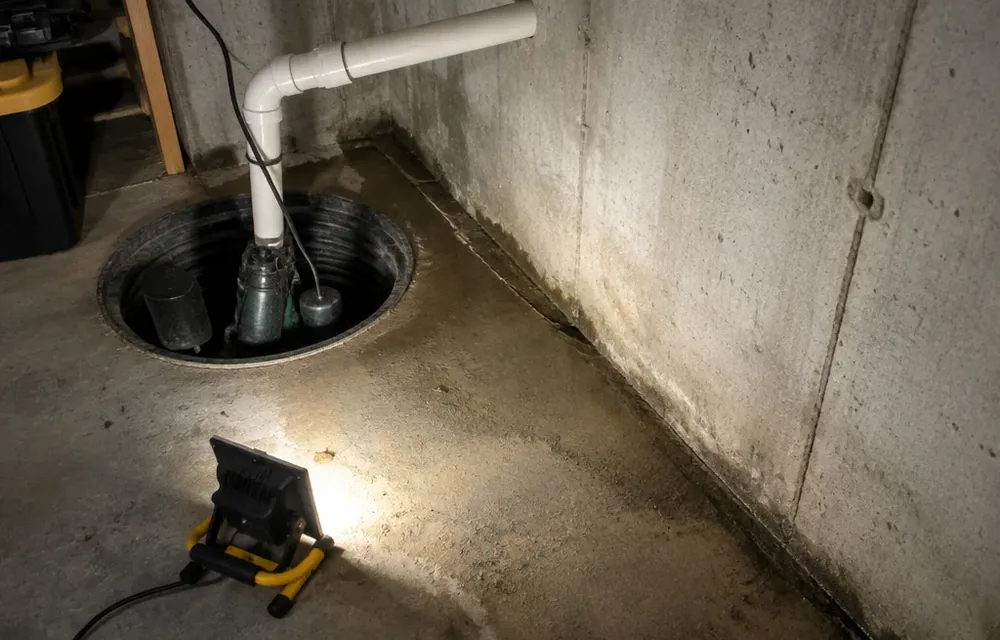
Groundwater look-alikes: a slab joint that beads after rain, a sump pit that no longer drops, and a wall face that wets during melt each move water to the heater corner without any tank fault. Read wet basement when pooling follows weather, and sump pump failure when the pit stays high. When waste joins the water, ask about drains rather than the heater.
Heater pools follow familiar Chelmsford-area setups
Short answer: basement corners, hard water, and tight mechanical rooms shape local heater leaks. Heaters packed beside boilers, washers, and softeners around Chelmsford, oil-indirect tanks in colonials near Concord and Acton and electric tanks on mineral-heavy feeds all show distinct pool patterns.
Where wear shows first: town water hardness settles as a thick blanket that rumbles during heating and stresses the lining, and relief discharge plus small seeps hide behind storage in cool, damp basements. Long lateral vents in older basements corrode quietly and add rust trails near the hood. Morning overlap of showers, dishwashing, and laundry drains marginal tanks and works connections hardest.
Where access decides: heaters boxed behind finished walls or set on uneven pads hide base pools until flooring lifts, and missing drain pans let even small weeps spread across the slab. Streets with steady pressure show relief and expansion behavior first at the tube and at toilet fills. Homes with treatment units overdue for service send scale downstream that fouls drain valves and relief seats alike.
A heater visit finds the path and frames repair or swap
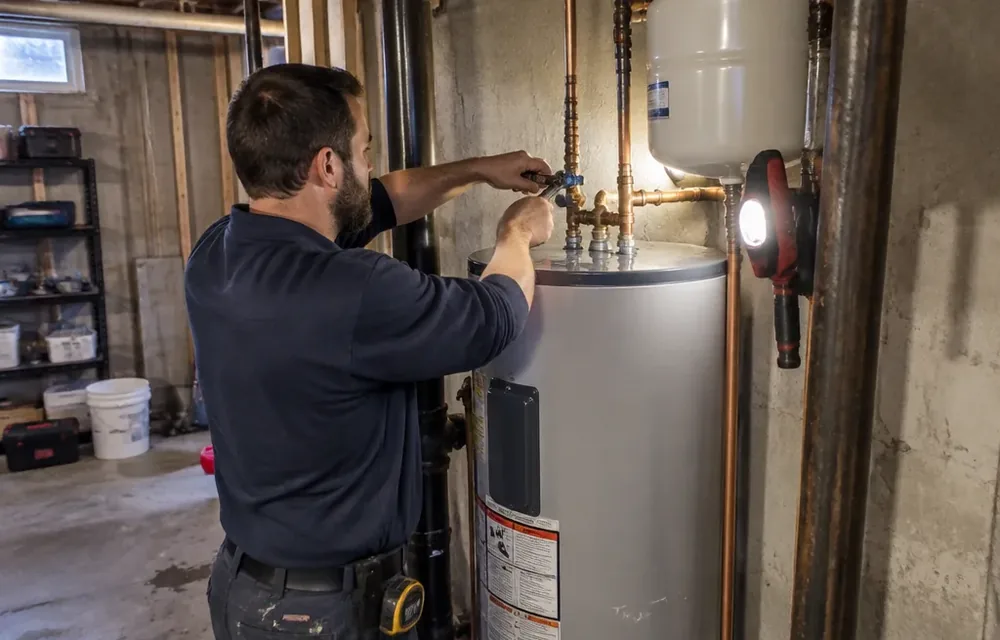
Short answer: a water heater installation and repair visit dries and tests fittings, relief, and vessel in order before recommending a path. We confirm feed behavior, inspect seam, base, top connections, and flue with a light, and run hot taps to watch each joint under use. You see the active path before choices are discussed.
How testing proceeds: top unions and valves are dried and watched through a heating cycle, relief discharge and expansion behavior are checked without blocking the safety path, and the drain valve is tested for sediment-held seep. The jacket edge and base are felt for weep that returns after wiping, and boiler-side piping joins the same pass where an indirect tank is fitted. Photos of rust trails and damp lines guide the verdict.
How the choice is framed: sound steel with a weeping fitting, tired relief, or sediment-held drain valve often returns with correct parts and a flush, while seam weeps, a rusted base, repeated relief lift after checks, or a flue that cannot be made sound point toward a new vessel. Fuel, vent path, pan and drain needs, and household shower overlap shape the next unit more than the old label. We lay out both paths in plain terms with inspection steps where a swap is planned.
Careful homeowner steps limit harm while caps harm
Short answer: close the cold feed, contain the pool, and keep power and gas paths clear without capping safety devices. Place shallow pans and towels to protect the slab and nearby storage, switch off power to wet areas at the panel where outlets are threatened, and keep clear of gas odor or scorch marks. Photograph the pool edge and fitting areas for the visit.
What you can do safely: ease storage away from the jacket, note whether pooling pauses with the feed closed, and keep the relief tube in view rather than tied or plugged. Write down loss of heat, noises during burns, and whether pooling follows heavy use or steady dripping. Keep the rating plate area clear and keep children and pets from the wet corner while the floor dries.
Harm risk from delay or blocking: a seam weep left to run rusts the jacket, wicks into framing and storage, and can open further under heating cycles until the pool spreads. Capping or plugging the relief path hides the warning while pressure behavior continues, and repeated resets without testing mask failing parts. Water that reaches boiler controls, outlets, or softener heads spreads harm beyond the heater, so feed control plus surface protection helps more than mopping alone while help is on the way.
The service that fixes it
Related services
Related problems
Frequently asked questions
What should I close when the heater pools water?
Close the cold feed to the heater first and note whether pooling slows, then keep storage and power clear of the wet area. Leave the relief path open and avoid removing covers. Photograph the pool edge and fitting damp for the visit. If water reaches outlets or gas controls, keep clear and call us with those facts.
Does a pool at the base always mean a new heater?
No, top fittings, relief discharge, and drain-valve seep can all travel down the jacket and pool at the base while the vessel remains sound. Drying and watching the return path separates traveling water from seam weep. Steady return from under the jacket after fittings test dry points toward the vessel.
Why does the relief line keep dripping?
A relief that stays damp often reflects pressure or temperature behavior, a tired valve seat, or sediment holding the seal open. Note whether dripping follows heavy hot use or runs continuously, because use-linked discharge implicates expansion behavior. Never cap the tube, and ask for relief and expansion testing before parts are changed.
Can I use hot water while the heater seeps?
Light use may be possible when the pool is small and fittings test as the source, but steady seam weep and active relief discharge argue for restraint until testing. Watch whether use enlarges the pool and keep the feed accessible. We confirm safe use on site after tracing the active path. See no hot water when heat also fades.
Seeing water heater leaking?
Call and describe the symptom. A local specialist will tell you the sensible next step.