How to tell what kind of leak you have
Supply leak signs: constant dampness, a warm spot on a slab, a hiss in a wall, or a meter that turns with fixtures off all point to pressurized piping. Note whether dampness grows when water sits unused overnight, because that pattern separates supply leaks from drain leaks.
Drain and fixture leaks: a stain that only appears during showers, toilet flushes, or washer discharge usually comes from a drain joint, a wax seal, or a grout failure rather than a supply line. Run one fixture at a time and watch, and check running toilet and washer hose behavior while you test. Supply leaks do not wait for fixture use, drain leaks do.
Burst pipe signs: a sudden drop in pressure at one faucet group, hammering followed by no flow, or water racing from a basement joint after a cold snap means a split has opened. Close the local valve, then the main if flow continues, and keep the boiler and water heater in sight if they share the room.
Why leaks happen around Chelmsford
Many Chelmsford homes mix copper supply with older galvanized sections at additions and basement bathrooms. Those mixed-metal joints corrode from the inside, especially on hard, mineral-bearing town water. Freeze risk adds a second driver in capes and raised ranches where supply runs through garage walls, bump-outs, and unheated crawl spaces.
Nail rubs from framing, overtightened straps, and old saddle valves for humidifiers or ice makers create weak points that let go years later. Slab areas and finished basements hide small seeps until a high water bill or a musty baseboard gives them away. The Lowell Regional Water Utility system serving much of Chelmsford delivers steady pressure, so a pinhole can spray a surprising volume before anyone sees it.
Options honestly compared
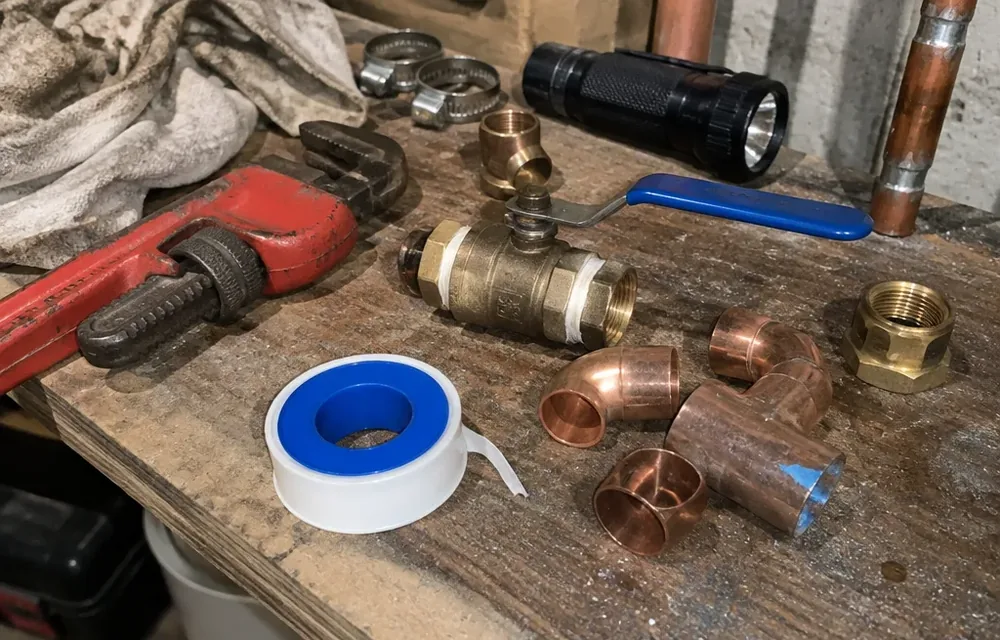
Targeted repair: cutting out the split or pinhole section and fitting a clean coupling preserves sound pipe and keeps patching small. It fits isolated freeze splits and single bad joints with good pipe on both sides.
Partial re-route: when a run has thin walls in several spots, abandoning that run and pulling a new PEX or copper path through a warmer chase lasts longer than patching every few feet. It costs more in access but avoids repeat openings.
Drying and finish work: plumbing repair stops the water, while drying, primer, and patching restore the room. We separate the two scopes so you see what is plumbing and what is restoration. Moisture meters guide the call, because closing a damp cavity too soon invites mold. For burst response context, see emergency plumber and frozen pipe thawing.
What moves the cost
Location and access: an exposed basement joint is reached in minutes, while a leak behind tile, a kitchen cabinet run, or a slab requires careful opening and patching. Second-floor leaks add ceiling protection and controlled drain-down time.
Material and extent: copper sweat joints, PEX manifolds, and old galvanized each need different fittings and wall time. One pinhole differs greatly from a run with paper-thin walls that should be replaced in full.
Testing, permits, and drying: acoustic and pressure testing, meter checks, and wall moisture readings shape labor before repair starts. Alterations to piping may need a permit and inspection under 248 CMR. Drying equipment and finish patching sit outside the pipe fix. Our cost guide explains these drivers without promising a number on the phone.
When this is the wrong answer
Leak detection is the wrong answer for condensation on a cold toilet tank, a sweating duct, or a damp basement wall with no plumbing behind it. Those need ventilation, insulation, or exterior drainage work rather than pipe testing. A stain that tests fully dry and does not grow with fixture use is better watched and sealed at the surface.
It is also the wrong first step when sewage backs up through a low drain, because the path is blocked rather than split. In that case ask for drain cleaning and a camera look instead of a leak search. If you smell gas near a boiler or a fuel line, leave gas piping to a gas fitter and call the utility first.
Standards that apply in Massachusetts
Concealed supply and drain alterations in Massachusetts fall under 248 CMR, the Uniform State Plumbing Code, with permits and inspections through the local plumbing inspector. The Board of State Examiners of Plumbers and Gas Fitters governs who may open potable and sanitary systems, which is why pressure testing and re-piping belong with a license holder.
We isolate electrical near wet areas, use lead-safe practice around old paint when opening walls, and pressure-test repairs before closing. Where dissimilar metals meet, we fit proper dielectric separation to slow galvanic corrosion. For hiring background, see how to check a plumber license in Massachusetts.
Signs you need this
Stain that grows or feels damp
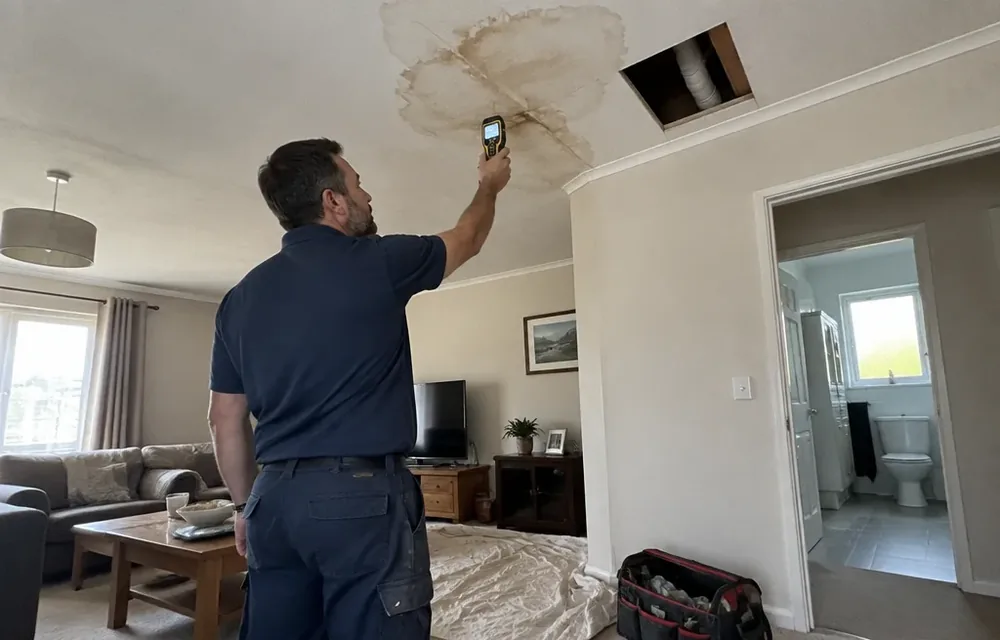
A ceiling spot that darkens after showers or a wall that stays cool and soft points to an active leak behind the surface.
Hiss, meter spin, or high bill
A faint hiss in a quiet house or a water meter that moves with all fixtures off means supply water is escaping somewhere.
Burst with water spreading
A split copper joint or frozen section that lets go sends a hard stream that needs the valve closed at once.
What happens on a visit
We guide you to the fixture valve and then the main shutoff, plus the water heater feed if the tank area is wet. We confirm the meter stops turning.
We meter walls and ceilings, check the basement below, and run one fixture at a time to separate supply, drain, and surface sources.
We isolate sections, apply controlled pressure tests, and listen at joints and valves so the opening lands on the failed inch, not the whole wall.
We cut a tight inspection opening, remove the failed section, and fit code-correct couplings with proper support and separation of metals.
We restore pressure, check joints under load, run fixtures, and set a drying and patching plan so the cavity closes only when readings are normal.
When this is the wrong answer
Do not book leak detection for a dry historic stain, tank condensation, or a damp foundation wall with no piping nearby, because no pipe test will explain it. Do not cut walls for a slow tub drain or a sewer backup that points to blockage rather than a split. Describe the timing, sound, and meter behavior on the call and we will steer you to drying, drain work, or frozen pipe help when that fits better.
Related reading


Where it comes up
Related services
Frequently asked questions
How do you find a hidden water leak?
We find hidden leaks by combining meter tests, fixture isolation, moisture readings, and pressure checks. The meter shows whether supply water moves with fixtures off, while running one fixture at a time separates drain leaks from pressure leaks. Acoustic listening and small inspection openings then pinpoint the joint. You see readings before we cut, so the opening stays small.
What should I do when a pipe bursts?
Close the nearest fixture valve at once, then the main shutoff if water keeps coming. Move rugs and electronics, place buckets, and switch off power to wet areas if outlets are threatened. Do not touch a boiler or water heater that is standing in water. Then call us and keep the meter area clear so we can confirm flow has stopped.
Why is my water bill suddenly high with no visible leak?
A high bill with no puddle often means a toilet flapper passing water, an outdoor spigot weeping, or a supply seep under a slab or behind a wall. Check toilets with dye, walk the foundation for damp soil, and watch the meter with all fixtures off. If the dial moves, supply water is escaping and testing is warranted. See high bill causes.
Can a homeowner do leak repair in Massachusetts?
Homeowners can close valves, dry areas, and replace a surface washer or a shower head. Opening supply or drain piping, soldering joints, or altering concealed runs falls under 248 CMR and the Board of State Examiners of Plumbers and Gas Fitters and should be handled by a license holder with a permit where required. Read homeowner plumbing rules.
Will a burst pipe always need the wall opened?
A burst needs an opening large enough to remove the split and fit sound couplings with proper support. We keep it as small as testing allows, often a single inspection square rather than a full bay. If the run shows thin walls in several places, a re-route through a warmer chase may avoid a second opening next winter.
How long does a damp wall take to dry?
Drying time depends on material, airflow, and how long water sat before shutoff. Drywall and insulation that stayed wet often need removal, while framing can dry with air movement and steady heat over days. We take moisture readings before closing so trapped dampness does not sit behind fresh paint. A restoration contractor handles large areas beyond the pipe fix.
Need leak detection and burst pipe repair in Chelmsford?
Call now and describe what is happening. A local specialist takes it from there.