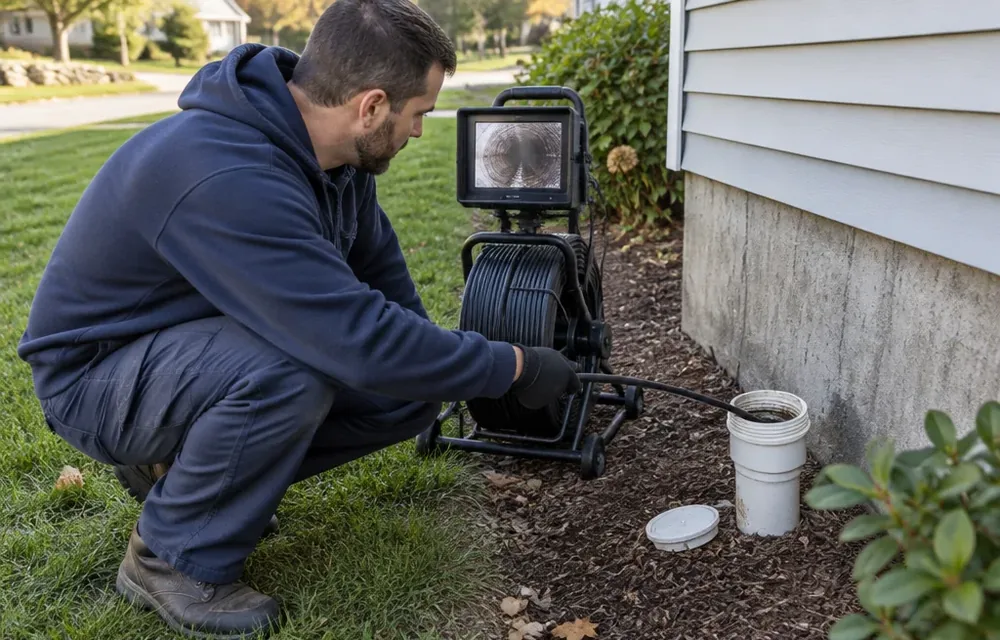
How does each sewer repair method fix your line?
Simple answer: trenchless methods renew the pipe from inside or pull a new pipe through the old path, while open-trench work digs down to the pipe and swaps the damaged section by hand. Trenchless lining cures a resin sleeve against the old pipe wall to form a smooth inner channel, and trenchless bursting draws a new pipe through while fracturing the old one outward. Open-trench excavation removes soil above the failure, cuts out the bad section, sets new pipe to proper grade, and backfills in layers.
What the crew needs for each: trenchless lining and bursting need sound entry and exit points, a line that can be cleaned enough for equipment to pass, and a host pipe with enough shape left to guide the work. Open-trench work needs room to dig safely with shoring where depth requires it, plus a plan for soil storage, dewatering where groundwater appears, and surface restoration afterward. Both methods start from the same camera footage and locating marks, since no honest recommendation exists without seeing the pipe interior first.
How the finished line differs: a lined pipe keeps its existing alignment with a renewed interior surface that resists root entry at sealed joints, while a burst or trenched replacement sets new pipe material at corrected grade through the repaired length. Each outcome suits different defects, which is why the footage review matters more than any preference for one method. Ask to see the video with distance marks and defect locations explained before discussing methods at all.
When is pipe lining the right fit?
Direct answer: trenchless fits lines that are mostly aligned with enough structural shape left, where the defects are cracks, joint gaps, root entry, or corrosion rather than collapse or severe bellies. Driveways, patios, mature trees, and finished landscaping above the line strengthen the case, since small pits replace a full trench through those surfaces. Straightforward access at both ends with a cleanable bore completes the picture.
Defects trenchless handles well: longitudinal cracks, offset joints within tolerance, root intrusion that cleaning can clear, and interior roughness that snags paper all respond to lining or bursting. Lines under retaining walls, additions, or specimen trees benefit most, because the surface above stays largely undisturbed while the pipe is renewed below. Shorter runs with clear endpoints and verified depth also favor trenchless, since equipment setup stays simple and the renewed length is continuous.
Conditions that must check out first: the line must accept cleaning and camera passage end to end, standing water from bellies must be limited enough that lining can cure or bursting can hold grade, and lateral connections must be mapped so branches are reinstated correctly. A pre-clean with cable or jetting, covered under drain cleaning or hydro jetting, usually precedes the decision so the footage shows the pipe rather than the blockage. Where any of these checks fail, the honest answer shifts toward excavation rather than forcing a method the pipe cannot carry.
When open-trench replacement is the honest answer
Blunt answer: open trench is the right call for collapsed sections, severe bellies that hold water, major grade errors, and lines whose alignment must change. Excavation also wins where the pipe location is uncertain, where connections need rebuilding by hand, or where the line is too damaged for equipment to pass. Choosing trenchless against these conditions risks a failed installation that still ends in digging, with the failed attempt added to the disruption.
Defects that demand digging: a flattened or collapsed Hinch of pipe cannot guide a liner or a bursting head, a deep belly full of standing water defeats curing and grade correction alike, and back-pitched sections need their slope rebuilt rather than coated. Shattered clay, separated joints with washed-out bedding, and lines crushed by surface loads all need eyes and hands on the pipe. Shallow lines under open lawn also favor trenching directly, since digging is straightforward and the surface restores easily.
Access and verification strengths: excavation lets the crew confirm bedding, rebuild connections to each branch with proper fittings, correct grade with a level rather than hope, and inspect the finished joint before backfill. Problem soil, groundwater, and buried debris get handled in the open instead of defeating equipment blindly underground. For lines with repeated failures at the same spot, seeing the soil and bedding around the failure often explains causes that footage alone cannot, such as settlement voids or surface loading.
Side-by-side comparison across what matters
Reading guide: use this table to match the line condition and the property layout to the method, not to declare a universal winner. The right choice follows the camera footage and the site constraints together. Any proposal that names a method before showing footage with distance marks deserves a second opinion.
How to weigh the rows: access and surface value pull toward trenchless, while pipe damage severity and grade problems pull toward excavation. Timelines differ in shape rather than simple length, since trenchless concentrates work at access pits while trenching spreads work along the full run with restoration after. Both methods need cleaning, footage, locating, and permits arranged properly, so those steps never separate the options.
| Factor | Trenchless approach | Open-trench approach |
|---|---|---|
| Digging footprint | Small pits at entry and exit points | Full excavation along the repaired length |
| Driveways and patios | Usually stays beneath them undisturbed | Cuts and restores hard surfaces along the trench |
| Lawns and plantings | Minor disturbance near pits only | Trench line disturbed with restoration after |
| Mature trees | Roots near pits only are cut | Root zones along the run are opened |
| Collapsed pipe | Generally not suitable | Exposes and replaces the failed section |
| Bellies holding water | Limited suitability depending on severity | Rebuilds grade with bedding by hand |
| Grade correction | Follows existing alignment | Resets slope with level checks |
| Branch connections | Mapped and reinstated from inside | Rebuilt directly with fittings in the open |
| Verification | Post-work camera confirms the interior | Direct visual check before backfill plus camera |
| Best-fit lines | Aligned pipes with cracks, gaps, or roots | Failed, misaligned, or grade-broken lines |
Pipe condition factors that decide the method
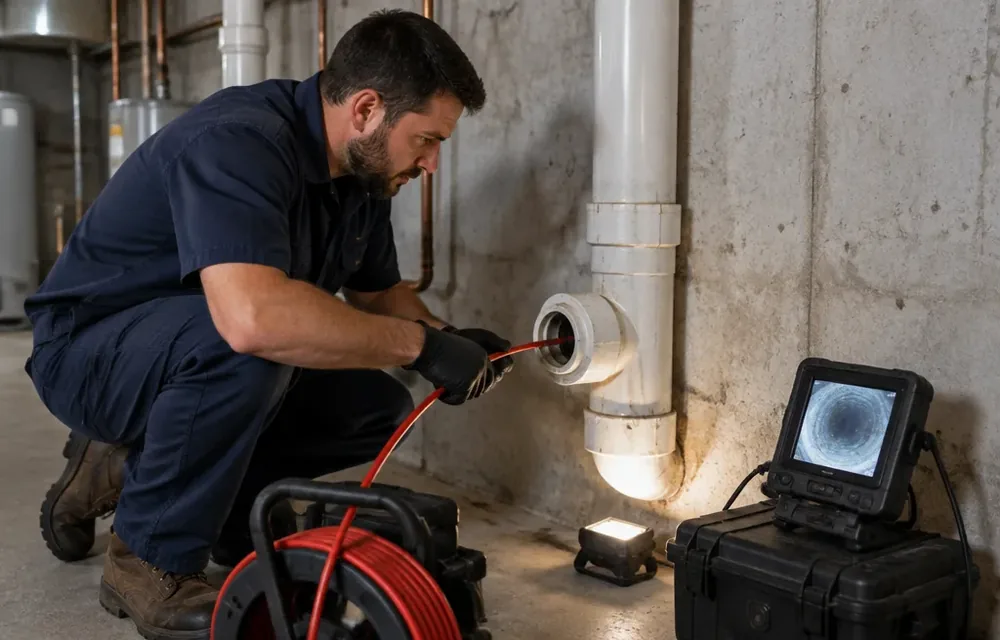
Key point: material, shape, grade, groundwater, and connection layout together decide suitability, and the camera footage with locating is how each factor gets judged. Clay tile with root-cleared joints, cast iron with interior scale, and PVC with isolated offsets each read differently on video. A careful footage review names each defect with its distance from the access point before any method is proposed.
Reading the footage like a pro: watch for standing water that marks bellies, offsets that catch paper at joints, root masses that return after cutting, and deformation where the pipe loses its round shape. Note where laterals join, since each branch must be handled correctly under either method. Ask which defects are structural, meaning the pipe wall itself is failing, versus service defects such as scale and debris that cleaning resolves. Structural failure across long lengths pushes toward replacement thinking, while service defects keep trenchless renewal on the table.
Soil and water around the pipe: high groundwater, running sand, and settlement voids complicate both methods differently, with excavation needing dewatering and shoring while trenchless needs stable guidance through the run. Root-disturbed soil along tree-lined streets and bedding washed out at separated joints both show in how the pipe sits on video. Where footage plus probing suggests the ground itself is the problem, excavation with proper bedding addresses the cause rather than hiding it inside a sleeve.
Chelmsford lines, lots, and access realities
Local answer: clay and cast-iron laterals under mature maple and oak, subdivision driveways over the pipe path, and river-low groundwater shape Chelmsford sewer decisions. Root entry at offset clay joints is the signature defect on tree-lined streets, and those lines often suit trenchless renewal once cleaning clears the mass and the joints still align. Where the same line runs beneath a wide driveway or a finished patio, the surface value above the pipe becomes a real factor in the method choice.
Neighborhood patterns: Center colonials with layered additions hide laterals beneath patios and walkways whose restoration costs attention, ranch streets in Billerica and Westford run long laterals under established lawns and maples, and river-low lots toward Lowell and Dracut add groundwater that complicates deep digging. Homes near Tewksbury, Tyngsborough, and Carlisle share the clay-joint and root pattern on older streets. Septic-to-sewer conversions and old cleanout gaps add locating work before either method, since the crew must find every access and connection first.
Permit and restoration notes: sewer work that alters the line generally involves the town permit office with inspection, and street or sidewalk openings add their own permissions and restoration standards. Confirm who arranges permits, who marks utilities, and how surfaces, loam, and plantings are restored under each proposal. A trenchless proposal should still name pit locations and surface repairs at each pit, while a trenching proposal should name the full trench path, soil handling, and restoration sequence in writing.
Limits, risks, and when to call for a camera look
Honest limits: no method fixes a line that has not been properly diagnosed, no liner corrects a grade failure, and no excavation succeeds without utility marking, safe shoring, and proper bedding. Trenchless work cannot proceed through collapse or severe deformation, and open trench cannot proceed safely without room for excavation and soil handling. Warranties cover the workmanship of the chosen method, not the wish that a different defect had been the problem.
When the call cannot wait: sewage backing into tubs or floor drains, multiple fixtures clogging together, gurgling with slow drainage across the house, and sewage odors with wet spots in the yard all point to the main line rather than one fixture. Stop using water fixtures to avoid adding to a backup, keep clear of sewage contact, and call (978) 592-1168 with the symptom pattern and any cleanout location you know. Active backups get clearing first with drain cleaning, and the camera review follows once flow is restored.
What a good sewer visit produces: expect clearing to restore flow, then camera footage with distance marks and defect explanations, locating paint or flags at the surface, and a written comparison of suitable methods with access points named. The proposal should state permit handling, restoration scope, and how connections are treated under the chosen method. Keep the footage reference and the written scope together, since any second opinion needs exactly those two items to judge fairly.
Near you
When to call
Related guides
Frequently asked questions
Which is better, trenchless or traditional sewer repair?
Neither is better in general, since pipe condition and site access decide. Trenchless suits aligned pipes with cracks, joint gaps, or cleared root entry beneath surfaces worth preserving. Open trench suits collapsed sections, severe bellies, grade errors, and lines needing rebuilt connections. Camera footage with distance marks plus the surface layout above the line makes the choice clear.
Can trenchless repair fix a collapsed sewer line?
Generally no, because lining and bursting equipment needs a pipe with enough shape left to guide it through the run. Collapsed, flattened, or severely deformed sections block passage and need excavation to expose and replace the failure by hand. A pre-clean and camera pass confirms whether the line can carry trenchless equipment before anyone commits to a method.
Do I need a camera inspection before choosing a method?
Yes, no honest method recommendation exists without seeing the pipe interior first. The footage shows defect types, bellies, offsets, root masses, and connection points with distances from the access. Ask to review the video with each defect explained, and keep the footage reference with any written proposal so second opinions judge the same evidence.
Will sewer repair destroy my driveway or landscaping?
It depends on the method and the pipe path. Trenchless work concentrates digging at small entry and exit pits, leaving driveways, patios, and most plantings above the line undisturbed. Open trench opens the full repaired length, with hard surfaces cut and restored along the way. Each written proposal should name every disturbed area and its restoration plan.
Is sewer pipe lining better than full replacement?
Lining is better only for aligned pipes with cracks, joint gaps, or cleared root entry beneath surfaces worth preserving, since it renews the interior without digging. Replacement by bursting or open trench wins for collapse, severe bellies, grade errors, and rebuilt connections. Camera footage with distance marks plus the surface layout above the line makes the lining versus replacement choice clear.
Still stuck?
Describe what you see when you call and a local specialist will guide the next step.