How does boiler installation cost take shape?
Scope shape: Boiler installation cost takes shape from sizing first and equipment second. The visit starts with heat-load math across rooms, radiation inventory by zone, and venting and fuel paths before any model is named. Total connected load, longest runs, and existing zone behavior size the unit and the near-boiler piping, which is why two colonials of equal size scope differently once additions and zone histories join the math.
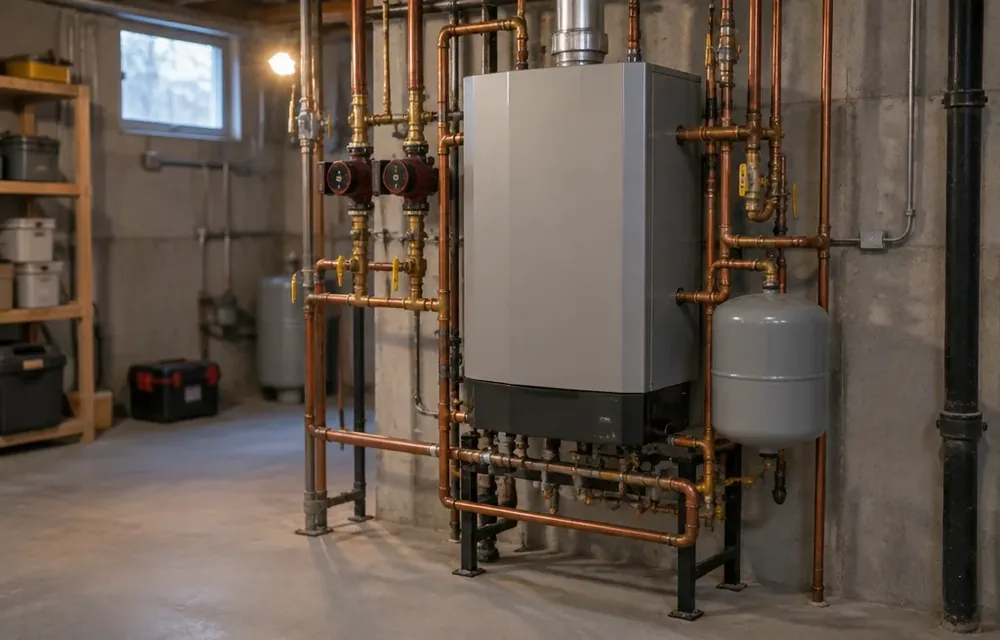
Equipment and near-boiler work: The boiler type, venting terminals and liners, circulators and zone controls, expansion and feed details, and fuel connections each add parts and labor beyond the cabinet itself. Piping corrections where old headers bottle-neck flow, condensate handling for high-efficiency units, and combustion air verification shape the mechanical room as much as the unit choice. Each of those details takes time that equipment-only figures never show.
Permit, startup, and proof: Boiler work in Massachusetts needs permits with inspection, and startup with combustion testing, control sequencing checks, and zone-by-zone heat proof close the visit. Old unit removal and disposal, system flushing and water quality treatment where sludge runs, and documentation of settings and readings complete the scope. That survey-to-proof path is described before any commitment in boiler service notes, and it protects you at resale and with insurance.
What drives boiler scope up or down?
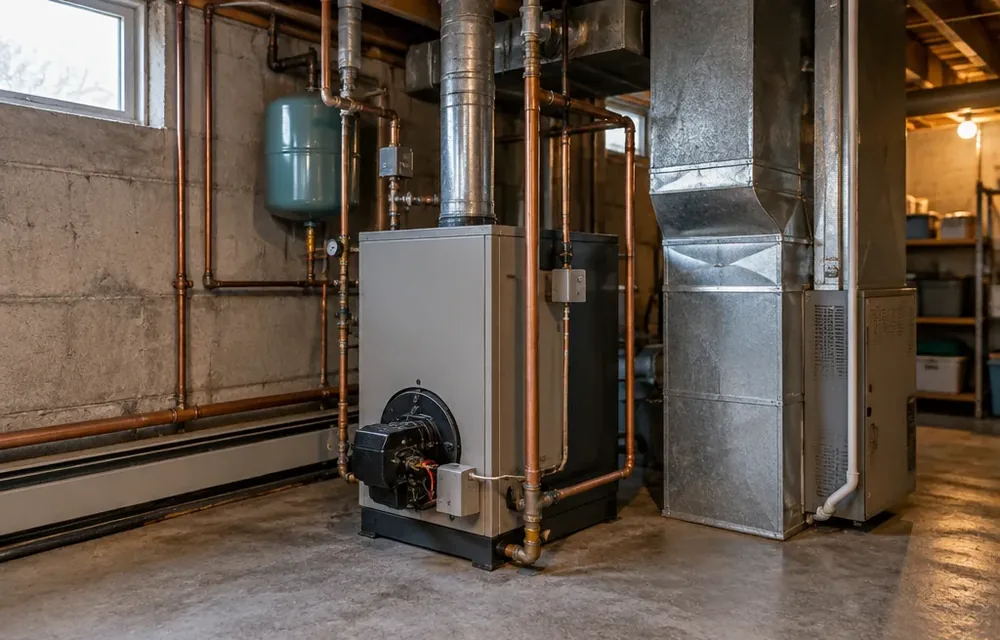
Type and efficiency path: Type and efficiency path move boiler installation cost together. Conventional units vent through chimneys with simpler condensate needs, while high-efficiency condensing units need suitable vent runs, condensate neutralization and drainage, and water quality discipline to hold their ratings. Fuel shifts between oil and gas add tank, line, and utility coordination layers that same-fuel swaps never touch. Note the current fuel, chimney condition, and drain availability when describing the home.
Venting, piping, and zones: Long vent runs through finished space, chimney liners for changed flue needs, repiped headers that unblock flow, and zone controls added without earlier review each add labor beyond the swap. Multi-zone splits with tired circulators and air-bound high radiators need balancing that single-zone ranches never require. Tell dispatch the zone count, radiator versus baseboard mix, and which rooms never heated evenly, since those facts size the piping corrections.
Removal and room readiness: Old boiler draining and removal with disposal, asbestos-era insulation handling through qualified channels where present, electrical and control wiring updates, and mechanical room clearances shape the project edges. Rooms with sound access and clear service space keep the swap tight, while buried units behind finished storage add opening and protection. That readiness review belongs in the survey, not as a surprise on install day.
Boiler paths compared side by side
Comparison frame: Boiler paths differ in venting needs, condensate handling, fuel demands, and how much piping correction each invites. Same-fuel conventional swaps disturb the least, high-efficiency conversions add vent and drain planning, and fuel conversions add supply-side project layers. The right path follows load math, chimney and drain reality, and fuel plans rather than brand preference, and boiler installation cost follows that choice. The table below keeps the trade offs visible before any model gets named.
Read the rows: Use the table to match your mechanical room to the sounder path. A sound chimney with simple zones leans conventional swap, while suitable drains with venting routes lean condensing with proper water treatment. Oil-to-gas interest leans conversion planning with utility coordination. Pair the table with boiler against furnace notes and keep fuel bills with zone complaints ready when you compare rows to your home.
Scope notes by path: Conventional swaps concentrate work at the unit with modest piping updates, condensing conversions add vent, condensate, and quality layers, and fuel conversions add tank, line, and inspection sequencing. Permits, startup testing, and zone proof apply across all three. Place each path beside the cost guide to see how venting, piping, and testing stack rather than treating any row as a figure.
| Path | What it involves | Best fit | Scope note |
|---|---|---|---|
| Conventional swap | New unit on proven venting and piping | Sound chimney with simple zones | Tightest project, modest updates |
| High-efficiency conversion | Condensing unit with vent and drain plan | Suitable drains with venting routes | Adds condensate and quality layers |
| Fuel conversion | New fuel supply with boiler change | Oil-to-gas plans with utility path | Tank, line, and inspection sequencing |
| Service over swap | Controls, circulator, and cleaning renewal | Sound block with control-side faults | No unit change, testing still applies |
What should you do in order before booking installation?
Ordered preparation: Ordered preparation for boiler work starts with paper, not equipment. Gather fuel bills across a full season, note which rooms never heat evenly with gauge readings where shown, and list zone count, radiator versus baseboard mix, and service history with part ages. Photograph the boiler nameplate, near-boiler piping, venting path, and fuel supply so the survey starts from facts. That record lets sizing begin at the table and keeps boiler installation cost tied to your load rather than guesses.
Hold control adjustments for the visit: Avoid repeated bleeding and top-ups that mask underlying faults, since each cycle adds oxygenated water that corrodes from inside. Keep filters and vents clear, keep the mechanical room accessible, and note relief drips or odors exactly as observed. If heat fails with freezing risk, call (978) 592-1168 with gauge readings and zone behavior ready rather than cycling controls repeatedly.
Sequence with season and permits: Book surveys before heating season so installation never races the first freeze, since winter emergency swaps forfeit planning leverage. Confirm who files permits, who coordinates fuel and utility work, and how inspection and startup testing sequence around delivery. That timing fits boiler emergency notes and keeps the cost guide drivers visible from the start, with hiring and license checks covering who should do the work.
Why boiler work looks this way around Chelmsford
Local pattern: Chelmsford colonials and capes heat hydronically through baseboard and radiators layered across remodels, with oil and gas boilers feeding zones that were added without expansion or control review. Tall radiator columns strand air upstairs, long split-level loops starve distant rooms, and mixed supply metals near the boiler weep at transitions. That layered history is why surveys trace every zone and header before sizing anything new.
Fuel and chimney mix: Oil-to-gas conversions span decades here, with abandoned oil lines, casually sealed entries, and chimneys whose liners predate current flue needs. Finished basements hide feeders and expansion details that complicate the next swap, and cold rim bays stress near-boiler piping each January. Homes near Lowell with stacked heating loads, near Acton with long zone loops, and near Concord with tall colonial columns each push survey attention to different corners.
What to tell dispatch: Mention fuel type and conversion history, zone count with cold-room notes, chimney and drain availability, and recent gauge and relief behavior. Note service history with control part ages and any remodel-added zones. Those details let the survey arrive with the right testing gear and venting stock through boiler methods rather than scattered returns.
Limits of averages and third party cost figures
Figure limits: Figure limits matter because no average can see your heat load, venting path, piping corrections, or fuel changes before the survey. A straightforward swap on sound piping and a conversion with vent rerouting and zone renewal can share a label yet involve very different engineering, parts, and inspection time. Per-unit promises fail for the same reason, since near-boiler work and room readiness do not scale with equipment size. That is why load and route proof on site carry more weight than any figure quoted without seeing the mechanical room.
Third party context with care: One national cost guide reports residential plumbing around eighty nine dollars per hour plus parts, with a range around eighty four to ninety five dollars, as third party estimates for context. Those figures come from the ProMatcher Massachusetts cost report as statewide labor context, not our prices and not boiler totals, and your load, venting, piping, and permit steps move any real plan away from hourly averages. Related camera work around three hundred seventeen dollars appears in the same report for adjacent diagnostic services. Use those reports to learn which drivers to ask about rather than as figures to hold any home to.
Wage versus billed scope: A national wage figure is not a project scope, and mixing the two creates false expectations about boiler work. The May twenty twenty five national median wage for plumbers, pipefitters, and steamfitters was thirty dollars and sixty seven cents per hour according to the Bureau of Labor Statistics, and that wage sits inside a business with trucks, combustion instruments, insurance, and dispatch. Billed scope also covers survey math, protection, startup testing, zone proof, and documentation. Keep that gap in mind when you read plumber hourly rates in Massachusetts and when you compare any online average to your system.
When should you call about boiler installation in Chelmsford?
Call signals: Call about installation planning when the block or exchanger proves faulty, when control-side renewal no longer holds zones even, when fuel conversion pencils with utility path confirmed, or when efficiency gains pair with venting and drain reality rather than wishes. No-heat with freeze risk, relief discharge that will not stop, and fuel odors need safety-first calls now rather than planning patience. Aging units with rising service frequency deserve survey before the heating season they cannot miss.
What to say on the call: Call (978) 592-1168 with fuel type, zone behavior, gauge readings, service history, and chimney and drain notes ready. Describe which rooms never heat and what changed this season versus last. That account lets the survey sequence load math, venting checks, and piping review correctly across Chelmsford, Billerica, and Westford. Ask how permits, startup testing, and zone proof will be handled before equipment is ordered.
Massachusetts rules: Boiler and fuel work involves licensed handling under Board and code expectations with permits and inspection through the local inspector, as homeowner plumbing rules describe. Combustion safety, venting correctness, relief protection, and carbon monoxide awareness around fuel equipment complete every visit. Only qualified hands install, alter, and test boiler systems.
Near you
When to call
Related guides

Frequently asked questions
How much does boiler installation cost in Chelmsford?
Boiler installation cost in Chelmsford has no set figure because heat load, boiler type, venting and piping corrections, fuel changes, and permit with startup testing shape each project. One national cost guide reports hourly labor context as third party estimates only, not boiler totals. The clearest path is a load survey with venting and piping review in plain terms.
Should I repair my boiler or replace it?
Component testing decides. Sound blocks with control, circulator, or feed faults usually earn service, while failed exchangers, unfixable venting, or conversion economics argue replacement. Zone behavior, gauge readings, and service frequency together predict which path holds. Survey before the heating season forces the answer.
Does switching fuel change the project much?
Fuel conversion adds supply-side layers with tank, line, utility coordination, and inspection sequencing beyond the boiler itself. Same-fuel swaps stay within the mechanical room with venting and piping updates only. Confirm the utility path and meter capacity before letting conversion hopes set the budget.
When is the best time to plan a boiler replacement?
Survey ahead of heating season, since planned work keeps permits, parts, and testing on a calm schedule. Winter failure swaps forfeit planning leverage and compress every decision into emergency timing. Spring and summer surveys also allow water quality corrections and zone balancing without freeze pressure.
What paperwork should a boiler proposal include?
Expect load reasoning, equipment and venting specifics, near-boiler piping scope, fuel and electrical items, permit handling, startup and combustion testing, zone proof, and removal with disposal. Proposals that name all seven rest on survey evidence, while equipment-only figures leave the real project undescribed.
Still stuck?
Describe what you see when you call and a local specialist will guide the next step.