How do primary and backup sump pumps work together?
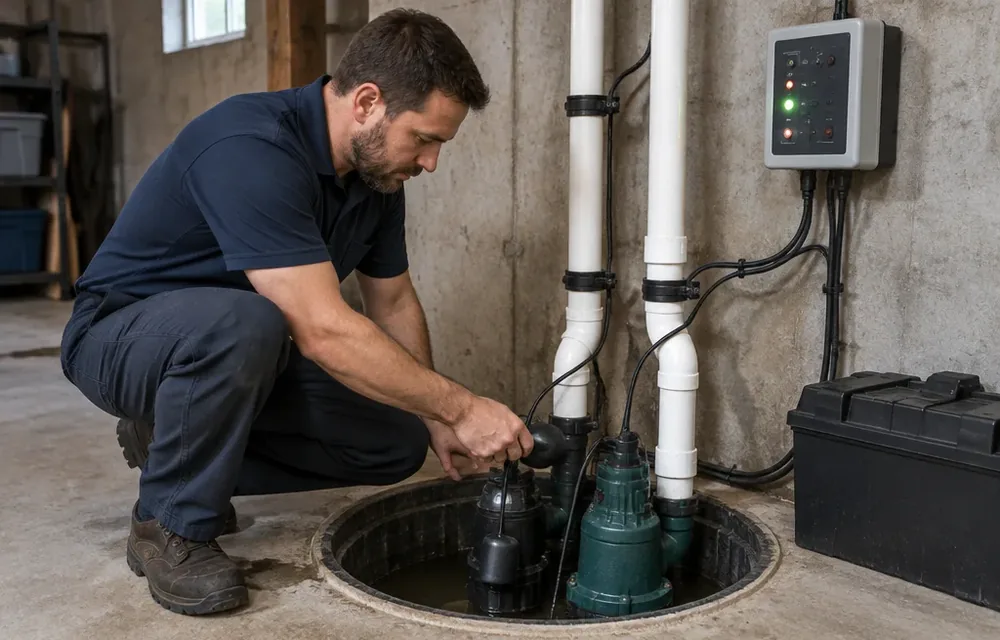
Simple answer: the primary pump does the everyday work on household power, while the backup pump sits slightly higher in the same pit and runs on battery only when water rises past its float. A control panel watches power and water level, switches to battery when the primary cannot run, and sounds an alarm so the outage does not go unnoticed. The two pumps share the pit but keep separate floats, so either one can lift water through the discharge line on its own.
Float staging explained: the primary float is set to start at the normal high-water mark, and the backup float is set a little above it, so day-to-day cycling never touches the backup. When the primary loses power or cannot keep up, water keeps rising until it lifts the backup float and the battery pump takes over. Check valves on each discharge path keep pumped water from falling back into the pit, which would otherwise force both pumps to lift the same water twice and drain the battery early.
What the battery actually does: a deep-cycle battery stores the energy the backup pump spends, and the control panel keeps it charged between storms while reporting its condition. Pumping draws the battery down steadily, so runtime depends on how often the pump cycles and how high it lifts water rather than on a fixed clock. Once power returns, the primary resumes normal duty and the panel recharges the battery for the next event. A battery that never gets tested or replaced quietly becomes the weak link, which is why readiness checks below matter more than the purchase itself.
Why do outages and peak water arrive together?
Direct answer: heavy rain and wind raise groundwater while knocking out power, so the pit fills fastest exactly when the primary pump is dead. Riverside ground stays saturated for days after a storm, which means the pit keeps refilling long after the rain stops. A basement that stays dry on utility power alone is therefore unprotected during the events that stress it most, and that gap is what backup coverage closes.
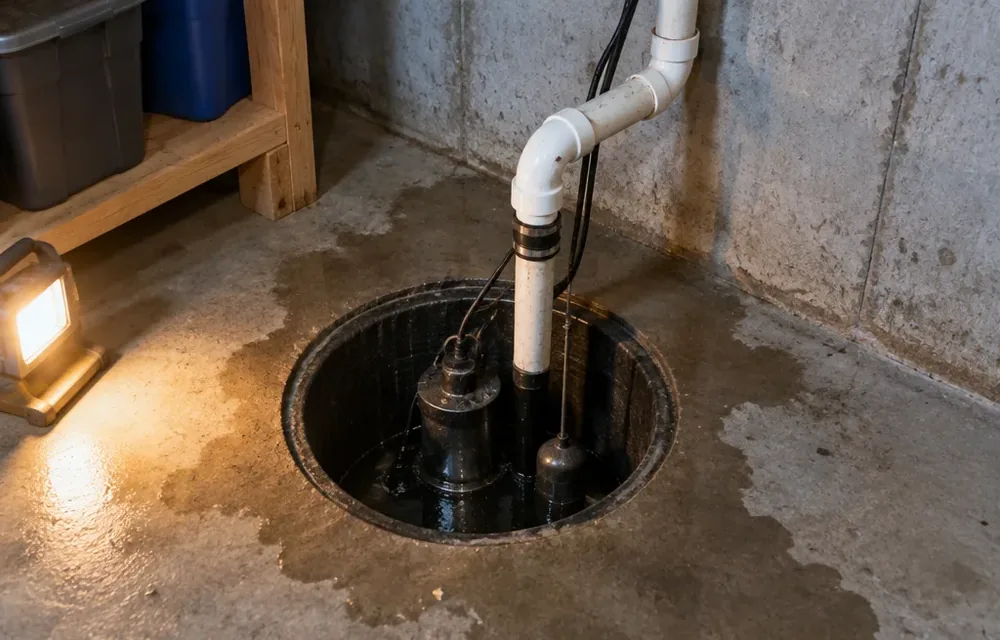
Storm sequence in practice: rain soaks the soil around the foundation, water finds the drain tile and the pit, and the primary pump cycles harder as the level rises. If the power drops mid-storm, an unprotected pit rises unchecked while the street may be too flooded for a fast response. Even short outages matter when the ground is already saturated, since inflow continues through the night while the house sits dark. Homes that have finished basements feel this first, because carpet, drywall, and stored goods meet rising water within hours.
Beyond full outages: brownouts, tripped breakers, and failed primary floats create the same gap without a storm taking down the grid. A primary pump with a stuck float or a burned-out switch sits silent in a rising pit while the house has full power, and the backup float above it is the only thing that responds. Occasional overload trips on a shared circuit behave the same way. Backup coverage therefore protects against pump failure as well as grid failure, which doubles its value across the year.
Backup types honestly compared
Bottom line: battery backups fit most finished basements, water-powered backups fit homes with strong municipal supply and no power dependence, and portable generators fit homeowners willing to operate equipment during storms. Each one trades independence, upkeep, and operating demands differently. Match the choice to the house water source, the basement finish level, and how the household handles outages.
Battery backup strengths and demands: battery systems switch on automatically with no one home, fit beside the primary in the existing pit, and alarm on power loss and low battery. Their demands are upkeep and capacity, since the battery needs testing, terminal care, and eventual replacement, and long outages can outlast the charge. For most Chelmsford basements with town water and finished space, automatic operation during an unattended outage outweighs the upkeep, which is modest when scheduled.
Water-powered and generator paths: water-powered backups use municipal supply pressure to eject pit water, so they run indefinitely without electricity but consume town water while pumping and need adequate supply pressure to perform. They suit homes on reliable municipal water where the owners accept the water use during rare events. Portable generators run the primary pump plus a few circuits, but they need safe outdoor placement, fuel on hand, and someone home to start and tend them. Whole-house standby units remove the tending burden at a larger project scope. Compare these paths against how often the house sits empty during storms before choosing.
| Backup path | Runs without grid power | Needs from you |
|---|---|---|
| Battery backup pump | Yes, until the battery charge is spent | Testing, terminal care, and battery replacement on schedule |
| Water-powered backup | Yes, using municipal supply pressure | Adequate town water pressure and acceptance of water use |
| Portable generator | Yes, while fueled and running | Safe setup, fuel storage, and someone home to operate it |
| Standby generator | Yes, automatically within its capacity | Professional sizing, fuel supply, and service plan |
Sizing and setup checks that decide real protection
Key point: a backup protects the house only if the pit, discharge, power, and alarm are all arranged so the battery pump can actually move water out. A strong pump with a frozen discharge or a dead battery is decoration. Walk through pit space, discharge routing, battery health, and alarm function together, since the chain fails at its weakest link rather than its strongest part.
Pit and discharge checks: confirm the pit has room for the backup pump and its float to move freely without tangling cords or the primary float. Follow the discharge line outside and confirm it releases well away from the foundation on ground that slopes away, since water dumped beside the wall returns through the drain tile and forces endless re-pumping. In freezing weather confirm the outside termination stays open and the line holds its slope, because a frozen outlet backs the whole system up regardless of battery charge. Each pump needs its own check valve oriented correctly on its own riser where the layout uses separate risers.
Battery and alarm checks: look at the panel status lights and test the alarm so everyone in the house recognizes the sound. Lift the backup float briefly to confirm the pump starts, moves water, and stops cleanly without hanging on the pit wall. Check terminals for corrosion and cables for tight seating, and note the battery age against its service expectations. If the panel reports a fault, the battery no longer holds a test run, or the pump strains without moving water, schedule service before the next storm rather than hoping the weather stays kind.
Upkeep through the year that keeps the backup ready
Simple routine: test the system each season, keep the pit clean, and replace the battery before it fades rather than after. Readiness is a habit, not a purchase, and each seasonal check takes less time than one mopping session after a flood. Put the checks on the same schedule as smoke alarm batteries so they are never skipped.
Seasonal task list: clear debris and silt from the pit so floats move freely, pour in a bucket of water to confirm the primary cycles first and the backup stays quiet at normal levels, then lift the backup float to confirm it takes over. Test the alarm, wipe the panel vents, and confirm the discharge outlet outside is clear of mulch, ice, and landscaping changes. Log the battery age and the test date on tape near the panel, since memory fades faster than batteries do. Homes with sump pump installation service history can ask for the backup test to be added to the same visit.
Replacement timing without guesswork: treat a battery that fails a test run, swells, leaks, or no longer holds charge through a storm as spent, regardless of its calendar age. Pumps that rattle, grind, or run hot, floats that stick after cleaning, and panels with persistent fault lights each mark parts that need attention before the next rain. Keep the pit lid seated and the area around it clear so testing stays easy and the alarm stays audible through the house.
Why Chelmsford basements need backup more than most
Local answer: river-low ground, high seasonal water tables, and finished basements make outages during storms especially costly around Chelmsford. Lots near the Concord and Merrimack bottoms sit close enough to water that pits refill for days after sustained rain, so a pump gap measured in hours still floods. Finished basements turn that water into ruined flooring and walls instead of a damp floor that dries.
Area patterns: North Chelmsford streets near the rivers cycle pumps heavily through spring melt and storm seasons, while Center colonials with finished lower levels pair hydronic heat equipment with storage and living space in the same vulnerable room. Subdivision ranches in Westford and Billerica share the water-table pattern, and homes in Lowell and Dracut near the Merrimack see the same long pit refill after big events. Households in Tyngsborough and Tewksbury with similar low-lot geography should read their own pump cycling the same way. Where storm water also threatens drains, keep drain cleaning history in mind, since backups and seepage sometimes arrive together.
Power reality during storms: the same wind and ice that saturate the ground drop branches onto lines across tree-lined streets, and restoration follows the grid rather than any single basement. A house that waits out an outage with a charged backup and a clear discharge keeps its floor dry while the street waits for crews. That independence is the whole argument, and it holds whether the finished space is a playroom, an office, or a guest suite.
Limits of battery backup and when to call
Honest limit: a battery backup bridges outages and pump failures, but it cannot fix an undersized pit, a blocked discharge, a failed primary that was never serviced, or water entering above the foundation. It also cannot run forever, so multi-day outages with heavy inflow can outlast any battery. Treat the backup as one layer with testing and service behind it, not as a promise that no storm can ever win.
When the visit beats waiting: call when the pit rises with no pump running, the panel shows a fault that resets do not clear, the battery fails a test, or water appears at cove joints and floor cracks faster than either pump lowers it. Call (978) 592-1168 and report the pit level trend, which pumps are running, what the panel shows, and whether the discharge outside is flowing. If water is already across the floor near outlets or the boiler, keep clear of the water and say so on the call.
What service covers: expect pit and float geometry corrected, check valves confirmed, discharge routing improved away from the foundation, battery health tested under load, and alarm function proven before sign-off. Where the primary pump itself is aged or mismatched to inflow, replacement planning for the primary belongs in the same conversation. The visit should end with both pumps demonstrated, the household knowing the alarm sound, and the next test date written down.
Near you
When to call
Related guides
Frequently asked questions
Will a battery backup keep my basement dry through any outage?
No, it bridges outages within the battery charge while inflow stays within the pump capacity. Short and overnight outages during normal storms are exactly what it handles well. Multi-day outages with heavy inflow, blocked discharge, or failed primary equipment can exceed it, which is why testing, discharge routing, and primary pump health matter as much as the battery itself.
How do I test my sump pump battery backup?
Confirm the primary cycles on a bucket of water first, then lift the backup float briefly to prove the second pump starts, moves water, and stops cleanly. Test the alarm, check terminals for corrosion, and confirm the outside discharge flows freely. Log the date and battery age near the panel, and treat any fault light or weak test run as a service call.
When should a backup battery be replaced?
Replace it when it fails a test run, no longer holds charge through storm cycling, or shows swelling, leakage, or persistent panel faults. Calendar age alone is a poor guide, since heat, discharge depth, and maintenance shape battery life. A battery that cannot complete a supervised test run has already answered the question, whatever its age.
Is a battery backup enough if my street floods every spring?
It is one necessary layer, but streets with recurring high water also need discharge routing that truly leaves the foundation, a sound primary pump, and attention to seepage paths at joints and cracks. Watch how long the pit refills after storms and whether discharge recycles back. Layered protection with tested equipment beats any single device on high-water streets.
Still stuck?
Describe what you see when you call and a local specialist will guide the next step.