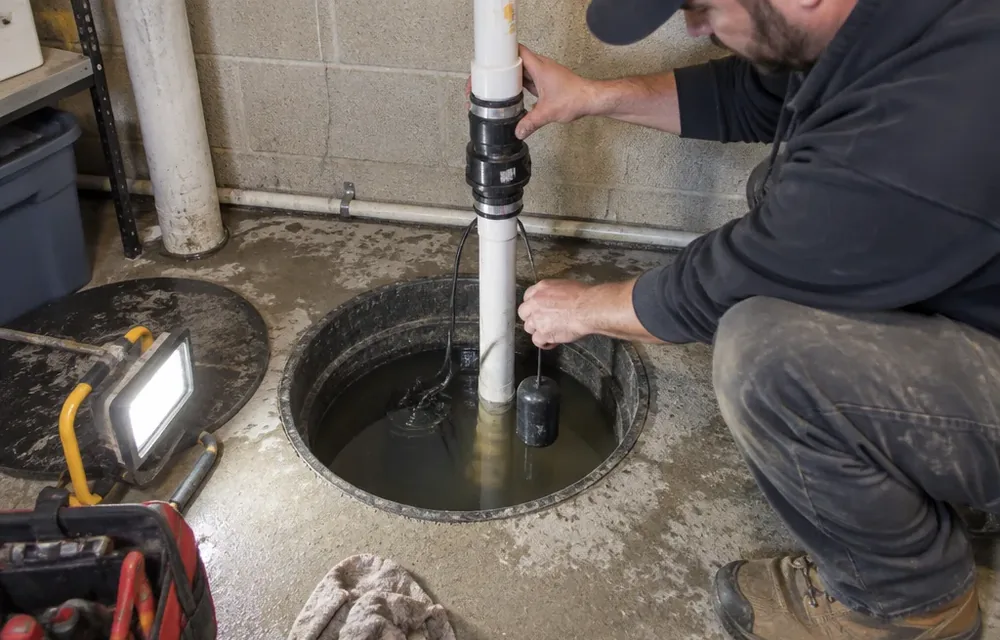
Signs
Pit water that never drops
A pit that stays near the rim after rain, with weak or no outside discharge, points to intake, check, or discharge trouble rather than normal inflow.
Motor hum with no lift
A pump that sounds alive yet moves nothing often has a stuck float, clogged intake, or failed check letting water fall back.
Short cycling every moment
A pump that starts and stops on a tight loop often has a narrow float span, a check that chatters, or a pit sized below inflow.
Silent pit during rising water
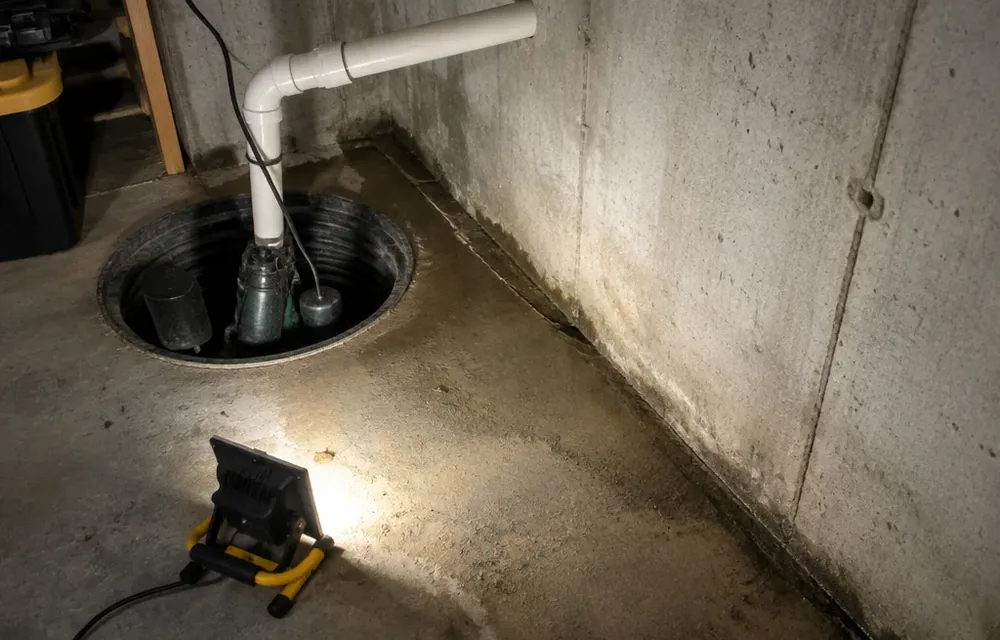
A pit that stays quiet while water beads at the slab joint often has a tripped outlet, failed switch, or seized motor.
Sump pump failure is lost lift, not just a dead motor
Short answer: sump pump failure is any pit fault that leaves groundwater in place, whether the motor runs or not. Sump pump failure includes stuck floats, clogged intakes, failed checks, blocked discharge, and power loss, and each leaves a different clue at the pit. The water level after a cycle tells more than the sound alone.
What you are seeing: a check that no longer seats lets lifted water fall back so the pump restarts on the same slug, a float tied by a cord or sidewall never calls even as water rises, and a discharge that ends against the foundation recycles the same water all night. Grit and iron film coat intakes and switches until movement drags. Power flickers during storms stall pumps at the worst hour and leave no sound at all.
Why cycle timing matters: a pit that drops well after each run but refills on a steady rhythm faces high groundwater rather than a fault, while a pit that never drops faces a path or power fault. Time several cycles during rain, note outside discharge strength, and mark where water first beads. Those three facts separate inflow load from equipment failure before the lid is lifted.
Floats, checks, discharge, and power cause most stalls
Short answer: most stalls come from float interference, check failure, discharge blockage or freeze, and outlet or breaker faults. Floats snag on pit walls, cords, and lids, checks stick half open and chatter, and exterior terminations ice over in cold snaps. Each stops lift while leaving the motor to hum or sit silent.
Pit-side causes: small pits with short cord travel cycle too tightly and wear switches, sealed lids fitted without switch clearance bind movement, and silt plus iron ochre coat the intake screen until flow thins. Alarms left without testing miss the early warning, and backup units left without charge sit dead when the primary needs them most.
House-side causes: a dedicated outlet that shares load trips under start surge, ground-fault devices in damp corners trip and stay silent, and long extension feeds starve the motor. Discharge runs that pitch back toward the house, end in mulch beds, or lack freeze relief lock with ice and deadhead the pump. Grading that pitches toward the wall and downspouts that end at the foundation add roof water to groundwater load until even a sound pump cannot rest.
Some basement water is not a pump fault
Short answer: roof water, plumbing leaks, and above-slab entry can flood basements while the pit tests sound. Downspouts that end at the wall and patios pitched toward the house send surface water straight to the slab joint, and no pump size fixes collection that starts at the gutter. A pit that stays low while walls wet points away from lift.
Plumbing look-alikes: a washer hose leak that sheets to the low corner, a water heater leaking at the base, and a softener discharge with nowhere to go each pool like seep but run regardless of weather. Mark whether pooling follows rain or follows appliance use, because weather timing separates groundwater from plumbing.
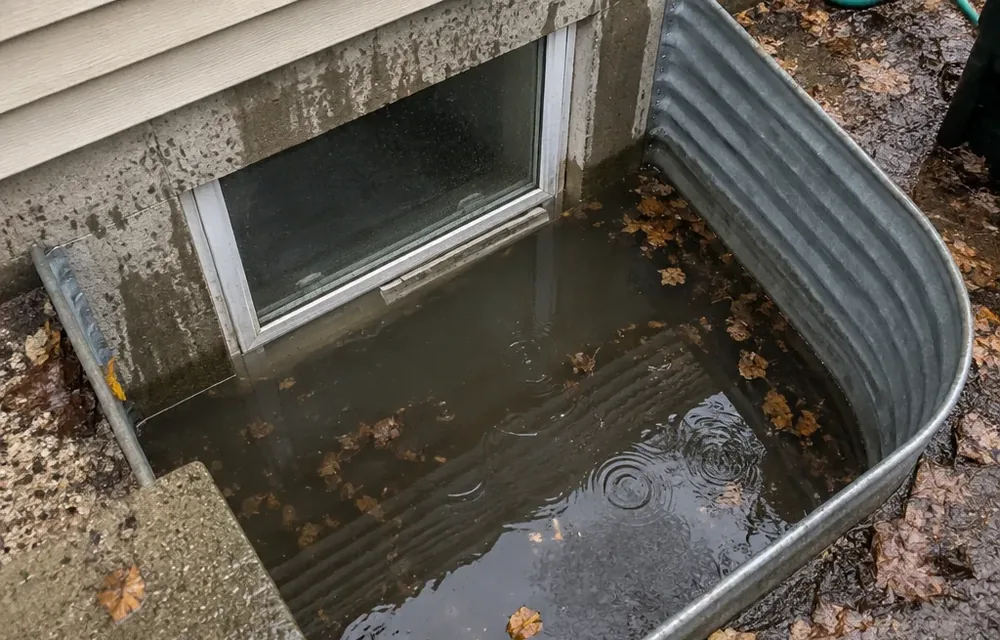
Entry-path look-alikes: water through window wells, bulkhead doors, or wall faces above the slab points to surface drainage and grading rather than pit capacity. Read storm drain flooding when entry rides above floor level, and wet basement when damp spreads far from a dry pit. When waste joins the water, ask about drains rather than pumps.
Failure follows familiar Chelmsford-area groundwater patterns
Short answer: river-lowland soils, block foundations, and finished basements shape local pump strain. High seasonal water around Chelmsford, block-joint seep in splits near Dracut and Tyngsborough and pits that serve finished rooms all raise the stakes of a stall.
Where inflow runs high: pockets of tight soil hold spring melt, the wall and footing joint weeps first, and perimeter paths that silted with age leave the pit dry while the slab edge wets. Short downspouts and discharge outlets that loop back to the mulch bed recycle roof water through the same pit all night. Finished walls hide early beading behind baseboards until carpet damps.
Where equipment lags: pits cut small for an unfinished cellar now serve finished space with flooring that tolerates no miss, and single-pump setups without alarms miss the first fault. Cold snaps freeze shallow exterior terminations without relief openings, and storm flickers find battery units left without testing. Streets with many finished basements show the same lesson each spring that collection and discharge matter as much as motor size.
A sump visit proves inflow, valve, power, and discharge
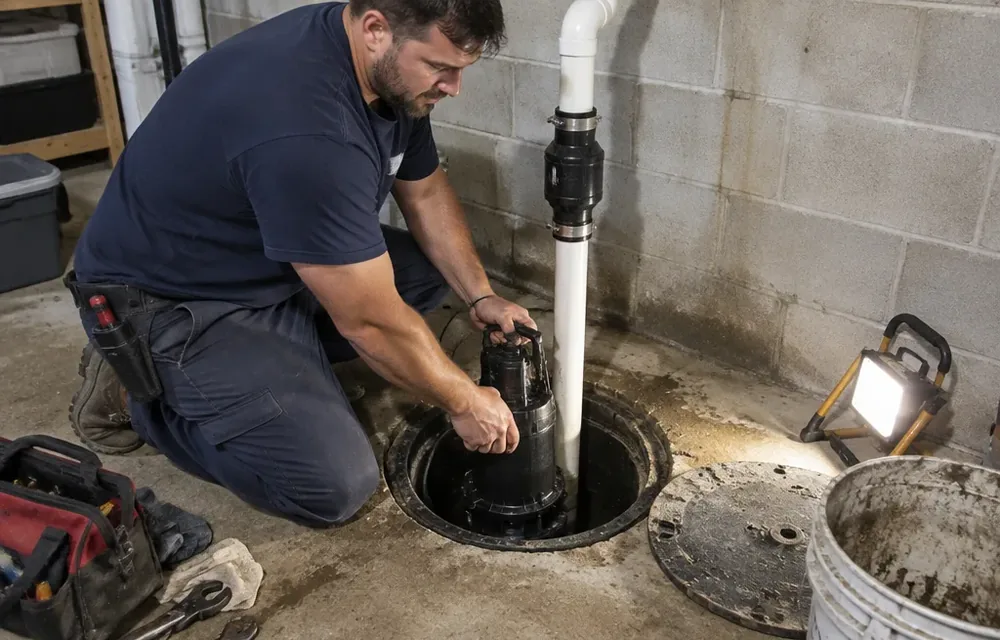
Short answer: a sump pump installation visit times cycles, tests valve and power, and flood-tests the pit before recommending repair or a new system. We check outlet and breaker behavior, float travel with the lid on, and outside discharge strength during a controlled fill. You watch the pit prove on and off levels before choices are discussed.
How testing proceeds: the pit is cleaned of silt, the intake and check are cleared and tested for backflow, and the discharge is traced outside to confirm it carries well past the foundation. Pump curve is matched to lift height, run length, and inflow rather than box size, and pit volume is checked against switch span. Where finish warrants it, battery or water-based backup with an audible alarm joins the plan.
How the fix is framed: a sound pit with a tired pump returns with a right-sized primary, new check, sealed lid, and alarm, while a pit that cannot collect or a discharge that recycles needs pit, inlet, and outlet rework plus grading help. Backup is weighed by flooring risk and outage history rather than habit. We leave test and battery care steps marked so the next storm does not arrive untested.
Careful homeowner steps help while deep water harms
Short answer: keep power safe, clear the pit area, and reduce inflow without lifting lids over deep water or touching live cords. Raise storage off the slab, guide downspout water away where extensions exist, and note cycle times for the visit. Keep clear of water that reaches outlets or the heater and boiler area.
What you can do safely: confirm the outlet has power with a lamp test where the receptacle is dry and reachable, ease storage away from the pit, and photograph water lines and entry points during rain. Listen for float movement without forcing the assembly, and keep the discharge outlet outside free of mulch and snow where it can be reached safely. Note whether the pit drops after rain eases, because recovery timing guides sizing.
Harm risk from waiting or wading: groundwater that keeps rising wicks into drywall, swells baseboards and doors, lifts flooring, and soaks insulation that then holds damp against framing. Wading through water with live cords and outlets risks shock, and lifting a sealed lid over deep water without a plan can release stored volume across the floor. Pumps run without freeze relief can deadhead and overheat, so discharge and power checks protect more than repeated switch jiggling while the pit climbs.
The service that fixes it
Related services
Related problems
Frequently asked questions
Why does my sump pump run without lowering water?
A pump that runs while the pit stays high often faces a failed check, clogged intake, blocked or frozen discharge, or inflow that exceeds the setup. Watch outside discharge strength and cycle length, because strong recycling near the house points to outlet placement rather than motor strength. We test check, intake, and discharge before sizing talk begins.
Why does the pump switch on and off constantly?
Tight cycling usually means a narrow float span, a small pit for the inflow, or a check that lets water fall back after each run. Note the time between starts during rain, because moment-to-moment cycling differs greatly from longer rhythms. Adjusting span, renewing the check, or enlarging collection calms the loop more reliably than a larger motor alone.
Do I need backup for my sump system?
Backup fits finished basements, high water table lots, and streets where storms interrupt power at the worst hour. Stored-energy units carry the pit with an alarm, while water-based units use town pressure where allowed. Unfinished storage with rare seep may not need it. Flooring risk and outage history guide the choice more than pump age.
Where should sump water go outside?
Discharge should carry well past the foundation to daylight or an approved point, never back against the wall or across a walk where it freezes. A freeze-resistant termination with relief protection prevents ice lock in cold snaps. Short outlets that end in mulch recycle the same water, so extension and support belong in the plan.
Seeing sump pump failure?
Call and describe the symptom. A local specialist will tell you the sensible next step.