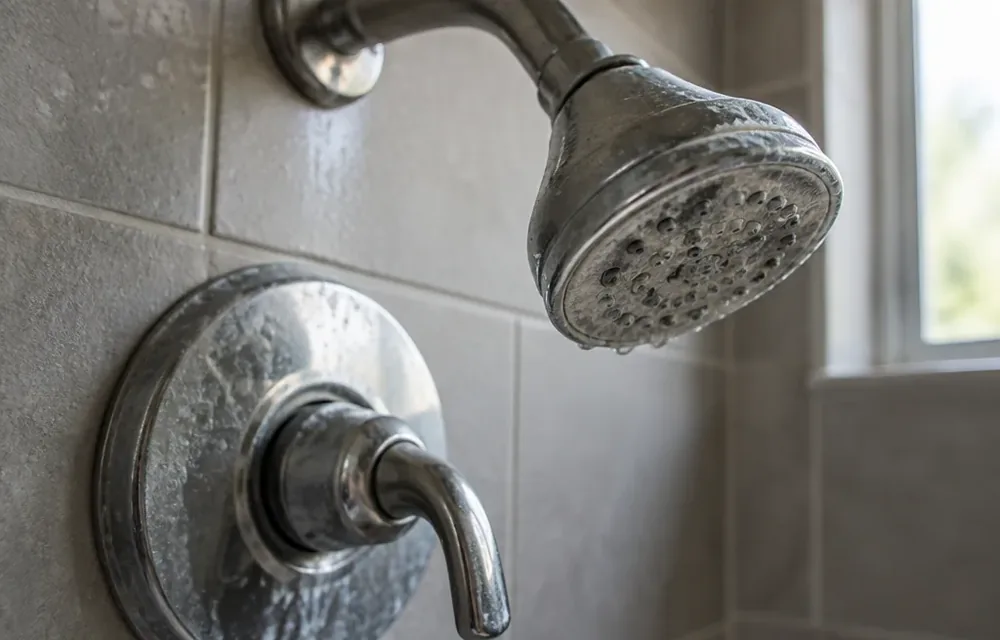
How does hard water leave scale and film?
Mineral action: Hard water leaves scale and film when dissolved minerals drop out as water heats, dries or sits in low flow spots. Hard water coats heater elements and tank bottoms, narrows cartridges and aerators, and dries into spots on glass and chrome.
Heat makes it worse: Heating drives minerals out fastest, so tank interiors, kettle bottoms and shower heads show buildup before cold lines do. Sediment settles into a blanket on the tank floor that forces longer burns and rumbling. That blanket also insulates the water from the burner or element, so recovery slows while wear climbs. See no hot water patterns and heater leak signs for heater effects.
Soap and skin clues: Minerals bind with soap into curd that will not rinse clean, leaving scum on tubs, haze on doors and stiff laundry. Skin feels dry after showering and hair feels coated even after rinsing. Those household clues often appear before any pipe symptom, so note them alongside fixture buildup when you describe the home through fixture notes.
What causes spots and scale, and how can you tell?
Spot causes: Spots and scale come from mineral content in town or well supply, from heated water that concentrates the load, and from low flow fixtures that let droplets dry in place. Spots and scale that wipe off with vinegar style acids point to surface film, while crust that stays points to deeper buildup.
Scale versus sediment versus scum: Scale feels hard and crusty on shower heads, faucet bases and kettle walls. Sediment feels gritty in aerators and pops inside heaters during burns. Soap scum feels waxy on tubs and doors and pairs with poor lather at sinks. Check all three spots in one walk, because the mix tells whether treatment, heater flushing or habit changes lead. Compare running toilet waste that can mimic supply trouble and low pressure clues that often trace to clogged aerators.
Well versus town patterns: Well pockets often add iron staining and metallic taste alongside hardness, with orange rings and clogged softener paths. Town mains tend toward steady mineral film with spotting and heater sediment rather than color. Note water source, staining color and where buildup concentrates, since that map guides testing rather than guessing through water treatment options.
What to do in order if you suspect hard water
Ordered checks: Ordered checks for hard water start with a fixture walk that notes spots, crust, scum and heater noise. Ordered checks then add simple care such as cleaning aerators and shower heads so later treatment results read true.
Simple steps that help now: Remove and rinse faucet aerators, soak shower heads to clear face jets, wipe doors after showering to limit drying spots, and use the labeled dose of detergent rather than extra scoops that feed scum. Flush a young heater only where the drain valve works freely and the discharge has a safe path, and stop if the valve clogs or drips. If the heater rumbles heavily, shows rusty first draw or wets its base, call (978) 592-1168 and review water heater care while you wait.
Test before hardware: Ask for tested mineral levels and a look at heater age, valve condition and fixture load before choosing softening or filtration. That testing keeps sizing tied to the home rather than habit. Keep a short log of spots, soap behavior and heater recovery, because that record shapes treatment choice and timing through the cost guide.
Treatment paths honestly compared
Path frame: Treatment paths differ in what they remove, with softening addressing hardness minerals and filtration addressing sediment, iron and taste issues. Treatment paths often pair together, since sediment filtration protects softening media and downstream valves.
Softening versus filtration versus habits: Softening lowers the mineral load that forms scale and scum, which eases heater wear and soap use across the home. Filtration strains sediment and addresses iron and odor sources that softening alone does not resolve. Habit care such as wiping doors, dosing soap correctly and flushing young heaters slows buildup but cannot change supply chemistry. Match the path to tested levels and fixture symptoms, with details in water treatment and heater notes in tank versus tankless.
Salt, space and upkeep notes: Softening needs salt or media upkeep, a drain path for regeneration and floor space near the main entry. Filtration needs cartridge or media changes on a schedule tied to use and sediment load. Both need backflow and discharge handled to code. Plan upkeep honestly, because neglected treatment can foul and restrict flow worse than no treatment through fixture strainers.
Why Chelmsford area water behaves this way
Local supply: Chelmsford town water comes from district wells treated for iron and manganese at two plants, and the district 2025 report publishes no hardness figure, so scale complaints on town mains warrant testing before softening. Much of the wider area draws through the Lowell Regional Water Utility system that serves a broad Merrimack Valley base, while nearby Billerica draws through Billerica Water Works off Treble Cove Road. Mineral behavior that coats heaters in one town may not appear in the next, which is why the hardness table maps suppliers before treatment talk.
Housing that shows it first: South Chelmsford ranches with heaters over finished space show sediment rumble early, while Center colonials with mixed copper and older steel show pinholes and valve crust where minerals meet transitions. Homes near Billerica often pair hardness with iron staining, homes near Groton with well pockets see similar pairing, and homes near Concord with antique runs show scale plus layered remodel valves.
What to mention on the call: Share town versus well source, staining color, heater age and noise, and which fixtures spot or clog fastest. Those local facts guide whether testing leans toward softening, filtration or both. Photos of aerator grit, shower crust and heater labels help size the visit without opening walls through leak detection staging.
Limits of softening and filtration
Treatment limits: Treatment limits appear when pipes already leak, when heaters already rust through, or when pressure loss comes from closed valves and clogged stops rather than minerals. Treatment limits also apply to lead, bacterial and structural issues that need other remedies beyond mineral control.
What treatment cannot fix: Treatment cannot dissolve a deep sediment blanket baked into an old tank, cannot reopen a cartridge already split by scale, and cannot cure a dry trap odor or a vent fault. It cannot rescue a heater with a weeping seam or a base already rusted. In those cases repair or replacement leads and treatment follows to protect the new hardware. Review heater leak checks and low pressure checks before assuming minerals explain every symptom.
Upkeep boundary: Treatment needs steady upkeep, with media checks, salt or cartridge attention and discharge paths kept clear. Homes that cannot host the space or drain routing may lean on point of use care and heater flushing instead. Set that boundary plainly on the visit so expectations rest on the home rather than on hardware alone through water treatment planning.
When to call about hard water in Chelmsford
Call timing: Call timing for hard water fits spotting plus heater rumble, aerators that clog again within weeks, and soap scum that persists after habit care. Call timing also fits orange staining, metallic taste or grit that points beyond simple hardness.
How to call well: Call (978) 592-1168 with source, heater age, staining notes and photos of buildup ready. Note which fixtures clog fastest and whether hot or cold sides spot worse, since that split points to heater versus supply load. Avoid opening concealed piping or altering treatment drains yourself. See emergency plumber guidance for active leaks and what moves the price for visit scope.
Massachusetts rules: Water treatment tie ins in Massachusetts fall under 248 CMR, the Uniform State Plumbing Code, with the Board of State Examiners of Plumbers and Gas Fitters governing who may alter potable piping as listed on mass.gov. We protect backflow boundaries, set discharge to a safe path and leave shutoff and bypass labeling clear. Where heater or valve defects appear during testing, we explain permit and inspection steps through the local inspector before changes.
Near you
When to call
Related guides

Frequently asked questions
How do I know if Chelmsford water is hard?
Hard water shows as spots on glass, crust on shower heads, waxy scum on tubs and grit in aerators. Heaters rumble and recover slowly as sediment blankets the tank floor. Check your district report first: the 2025 district report publishes no hardness figure while documenting iron and manganese filtration, so town-supply scale complaints warrant lab testing before softening. Tested mineral levels plus heater age confirm the call better than taste alone, so log symptoms by fixture.
Will a softener stop my water heater rumbling?
A softener slows new scale but cannot fully clear a deep baked blanket in an old tank. Young tanks often quiet after flushing plus treatment, while older rumbling tanks with rusty draw usually need replacement first. Treatment then protects the new unit. Share heater age and noise history so the visit sequences flush, repair or swap correctly.
Do I need filtration plus softening?
Filtration plus softening fits when sediment or iron joins hardness, with orange rings, metallic taste or gritty aerators alongside scale. Softening alone handles mineral hardness film, while filtration strains particles and addresses taste sources. Tested levels decide the pairing. Filtration placed ahead also shields softening media and downstream valves.
Can hard water lower my water pressure?
Hard water can lower pressure by crusting aerators, shower faces and cartridges until flow thins at single fixtures. Whole home pressure loss more often traces to valves, regulators or supply faults. Clean aerators first and compare hot versus cold flow. Persistent single fixture thinning after cleaning points to cartridges that need service rather than more scrubbing.
Still stuck?
Describe what you see when you call and a local specialist will guide the next step.