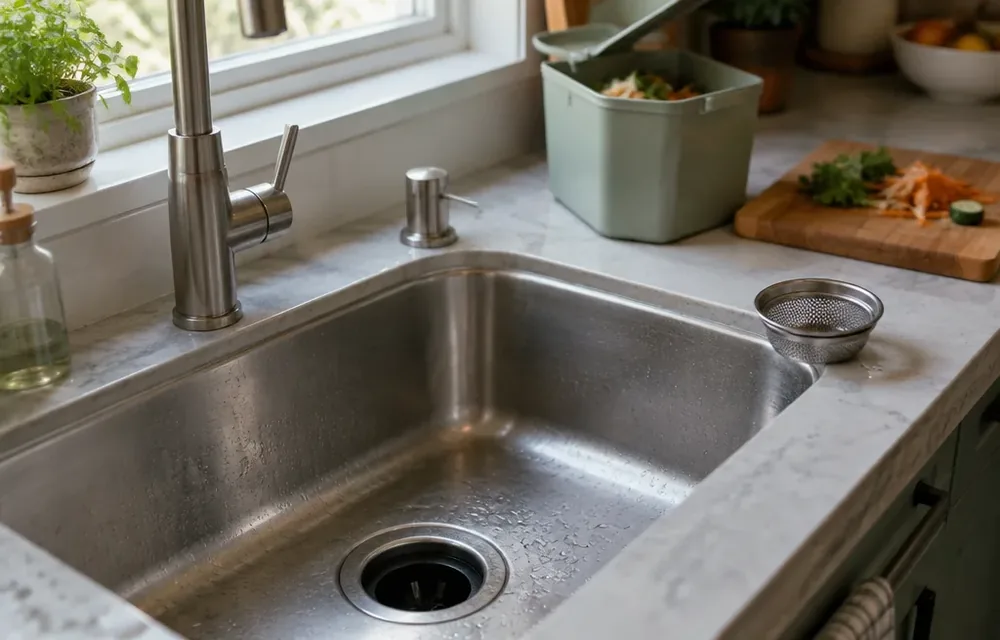
How does a disposal grind, and what can it not handle?
Disposal action: A disposal grinds soft scraps with a spinning plate and lugs that fling material against a grind ring, then flushes the slurry down the trap. A disposal does not chop like a blender, so stringy and hard loads wrap or wedge rather than pass.
What passes safely: Small soft bits left on plates with a strong cold flow pass when ground in short bursts with the water left running after the noise fades. That cold flow carries slurry past the trap into the branch before it settles. Keep loads small and spaced rather than feeding a full plate at once. See drain cleaning care for trap and branch effects.
What never belongs: Grease, coffee grounds, rice, pasta, beans, potato peels, celery, onion skins, bones, pits and shells never belong even with strong flow. Wipes labeled flushable also never belong, since they snag on any wall film downstream. Trash those loads and wipe pans with paper into the bin before rinsing through fixture care habits.
What causes jams and buildup, and how can you tell?
Jam causes: Disposal jams come from hard objects, fibrous wrap, sudden overloads and worn splash guards that drop utensils into the chamber. Drain buildup past the disposal comes from grease sheets, starch paste and grounds that settle in long cool runs.
Jam versus line clog: A jam hums or trips the reset with no drainage trouble elsewhere, while a line clog drains slowly at the sink plus gurgles at nearby fixtures. A jam that frees then returns within days often means a dull plate or bent lug rather than user error. A sink that clears at the disposal yet slows again after dishwashing points to wall film farther down. Compare gurgling signs and clogged drain signs while you track.
Smell versus blockage: Odor with good drainage usually means food film under the splash guard and baffle rather than a deep clog. Blockage with standing water plus odor points to trap or branch loading that needs mechanical clearing. Note reset behavior, sound and which fixtures share the symptom before reaching for chemicals through hydro jetting planning.
What to do in order when the disposal stops
Ordered reset: Ordered reset for a stopped disposal starts with power off, then a look for the object, then the reset button only once the chamber runs clear. Ordered reset protects hands and the motor from repeated strain.
Safe sequence: Switch the wall control off, unplug the unit or open the breaker where access stays dry, and shine a light into the chamber for bones, pits or utensils. Remove objects with tongs rather than fingers, press the reset once, then run strong cold water and pulse the unit briefly. If the unit hums without spinning, trips again or leaks at the base, leave it off and call (978) 592-1168 rather than forcing it. Review emergency steps for leaks and fixture notes for trap care.
What not to pour: Do not pour chemical openers into a jammed disposal, since they sit in the chamber and endanger the next hands that service it. Do not pack ice and citrus as a fix for a dull plate, since that masks wear without restoring grind. Keep a short log of jams, resets and line slowing to guide repair or habit coaching through the cost guide.
Safe use versus misuse in daily cooking
Use frame: Safe disposal use means cold water before, during and after short grinds of small soft loads. Misuse means hot grease, bulk starch and fibrous bundles that coat or wrap the line past the trap.
Daily habits that help: Scrape plates to the trash first, wipe pans with paper into the bin, feed soft bits slowly with full cold flow, and leave water running briefly after the grind fades. Use a sink strainer for coffee grounds and peels even where a disposal sits. Run the dishwasher with full hot flow after hand washing so film carries to the main rather than settling in the branch. Pair these habits with drain cleaning guidance for long run homes.
Kitchen loads to trash: Trash grease and oils, coffee grounds, rice, pasta, potatoes, beans, fibrous vegetables, eggshells in volume, bones, pits and seafood shells. Compost where the town allows rather than grinding bulk produce. Those choices matter most where basement runs stay cool and grease sets before the street through sewer line awareness.
Why Chelmsford area kitchen lines clog faster
Local run: Chelmsford area kitchen lines clog faster because many sinks feed long basement runs to the main through cool space where grease firms up. Chelmsford area colonials and capes also share branch vents added during remodels, so a coated branch slows the whole group.
Trees plus film: Mature maples and oaks already narrow older laterals with fine roots, so a little kitchen film snags paper that a clean lateral would pass. Mineral scale from town supply through the Lowell Regional Water Utility system roughens older interiors and grips that film. The same pairing shows near Lowell shared stacks, near Ayer wooded lots with older joints, and near Concord remodel era branches.
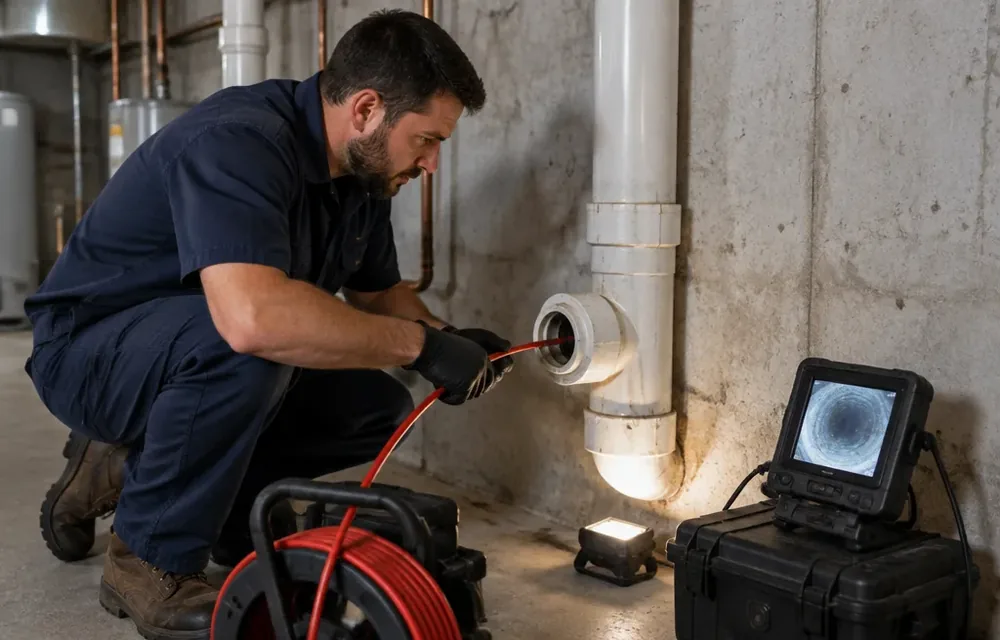
Habit pressure: Daily disposal loads of starch and grounds feed the layer faster than occasional use. Homes that cook daily need stricter trash habits than homes that rinse lightly. Tell dispatch about disposal age, reset history and return interval, because those facts decide whether the visit stages trap care, cable work or camera review through hydro jetting scoping.
Limits of disposal care
Care limits: Disposal care limits appear when the unit leaks at the base, vibrates heavily, trips repeatedly after clearing, or drains slowly despite sound habits. Care limits also apply to wall film already hardened past the trap that no disposal setting can scour.
What care cannot fix: Care cannot sharpen a worn plate, straighten a bent lug, seal a cracked housing or reopen a grease lined branch. It cannot clear roots at the street joint or a belly holding water past the kitchen tie in. In those cases mechanical clearing or unit service leads and habit coaching follows. Review backed up sewer signs and slow tub signs before assuming the disposal alone explains whole home slowing.
Unit age boundary: Units with persistent leaks, swollen housings and repeated electrical trips sit past care and need service evaluation. Continuing to grind on a failing unit risks cabinet flooding and trap damage. Note model behavior and leak points with photos rather than running the unit for demonstration through fixture service triage.
When to call for disposal and drain help
Call timing: Call timing for disposal help fits repeated jams, humming that will not clear with safe reset, base leaks, and sink backups that spread to nearby fixtures. Call timing also fits starch heavy homes where the same kitchen branch slows within weeks of clearing.
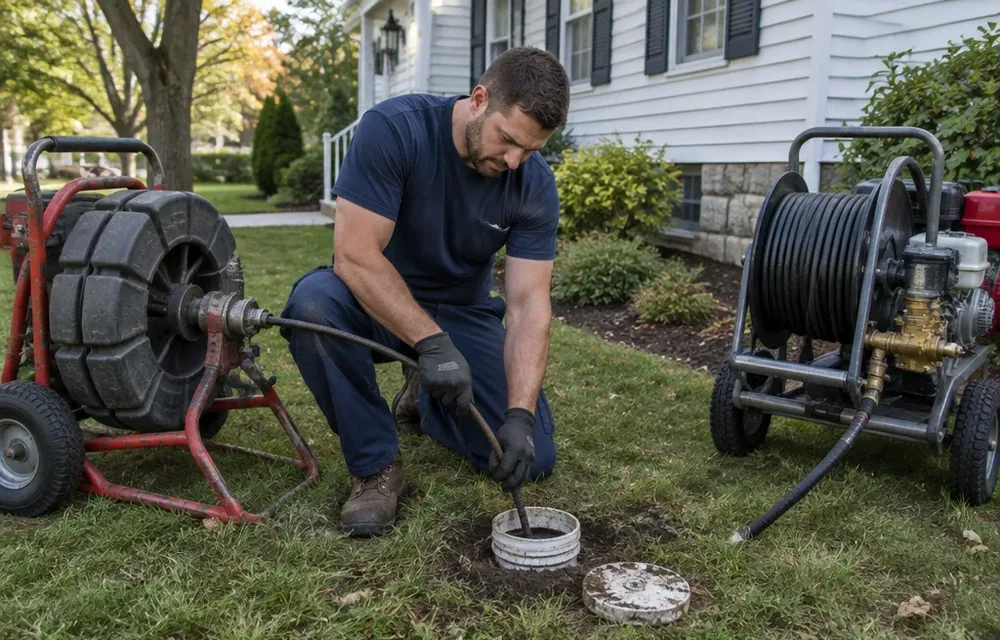
How to call well: Call (978) 592-1168 with unit behavior, reset history, what went down before the jam and which fixtures share slowing ready. Keep the unit off, keep chemical products out of the sink, and keep water use low where the branch backs up. Ask whether the visit should bring trap parts, cable gear or camera based on return history. See emergency help and what moves the price for scope.
Massachusetts rules: Disposal and trap work that opens or alters sanitary piping in Massachusetts falls under 248 CMR, the Uniform State Plumbing Code, with the Board of State Examiners of Plumbers and Gas Fitters governing who may alter concealed drainage as listed on mass.gov. We protect traps and vents during service, refit cleanout caps and leave reset and shutoff locations marked. Where camera shows structural defects, we explain permit and inspection steps through the local inspector.
Near you
When to call
Related guides
Frequently asked questions
What should never go in a garbage disposal?
Grease, coffee grounds, rice, pasta, beans, potato peels, fibrous vegetables, bones, pits and shells never belong in a disposal. Wipes never belong even when labeled flushable. Those loads coat long cool branches or wrap the plate and trap. Scrape plates to the trash and wipe pans with paper first.
Why does my disposal jam every week?
Weekly jams usually mean hard objects, fibrous loads or a worn plate and lug set rather than bad luck. Small soft loads with strong cold flow should not trip the reset often. Note what went down before each trip and whether the reset restores normal grind. Persistent trips after clearing point to unit service.
Can a disposal cause a main line clog?
A disposal can feed a main clog by sending grease, starch and grounds into a lateral already narrowed by roots or scale. The disposal itself rarely blocks the main, but its slurry builds the film that snags paper downstream. Trash bulk loads and keep strainers in place. Repeat branch slowing needs cable plus camera review.
Should I use hot water with the disposal?
Use strong cold water before, during and after short grinds so grease firms and flushes past the trap rather than coating it. Hot water melts grease that later sets farther down the cool run. Leave cold flow running briefly after the noise fades. Pair that habit with wiping pans to the trash first.
Still stuck?
Describe what you see when you call and a local specialist will guide the next step.