How to tell ejector trouble from a sewer backup
Ejector pattern: Ejector trouble shows at below-grade fixtures first while upstairs baths and kitchens drain normally. The basement toilet burps, the shower base holds water, or the laundry tub drains slowly after the washer discharges, yet the first-floor fixtures behave as usual. That split between levels marks the lift station as the suspect, because a main sewer blockage slows every level at once starting from the lowest drain in the house.
Sewer pattern: A main sewer blockage backs waste into the lowest opening regardless of pumping, and it often brings paper and solids up through a basement shower or floor drain after upstairs use. Ejector failure instead leaves the basin full with the pump silent or running without moving water, and the alarm sounds as the level rises. Note which fixtures connect and whether upstairs use changes the symptom, because that pattern sizes the visit toward the pit or toward the lateral. See backed-up sewer signs and clogged drain patterns for the symptoms we separate on the call.
What to do first: Stop using basement fixtures the moment backup or alarm appears, since every flush and every laundry load adds to a basin that cannot empty. Keep upstairs water use light until the cause is known, and avoid opening the pit cover yourself because of gases and pathogens inside. Call (978) 592-1168 with the fixture pattern, the alarm state, and the pump age where known, and review emergency plumber guidance while you wait.
Why ejector setups look this way around Chelmsford
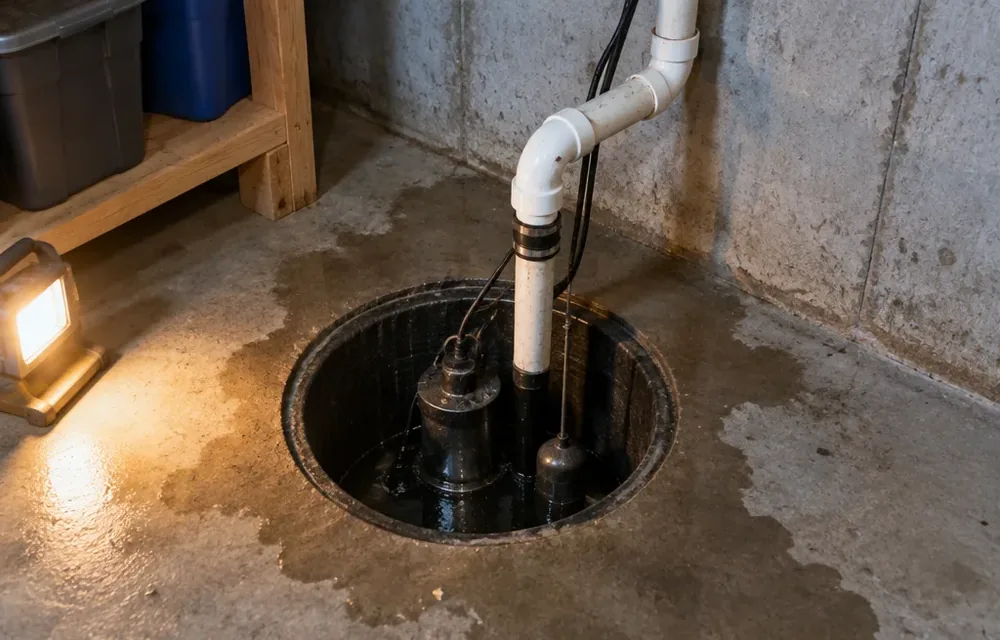
Chelmsford colonials, capes, and splits with finished basements often add a bathroom or laundry below the sewer lateral without enough fall to drain by gravity. A sealed basin with a grinder or solids-handling pump, a check valve on the discharge, and a high-water alarm make that below-grade plumbing possible. River-low streets near the Concord and Merrimack add groundwater pressure around older pits, so basin seals and covers work harder there than on high ground.
Many pits date to a remodel wave rather than original construction, which means the basin size, pump rating, and alarm wiring reflect what one bathroom needed then rather than what two baths and a washer demand now. Added fixtures overload the original pump, floats tangle on basin walls, and check valves installed without unions complicate every later swap. That layered history is why we test the whole station as a system instead of swapping one part blind.
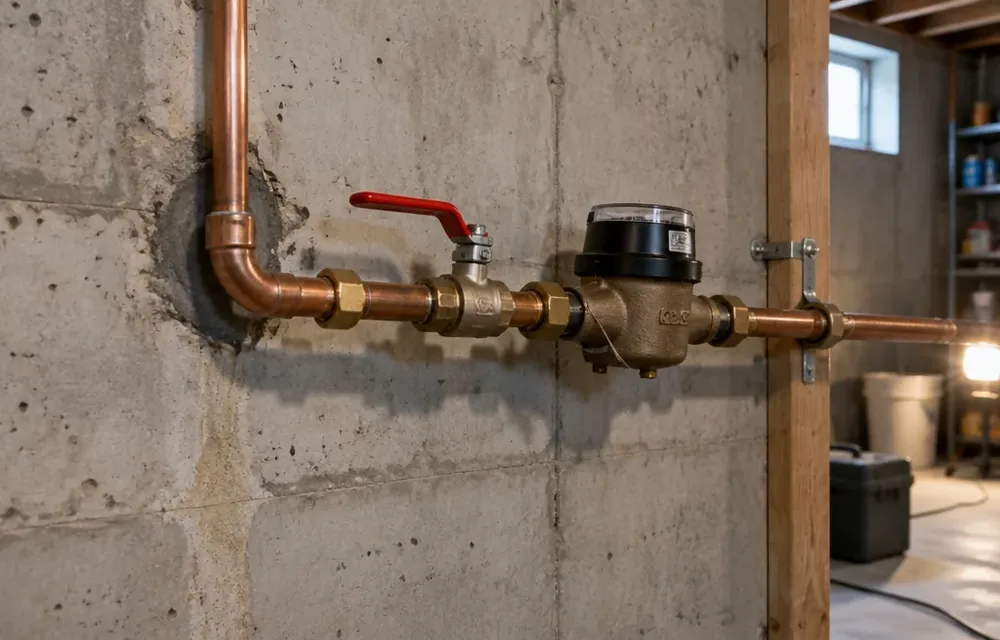
Finished basements raise the stakes because the pit often hides behind a closet panel or under a stair, so alarms go unheard and slow drains get explained away until the basin tops out. Much of Chelmsford draws town water through the Lowell Regional Water Utility system, so supply is steady while the weak point sits on the waste side below grade. Homes near Lowell with stacked baths over basement suites and near Billerica with finished lower levels show the same below-grade pattern.
Options honestly compared
Float and switch repair: A tangled float, a worn piggyback switch, or a stuck tether often explains a silent pump or one that never rests, and correcting the float path or replacing the switch restores cycling without touching the pump. This fits stations where the pump runs strong on manual test and the basin and discharge prove sound. It is the lightest fix and the right first check before any pump decision.
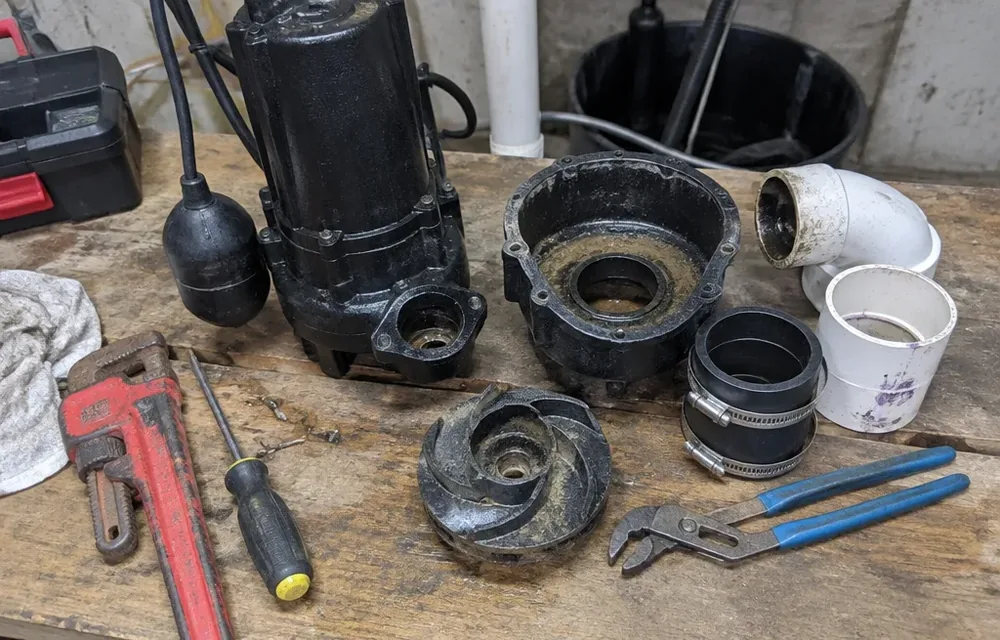
Pump replacement: A pump with a failed motor, a cracked housing, or worn impellers that cannot move rated flow needs replacement matched to basin size, head height, and fixture load. Grinder pumps suit basement baths with solids and longer lifts, while solids-handling effluent pumps suit laundry and gray-water loads with shorter runs. We size to the actual fixture count and lift rather than copying the old nameplate, since remodels often outgrew the original unit.
Station renewal: A corroded basin, a missing or failed check valve, a dead alarm, or a vent tied in poorly calls for renewing the station around the pump rather than another drop-in swap. New basin seal and grommets, a check valve with unions for future service, a tested high-water alarm with battery backup where power flickers, and a correct vent connection end the cycle of yearly callbacks. Pair the choice with sump pump installation notes where groundwater also presses the basement, and with sewer repair planning where the discharge lateral itself proves faulty.
What moves the cost
Access and basin condition: An open pit in an unfinished utility corner with unions on the discharge allows direct testing and swapping. A pit sealed behind finished walls, under stairs, or beneath stored goods adds opening, protection, and careful patching coordination before any plumbing begins. Corroded covers, seized fasteners, and basins set without service clearance slow careful removal without damaging surrounding finishes.
Pump type and station parts: Grinder and solids-handling pumps differ in capability and handling, and head height plus fixture count set the required rating rather than brand preference. Check valves with unions, alarm panels with battery backup, seals, grommets, and vent corrections each add parts beyond the pump itself. Discharge routing length and the condition of the lateral tie-in shape labor where the line runs far to reach the main.
Permits, testing, and follow-up: Work that alters drainage and venting in Massachusetts may need a permit and inspection through the local inspector under 248 CMR. Fill testing with several full flushes, alarm testing at rising level, and check-valve proof under flow all take time after the new parts sit in place. Our cost guide explains these drivers without quoting a figure here, and we describe the test sequence before the basin is closed.
When this is the wrong answer
Ejector work is the wrong answer when upstairs fixtures back up together with the basement, which points to the main lateral rather than the lift station. A camera look from an accessible cleanout settles that call faster than opening the pit. Septic tanks due for pumping show a similar whole-house pattern on homes beyond town sewer, and no pit part fixes a full tank.
It is also the wrong first call for groundwater seepage through floor cracks and cove joints with a steady meter and no fixture involvement, which belongs to sump and drainage work rather than sewage handling. Dry trap odor and roof vent blockage mimic pit odor without any pump fault. Describe the fixture pattern and the alarm state and we will steer you to ejector, sewer, or sump help honestly, including drain cleaning where a branch clog explains a single slow fixture.
Standards that apply in Massachusetts
Drainage, venting, and sewage handling work in Massachusetts falls under 248 CMR, the Uniform State Plumbing Code, with the Board of State Examiners of Plumbers and Gas Fitters governing who may open and alter sanitary piping. Ejector basins need sealed covers with gaskets, correct vent connections, accessible check valves, and alarms where below-grade fixtures depend on the pump. Permits and inspection run through the local inspector where piping is altered.
We isolate power before opening any pit, verify the basin vents correctly, fit check valves with unions for future service, and test the alarm at rising water before closing the cover. Discharge tie-ins, supports, and backflow protection follow code rather than habit, and finishes around the pit are protected through the visit. For background on hiring, see how to check a plumber license in Massachusetts.
Signs you need this
Basement fixtures backing up first
A below-grade toilet, shower, or laundry that drains slowly while upstairs fixtures run fine points to the lift system rather than the main sewer.
Alarm sounding or pump running nonstop
A high-water alarm or a pump that never rests signals a stuck float, a failed switch, or a pump that can no longer keep up with inflow.
Odor around the basin pit
Sewage odor near the pit cover means the seal, gasket, or vent connection needs attention even when fixtures still drain.
What happens on a visit
We confirm basement fixtures stay off, check the alarm state and breaker, and keep upstairs use light until the station is diagnosed.
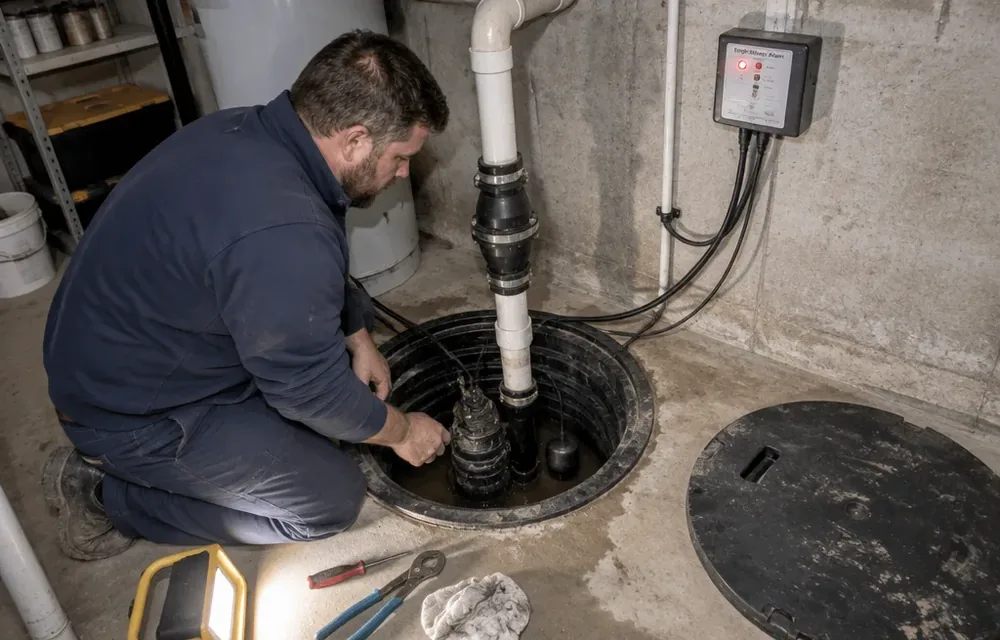
We isolate power, vent the area, open the pit cover, and read basin level, float positions, and check-valve condition before touching parts.
We run the pump on manual, exercise floats through full travel, and prove the check valve and alarm separately so the failed part is known.
We correct the float path, fit the matched pump, or renew basin parts with unions and seals, keeping the discharge and vent to spec.
We run full flushes and laundry discharge, watch cycling under load, and trip the alarm at rising level before closing the pit.
When this is the wrong answer
Do not book ejector work for whole-house backups that rise with upstairs use, for a septic tank due for pumping, or for groundwater seepage with no fixture involvement, because the pit is not the fault in those cases. Do not open a sewage pit yourself or ignore a sounding alarm while basement fixtures stay in use. If the basin overflows with waste spreading, or sewage rises through low drains on every level, that is the opposite case and you should call now.
Related reading
Where it comes up
Chelmsford
Hard-water heaters above finished space.
Westford
Long supply runs behind finished walls.
Lowell
Lowell sits at the meeting of the Concord and Merrimack rivers just east of Chelmsford, threaded by canals and dense brick mill blocks.
Billerica
Billerica spreads southeast of Chelmsford along the Concord River toward Wilmington and Burlington, mixing older village pockets with postwar subdivisions and wooded lots.
Tewksbury
Tewksbury lies east of Chelmsford beyond Lowell and Billerica, strung along the Route 38 corridor with the Shawsheen River winding through its low ground.
Dracut
Dracut stretches along the Merrimack north bank northeast of Chelmsford across Lowell, with Beaver Brook cutting its low ground and wooded subdivisions climbing behind.
Related services
Frequently asked questions
How do I know the sewage pump needs replacement or just repair?
The component test decides. A pump that runs strong on manual with a tangled float or dead switch needs the control parts, while a silent or weak pump with sound controls and power needs replacement matched to basin size, head, and fixture load. Basin corrosion, missing check valves, and dead alarms argue for station renewal around whichever pump is chosen.
What is the difference between a sump pump and a sewage ejector pump?
A sump pump moves clear groundwater away from the foundation, while a sewage ejector pump lifts waste from below-grade fixtures to the sewer line. Ejector basins are sealed with gaskets and vents and handle solids, and their discharge ties into sanitary piping rather than daylight. Odor, alarms, and basement fixture backup mark the ejector side.
Why does the high-water alarm keep sounding?
The alarm sounds because basin level rises faster than the pump clears it. A stuck float, a failed switch, a dead pump, a closed or failed check valve, or fixture load beyond pump rating each produce the same alarm. Stop basement fixture use, note whether the pump runs at all, and call with the alarm state and pump age ready.
Can I use basement fixtures while waiting for service?
Keep basement fixture use off once backup or alarm appears, since every flush adds to a basin that cannot empty. Light upstairs use is usually workable until the cause is known, unless upstairs fixtures also slow, which points to the main line instead. Tell dispatch the full fixture pattern so the visit brings pit parts, cable gear, or camera as the pattern demands.
Why does the basement bath back up but upstairs drains fine?
Below-grade fixtures depend on the lift station while upstairs fixtures drain by gravity, so a failed pump, float, or check valve strands only the basement level. That split between levels is the classic ejector signature. A main sewer fault instead slows every level starting low, which is why the upstairs behavior settles the first question.
What maintenance keeps an ejector station reliable?
Keep wipes, grease, and harsh chemicals out of basement fixtures even with a grinder pump, test the alarm on a schedule, and keep the pit cover sealed with the vent clear. Note pump age and any prior float trouble for the next visit, and keep stored goods clear of the pit access. A station with unions on the discharge and a tested alarm turns future service into a short visit.
Need sewage ejector pump in Chelmsford?
Call now and describe what is happening. A local specialist takes it from there.