What this setting needs
High-use restroom fixtures
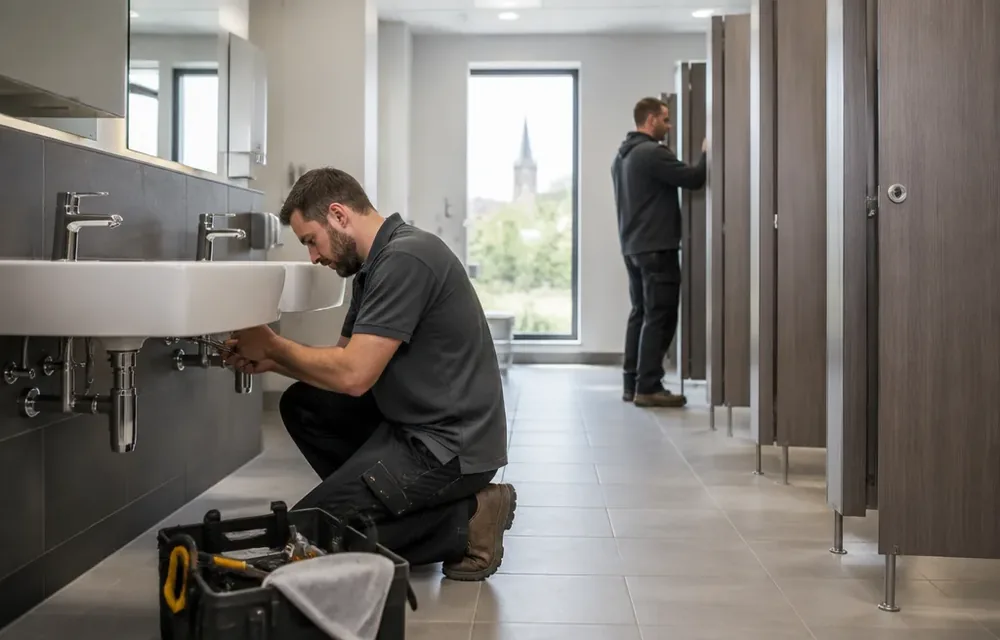
Flush valves, fill valves, and faucet cartridges wear on schedule under daily office use. A toilet that runs between flushes or a faucet that drips steadily wastes water all week and signals parts that need attention.
Low-disruption scheduling
Restroom work fits best outside peak traffic, with one restroom kept open while the other is serviced where the floor plan allows. Clear staging near the work area keeps hallways and sales floors usable.
Break rooms and mop sinks
Coffee grounds, food film, and mop grit enter small branches that were not sized for kitchen loads. Strainers and wipe-down routines slow buildup, while camera checks sort trap trouble from deeper branch restriction.
Odor and noise complaints
Dry traps in low-use restrooms, tired flappers, and water hammer from fast valves draw complaints before flow fails. Trap primers, seal checks, and pressure notes address the cause rather than masking it.
Restroom upkeep that holds through the week
Fixture wear pattern: commercial restrooms cycle fill and flush parts far more than home baths, so seals, cartridges, and handles loosen on a predictable path. A toilet that ghosts or a urinal that drains slowly points to serviceable parts rather than full replacement in many cases. Recording install dates and past part swaps guides the next visit.
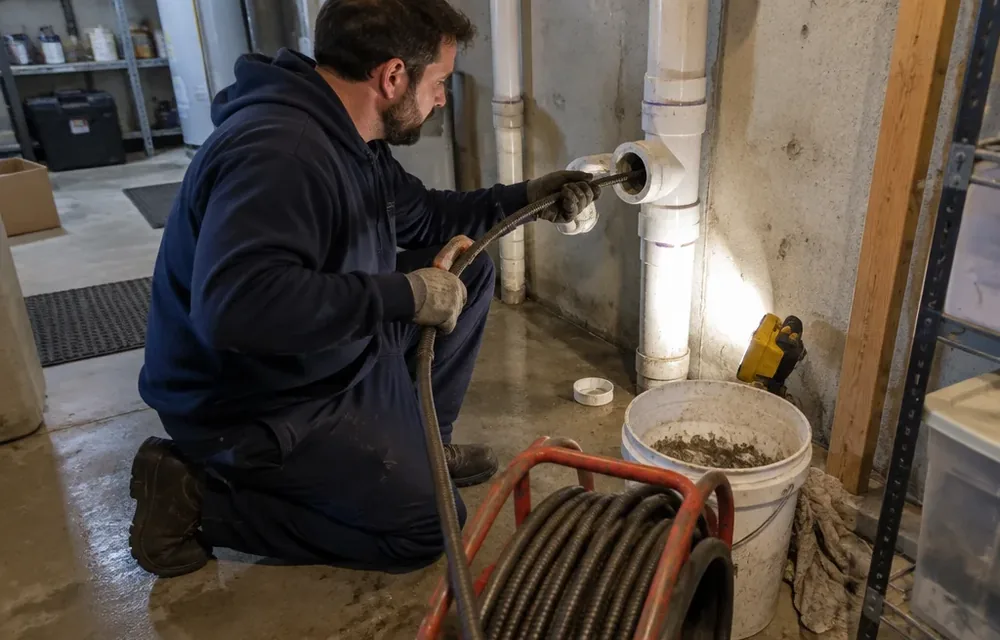
Drain side: hair, paper, and cleaning wipes meet in shared restroom branches that run long to the main through slab or ceiling space. A single slow lavatory often traces to a trap or stopper, while several fixtures slowing together point to the branch. That pattern decides between trap service and drain cleaning with retesting under load.
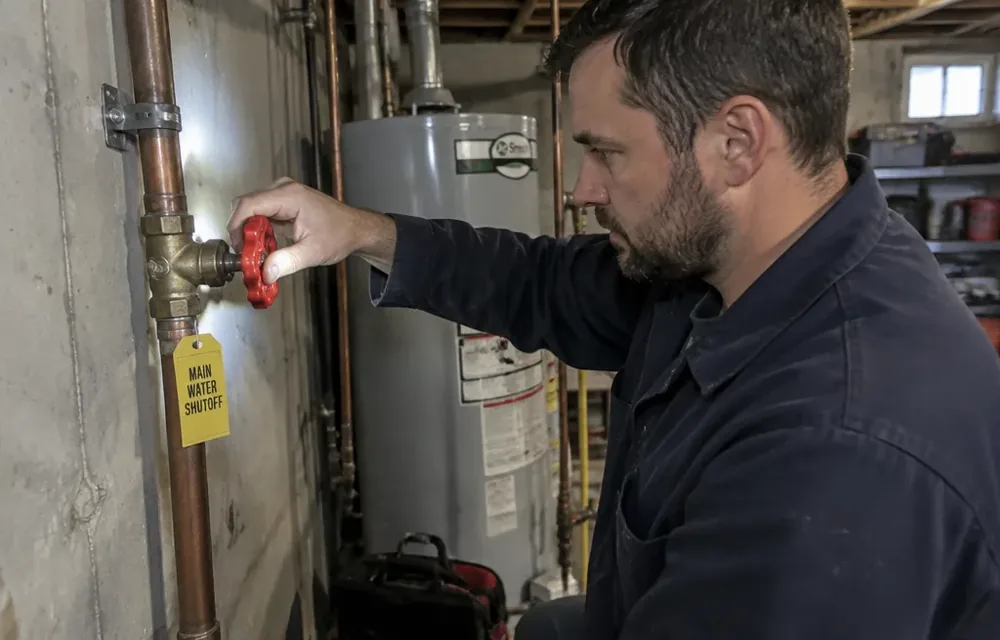
Water control: a stuck angle stop turns a small swap into a floor-wide shutdown, so confirming reachable shutoffs at each fixture matters before parts are ordered. Where stops are missing or seized, daytime correction avoids an after-hours scramble. Sites in Westford and Tewksbury with similar office stock follow the same checklist.
Scheduling work around business hours
Window selection: restroom shutdowns fit early mornings, lunch lulls, evenings, or weekends depending on lease rules and cleaning schedules. Phasing by restroom keeps one facility open while the other is under repair. A short call that lists fixture counts, access hours, and parking sets a workable window.
Containment on site: drop cloths, tool staging near the workroom, and controlled water shutdowns keep lobbies and sales areas clean. Dust and noise stay inside the restroom while partitions and tile remain protected. Staff need only keep water use off the affected branch until retesting is done.
Leak priority: an active supply leak, a toilet that will not stop running at the valve, or waste returning at a floor drain moves ahead of planned swaps. Close the nearest fixture valve first, then the branch or main where needed, and call with what was closed. See emergency response for the make-safe order that limits damage.
Code and planning notes for workplaces
Plumbing code scope: fixture changes and piping alterations in Massachusetts fall under 248 CMR, the Uniform State Plumbing Code, with the Board of State Examiners of Plumbers and Gas Fitters governing who may alter supply and sanitary systems. Permits and inspection run through the town office where piping is opened or fixture counts change.
Fixture choice: durable commercial flush and faucet parts with replaceable cartridges simplify the next service compared with sealed residential trims in a busy restroom. Correct height, clearances, and grab-bar coordination matter during any swap. Fixture installation notes cover what to record before ordering parts.
Scope drivers: fixture count, access above ceilings or below slabs, part availability by brand, and whether camera or jetting equipment is needed shape the plan. Our cost guide explains those drivers without listing figures, so managers can compare windows and phasing on equal terms.
Related services
Frequently asked questions
How do we keep one restroom open during repairs?
Phasing by restroom keeps one facility open while the other is serviced. Work starts on the less-used side with water isolated to that branch, then crews retest and reopen it before moving across. Clear signage and a short staff note prevent use of the closed side. Sharing fixture counts and floor plans on the call helps set the sequence.
Why does the same office toilet keep running?
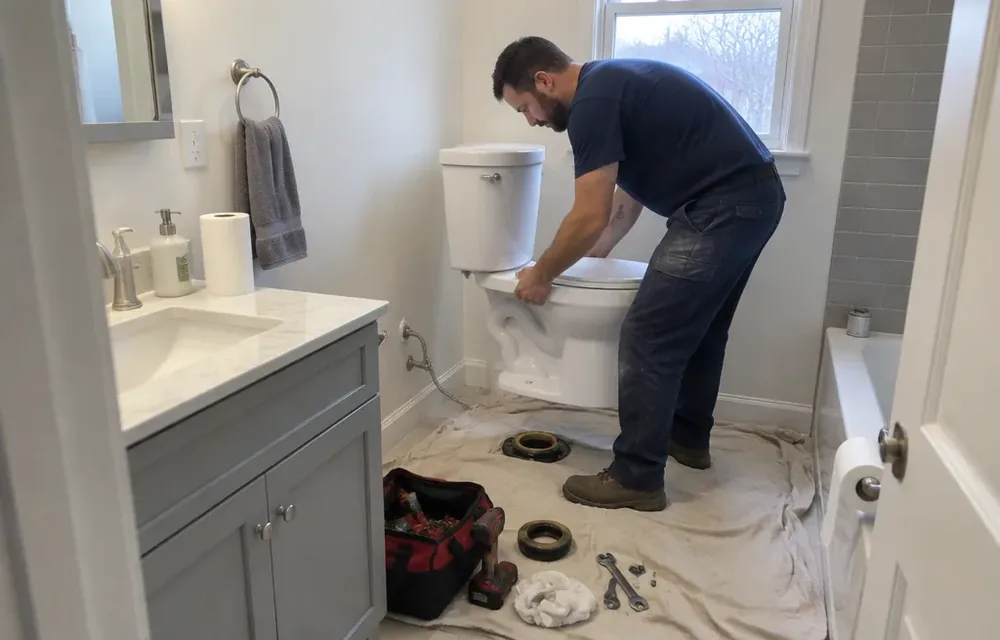
A running toilet usually traces to a worn flapper, a tired fill valve, or a chain that catches under the seal. Heavy daily cycling wears those parts faster than in a home bath. Replacing serviceable internals with matching parts often ends the cycle. Where the bowl or tank itself is cracked or the valve seat is pitted, replacement becomes the durable path.
What causes restroom drain odor in offices?
Odor often traces to a dry trap in a low-use restroom, a failed trap seal, or buildup in an overflow or floor drain. Infrequent flushing lets trap water evaporate, while mop sinks collect organic film. Restoring trap water, cleaning the drain face, and checking vent action usually clears it. Persistent sewer odor with slow drains points to a branch that needs cable and camera work.
When should an office call now rather than wait?
Call now when water keeps spreading, a valve will not stop flow, or waste returns at a drain. Close the nearest fixture valve first, then the branch or main where needed, and keep people clear of wet electrical areas. A single slow lavatory with no overflow can usually wait for a planned window. Describing what was closed and what keeps running sets the priority.
Offices and Retail?
Call and describe the building. A local specialist takes it from there.