How to tell repair from a new fixture
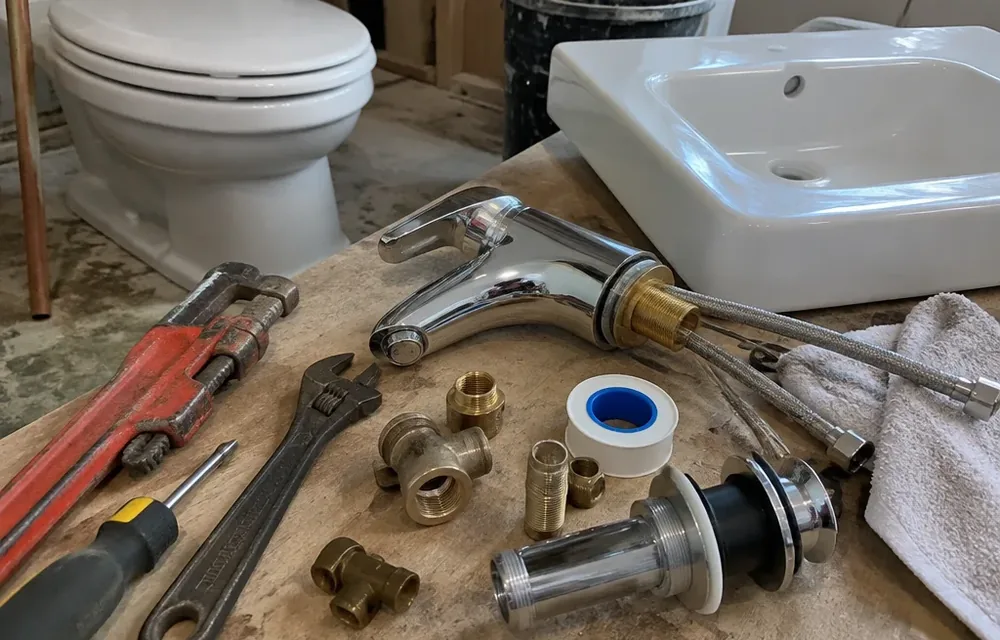
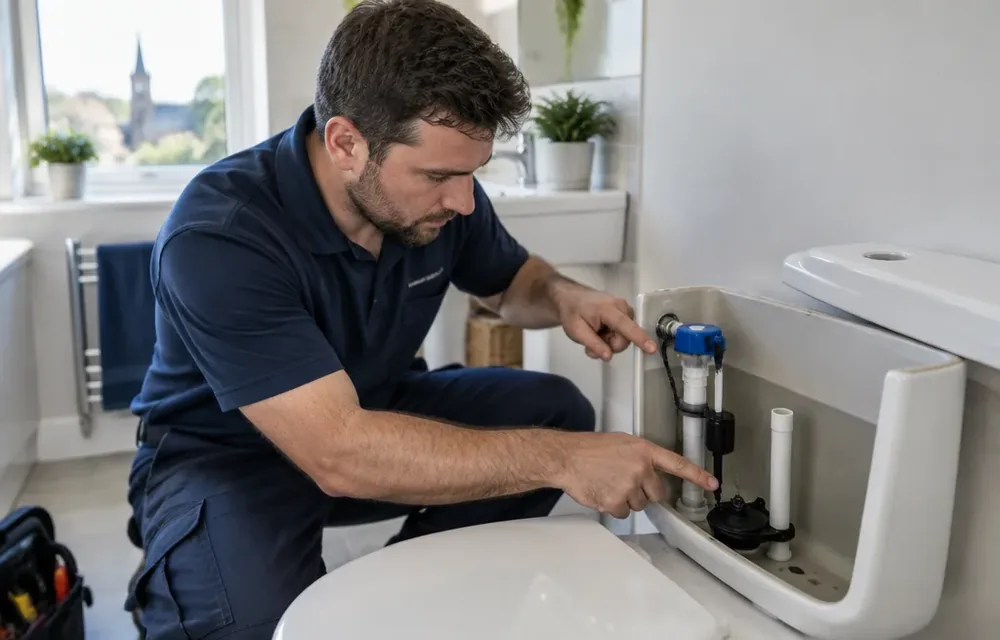
Repair fits: a single-handle faucet with a known cartridge, a toilet with a warped flapper or tired fill valve, and a P-trap with a weeping slip joint often return with cleaning and factory parts. Note the brand and model under the sink or inside the tank lid, because correct parts matter more than force.
Replacement fits: a faucet with a pitted body, a toilet with a hairline tank crack or a chronically staining bowl, and a shower valve with no scald control in an older bath are better swapped than nursed. A base that rocks on a damaged flange needs the flange repaired before any seal will hold. See dripping faucet and running toilet for the tests we run first.
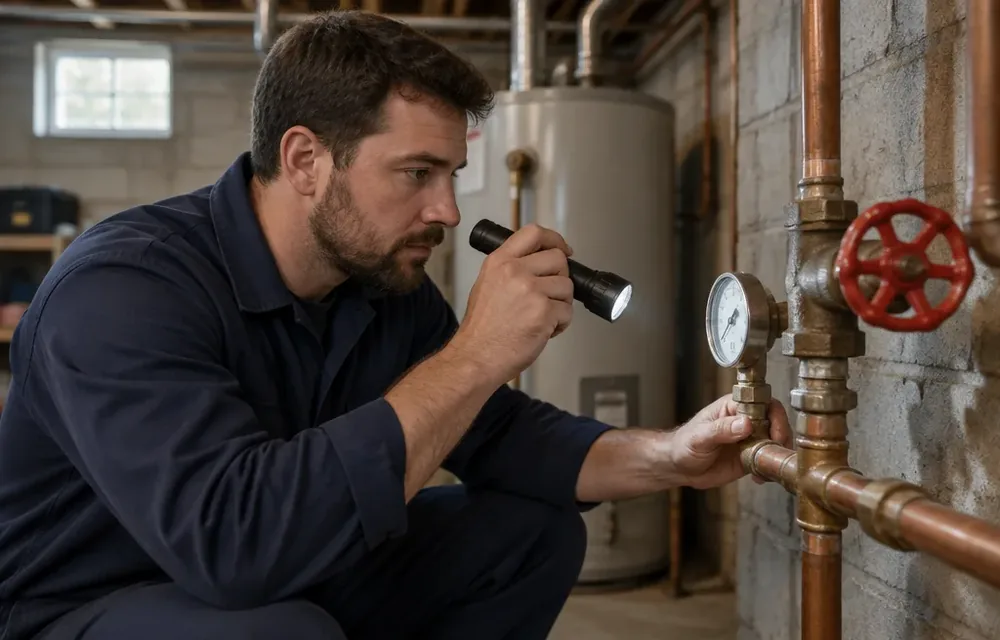
Shutoff check: try each stop gently before work day. Stops that spin, weep, or will not close mean the house main must be used and the stops replaced as part of the job. Tell us what you found so we bring the right valves.
Why fixtures fail around Chelmsford
Hard, mineral-bearing town water leaves scale on aerators, cartridges, and toilet fill valves across Chelmsford. That grit scores ceramic discs and keeps flappers from seating, which is why a cleaned aerator restores flow for a month and then clogs again. Older basement bathrooms and addition baths often have long, cool supply branches where sediment settles and feeds the fixture dirtiest water first.
Galvanized nipples at older stops corrode from the inside and shed rust into new cartridges within weeks if the stops are left in place. High street pressure in some neighborhoods hammers fill valves and supply hoses overnight. Homes on the Lowell Regional Water Utility system see steady pressure, so a missing or tired expansion control shows up first at toilets and heater relief lines.
Options honestly compared
Factory part repair: keeps a sound faucet body or toilet tank with correct seals and cartridges. It fits recent fixtures with available parts and intact finishes, and it keeps the existing footprint and supply positions.
Full fixture swap: a new WaterSense-labeled toilet or a solid-brass faucet with available parts restores shutoff reliability and simplifies future service. Swaps allow us to renew stops, supplies, and seals in one visit rather than layering new parts on tired valves.
Rough and trim upgrades: moving a shower valve for scald protection or raising a toilet flange to finished-floor height involves opening walls or floors and belongs in a small remodel scope. Surface swaps without moving supplies stay simpler and cleaner. We lay out which path your bath needs after testing stops and seals.
What moves the cost
Access and stop condition: an open vanity with working stops keeps labor simple, while a pedestal sink against tile or a toilet with frozen closet bolts adds careful removal time. Replacing stuck stops from the main adds drain-down and soldering or pressing steps.
Fixture type and finish: single-hole, widespread, and wall-mount faucets each need different mounting and seal work, while comfort-height, skirted, or wall-hung toilets change carrier and flange needs. Stone and tile demand slower cutting and sealing than drywall and vinyl.
Seals, supplies, and permits: braided supplies, solid stops, wax or silicone seals, and flange repair parts are separate from the fixture price. Most direct swaps need no permit beyond code-correct methods, while moving drains or supplies may need a permit and inspection under 248 CMR. Our cost guide puts these drivers in context.
When this is the wrong answer
Fixture work is the wrong answer when low water pressure affects the whole house, because the cause sits at the main, a pressure control, or a softener rather than one tap. Whole-house rust that clears after running points to the heater or service line rather than the faucet.
It is also the wrong fix for a sewer odor from a dry trap or a missing cleanout cap, and for a tub that drains slowly because of hair below the stopper. If a toilet backs up into a tub, ask for drain cleaning rather than a new toilet. Describe how many fixtures are affected and we will point you to the right visit.
Standards that apply in Massachusetts
Fixture installation in Massachusetts follows 248 CMR, the Uniform State Plumbing Code, with the Board of State Examiners of Plumbers and Gas Fitters governing trap, vent, shutoff, and anti-scald requirements. Showers need temperature-limiting control, toilets need sound flange and seal practice, and supplies need accessible stops.
We set scald limits to a safe delivery range, confirm trap seals and vent behavior after the swap, and check for cross-connection risks at handheld showers and bidet attachments. Lead-free supply and fixture standards apply to potable connections, and we leave you with stop locations and care notes for finishes.
Signs you need this
Drip that returns after washers
A faucet that resumes dripping within days often has a scored seat or worn cartridge that needs proper parts.
Toilet that runs or rocks
A tank that refills on its own or a bowl that shifts at the base points to flapper, fill, seal, or flange trouble.
Stops that stick or weep
Supply valves that will not close fully turn a simple swap into a water-off job that should be planned, not forced.
What happens on a visit
We try each stop gently, check supply hoses for bulge and rust, and confirm the main shutoff location before parts come out.
We lay drop cloths, pad porcelain and stone, and stage buckets so trap water never reaches the floor.
We cut sealant lines, free closet bolts and mounting nuts with penetrating care, and lift fixtures straight to protect tile and flanges.
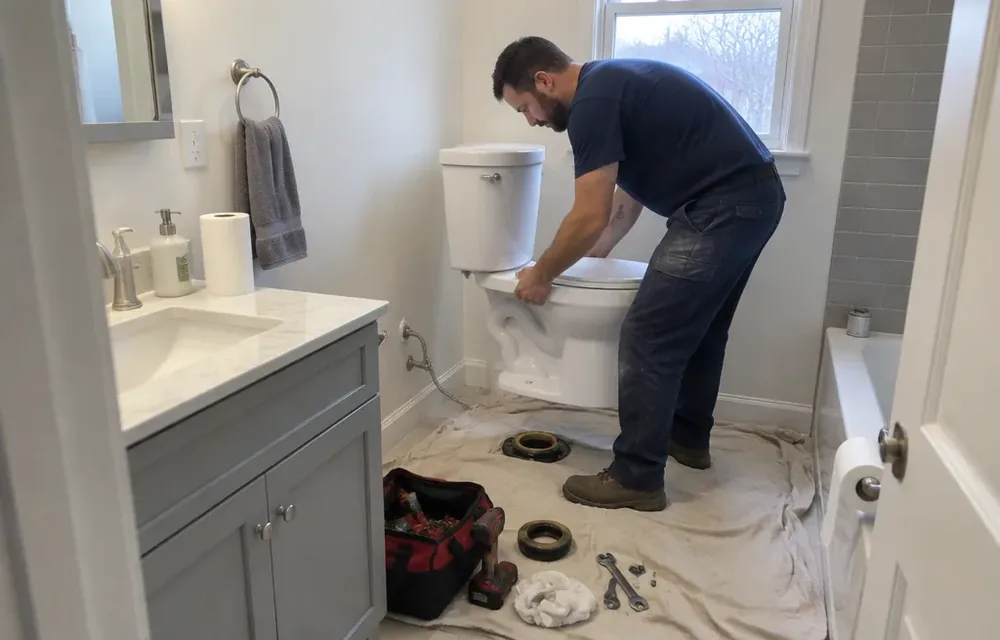
We replace stops and supplies where worn, repair the flange to finished height, set a fresh seal, and level and anchor the new fixture.
We set scald limits, seal with smooth tooling, refill slowly, check joints under pressure, and run hot and cold while watching the trap below.
When this is the wrong answer
Do not book a new toilet for a whole-house pressure drop, a dry trap odor, or a main-line backup that lifts a tub, because the fixture is not the cause. Do not swap a faucet that only needs an aerator cleaning or a factory cartridge. If water appears at the toilet base with rocking, or a stop will not close at all, that is the opposite case and a planned visit with stops and seals on hand will save a second trip.
Related reading

Where it comes up
Lowell
Triple-decker stacks and shared building drains.
Lawrence
Triple-decker stacks and shared drains.
Chelmsford
Chelmsford sits between Lowell and Westford where the Concord River joins the Merrimack along the North Chelmsford line, so river-low basements and town-center colonials share one dispatch map.
Billerica
Capes with crawl-space plumbing and knee-wall baths.
Dunstable
Dunstable sits northwest of Chelmsford past Westford's back roads, a spread of fields, woods, and quiet lanes rather than a dense center.
Pepperell
River-town grit in the lines.
Related services
Frequently asked questions
Why does my faucet keep dripping after a repair?
A returning drip usually means a scored seat, the wrong cartridge, or grit from an old stop feeding the new part. Hard water scale in Chelmsford scores discs quickly when stops shed rust upstream. Replacing stops and supplies with the cartridge, then flushing the branch before fitting parts, breaks the cycle more reliably than another washer alone.
Why does my toilet run every few minutes?
A toilet that refills on its own usually passes water through a warped flapper or a cracked overflow tube. Dye in the tank that appears in the bowl without a flush proves the leak path. Fill valves with grit stick open and add to the waste. Replacing the flapper and fill as a set with a tank cleaning solves most cases. See running toilet fixes.
Should I repair or replace an old toilet?
Repair fits a sound bowl and tank with available flapper and fill parts and a solid flange. Replacement fits cracks, chronic staining that resists cleaning, a wobbling base on a damaged flange, or a design that always clogs. Comfort height and water use shape the new choice. We test the flange and stops before recommending either path.
Why is water pressure low at one faucet?
Low flow at one tap usually traces to a clogged aerator, a scaled cartridge, or a partially closed stop rather than the town main. Remove and rinse the aerator first and note whether hot, cold, or both are weak. Whole-house weakness points to pressure control or treatment equipment instead. Read low pressure causes for the sequence.
Can a homeowner replace a faucet or toilet in Massachusetts?
Homeowners can clean aerators, replace a flapper, and adjust a fill level by hand. Altering supply piping, resetting a toilet seal, and moving drains or vents fall under 248 CMR and the Board of State Examiners of Plumbers and Gas Fitters and are best handled by a license holder. A rocking bowl or a stuck stop is a good point to call rather than force parts.
What should I do if a supply valve will not shut off?
Leave a stuck stop alone rather than forcing it with pliers, which often snaps the stem and starts a spray. Close the next upstream valve or the house main, open a low tap to relieve pressure, and call us with the fixture location. We replace the failed stop and supplies as part of the fixture visit so the next service is simple.
Need fixture installation, faucets and toilets in Chelmsford?
Call now and describe what is happening. A local specialist takes it from there.