How to tell what your water needs
Hardness signs: soap that will not lather, stiff laundry, and white scale on kettles and aerators point to calcium and magnesium. Note whether spots wipe off with vinegar, because hardness scale dissolves while silica and film do not. A simple hardness strip plus heater sediment history usually confirms the call.
Iron and odor signs: rusty slugs after stagnation, orange toilet tanks, or a rotten-egg smell at one tap differ from whole-house hardness. Run cold and hot separately at several taps, because odor only at the hot tap points to the anode and tank rather than the well or main. See rusty water and softener issues for the patterns we test.
Flow and pressure signs: whole-house flow that fades over months often traces to a loaded sediment filter, a scaled softener bed, or a clogged main screen rather than the town supply. Record filter age, bypass behavior, and whether flow returns on bypass, because that isolates treatment from plumbing.
Why water behaves this way around Chelmsford
Most Chelmsford homes on town supply receive water through the Lowell Regional Water Utility system serving Chelmsford with Lowell, Dracut, and Tyngsborough, treating about 4.6B gallons per year across the system, while nearby Billerica Water Works treats at its Treble Cove Rd plant. That surface supply is tested and reliable, yet it still carries hardness and minerals that scale heaters, cartridges, and boiler makeup over time. Outlying homes on private wells near Dunstable, Groton, and Carlisle add iron, manganese, and sediment that town mains do not bring.
Older galvanized branches and long cool basement runs collect that mineral load first, so two homes on the same street can show different staining and flow. Water heaters and boilers concentrate the effect because heat bakes minerals onto elements and exchanger walls. Seasonal main flushing can also stir sediment that loads filters for a week after hydrant work.
Options honestly compared
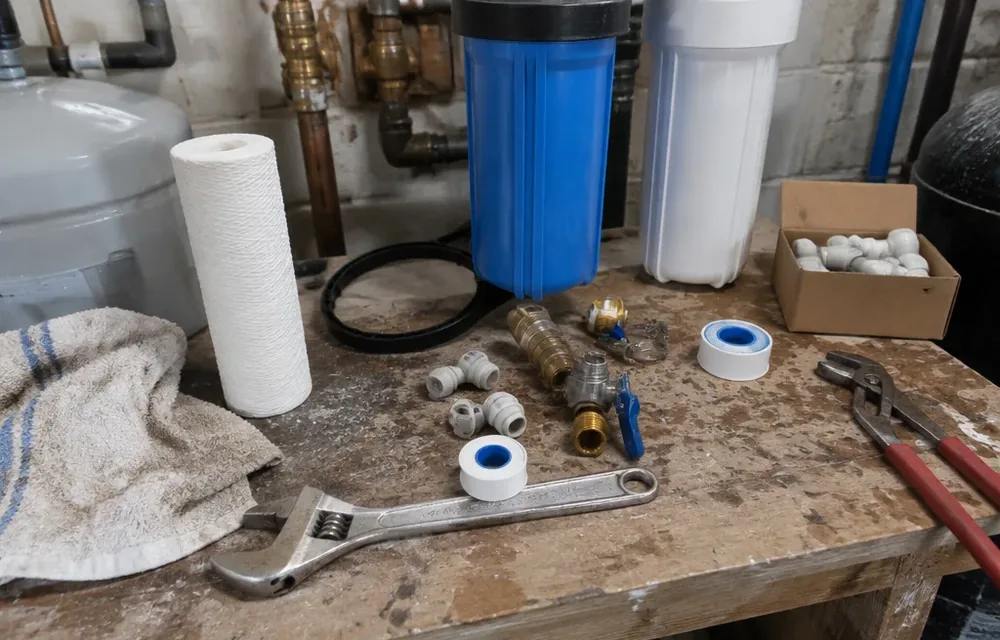
Sediment filtration: a properly sized prefilter protects softeners, heaters, and cartridges from sand and rust slugs with simple cartridge changes. It fits town and well homes with visible particulate and keeps downstream equipment honest. It does not soften hardness or remove dissolved iron alone.
Softening for hardness: an ion-exchange softener sized to grains, flow, and household use removes calcium and magnesium that spot fixtures and scale heaters. It needs drain, power, and salt or potassium planning plus bypass valves for hose bibs and irrigation where you want hard water left in place.
Iron, odor, and drinking-water filters: dissolved iron and manganese need oxidation and media filtration rather than softening alone, while taste and odor at the kitchen tap often fit a point-of-use carbon or reverse-osmosis unit rather than whole-house media. We test first so each problem gets its own stage. For heater context, see water heater choices and read hard water in Chelmsford before choosing media.
What moves the cost
Testing and sizing: hardness grains, iron level, flow rate, and fixture count decide media volume and valve size more than the brand sticker does. A home with high-flow showers and a large soaking tub needs a different valve than a small cape with one bath.
Space, drain, and power: basement room for tanks, a code-correct drain for backwash, nearby power, and bypass piping each shape labor. Tight corners with the boiler and heater nearby add careful repiping time, while long runs to the kitchen for drinking-water lines add tubing and trim work.
Permits and maintenance: treatment tie-ins follow 248 CMR for backflow, air gap, and drain practice, with permits where piping is altered. Media life, salt use, and cartridge intervals are ongoing factors beyond install day. Our cost guide explains these drivers without quoting a figure here.
When this is the wrong answer
Treatment is the wrong answer when a single aerator clogs from construction debris, a water heater anode causes hot-only odor, or low pressure at one tap traces to a scaled cartridge rather than supply chemistry. Those need cleaning or heater service rather than whole-house media.
It is also the wrong first step for lead service lines, where line replacement and flushing guidance matter more than a filter alone, and for a softener that no longer softens because the valve or resin needs service rather than a second unit. Test results should precede any equipment choice.
Standards that apply in Massachusetts
Treatment tie-ins in Massachusetts follow 248 CMR, the Uniform State Plumbing Code, with the Board of State Examiners of Plumbers and Gas Fitters governing potable connections. Backflow protection, air-gap discharge, and proper drain connections are code matters, and cross-connections with softener drains or filter waste lines must be prevented.
We fit full-bore bypasses so the home keeps water during service, label valves and drains, and set backwash timing to avoid septic overload where a private system is present. Drinking-water units get dedicated faucets with air-gap practice, and we leave test readings and cartridge schedules with you.
Signs you need this
Spots and scale on fixtures
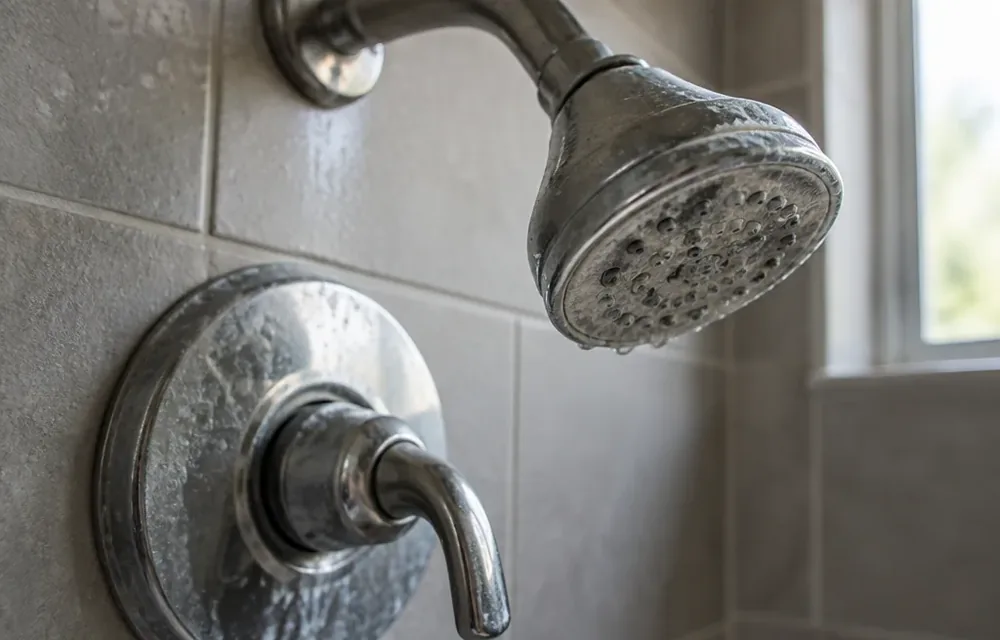
White crust on aerators and shower glass that returns within weeks points to hardness rather than soap.
Rust streaks or metallic taste
Orange rings, brown slugs after time away, or a metallic tang suggest iron or manganese that needs its own filter.
Heater rumble and short element life
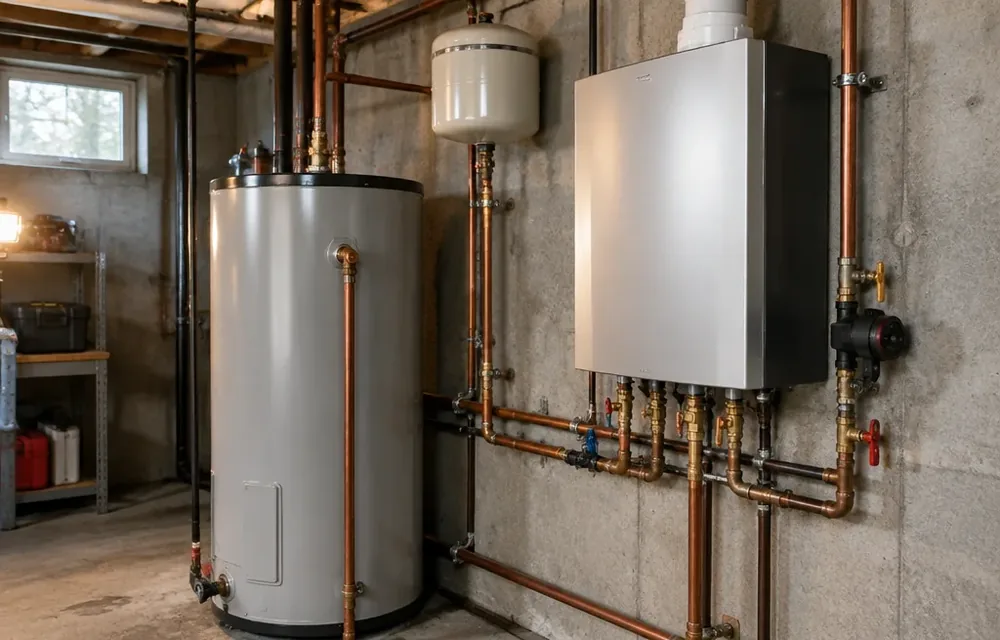
Popping tanks and elements that fail early often trace to sediment baking on heat surfaces.
What happens on a visit
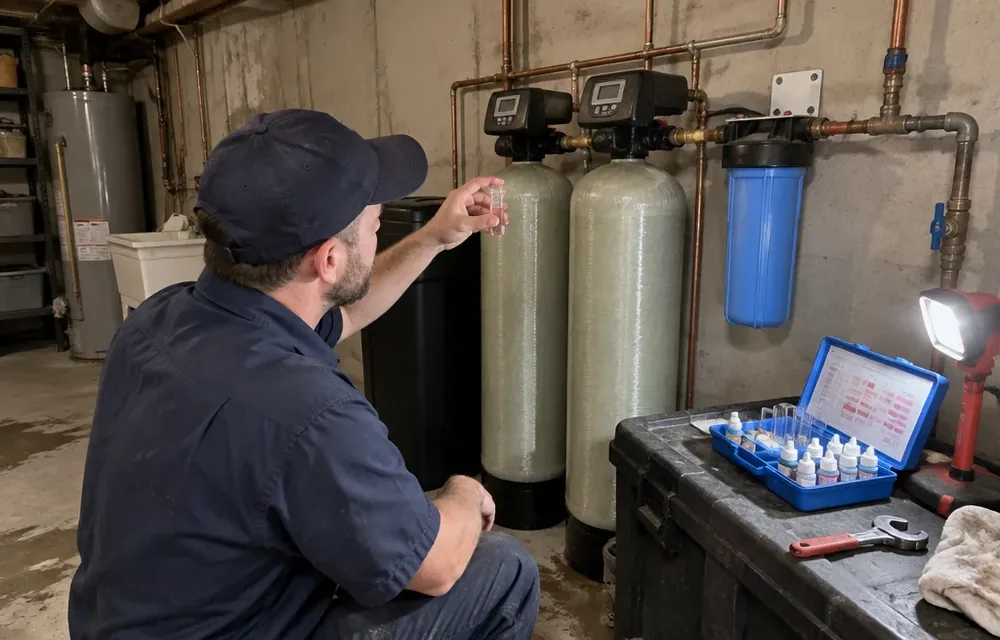
We test hardness, iron presence, and sediment behavior at several taps. We check heater drain water and note filter and softener history.
We count baths, note high-flow fixtures, and measure basement room for tanks, drain access, and power for valves.
We match media volume and valve flow to test results and peak use, keeping hose and irrigation on hard water where you prefer it.
We pipe sediment, softening, and specialty stages with full-bore bypasses, code-correct drains, and labeled valves for service.
We program backwash, flush media, retest hardness and clarity at taps, and leave salt, cartridge, and service intervals in writing.
When this is the wrong answer
Do not book whole-house treatment for a single clogged aerator, hot-only odor from an anode, or a dripping faucet that only needs parts. Do not add a second softener when the existing unit only needs valve service or resin cleaning. If rust appears only after time away, or flow returns on bypass, describe the pattern on the call and we will test before recommending media, because cleaning or heater service often fits better.
Related reading

Where it comes up
Related services
Frequently asked questions
Do I need a water softener in Chelmsford?
A softener fits when testing shows hardness that spots fixtures, scales heaters, and stiffens laundry despite normal soap use. Town supply through the regional system still carries minerals that build over time, while wells add their own load. Test grains and flow first, because softening without numbers often sizes wrong. Our visit pairs hardness readings with heater and fixture history.
What removes iron and rust stains?
Dissolved iron and manganese need oxidation and media filtration sized to level and flow, not softening alone. Orange rings and brown slugs after stagnation point to iron, while black specks can mean manganese. A prefilter catches particulate, then iron media handles dissolved load. Testing separates the two so cartridges are not asked to do media work.
Will treatment improve water pressure?
Treatment restores flow when a loaded sediment filter, scaled softener bed, or clogged screen is the restriction, and bypass testing proves it in minutes. It will not fix a partially closed main valve, a failed pressure control, or a scaled branch that needs pipe work. We test on bypass and at several taps before recommending media changes. See low pressure causes.
Where should treatment equipment go?
Equipment usually sits in the basement near the water entry with room for tanks, a code-correct drain for backwash, power for valves, and full-bore bypasses. Hose bibs and irrigation often stay on hard water to save salt and keep plants happy. Tight rooms with the boiler and heater need careful repiping so service clearance remains.
Can a homeowner install filters in Massachusetts?
Homeowners can change listed cartridges in existing housings and note pressure and taste changes. Cutting potable piping, adding backwash drains, and altering valves fall under 248 CMR and Board rules and belong with a license holder. If flow drops after a cartridge change or the drain connection looks makeshift, call us to correct the tie-in.
How often does treatment need service?
Service intervals rest on water use and test results rather than a fixed season. Sediment cartridges load faster after main flushing, softener salt use follows grains removed, and iron media needs backwash checks. Annual testing with cartridge and valve checks keeps results steady. We leave a schedule based on your readings, not a generic card.
Need water treatment and filtration in Chelmsford?
Call now and describe what is happening. A local specialist takes it from there.