How to tell what your basement needs
Pump service need: a pump that works but cycles fast, chatters the check valve, or leaves the pit high usually needs float adjustment, a new check, or a cleared intake and discharge. Note the cycle time during rain, because a one-minute cycle differs greatly from a ten-minute cycle.
Replacement need: a unit that trips the breaker, shows a cracked housing, or cannot keep up even with a clear path has reached its limit. Age matters less than gallons moved per cycle and whether the motor still reaches shutoff head. See sump pump failure and wet basement for the checks we run.
System need: water entering far from the pit, multiple seeps along the wall joint, or a pit that stays dry while the floor wets elsewhere points to collection and grading rather than pump size. Walk the basement during rain and mark where water first appears, because that path sizes the fix.
Why basements wet around Chelmsford
Chelmsford sits among Concord and Merrimack river lowlands with pockets of high seasonal water table and tight soils that hold spring melt. Many colonials and split-levels have block foundations with a cold joint where wall meets footing, and that joint weeps first when groundwater rises. Finished basements hide the early beading behind baseboards until carpet damps or paint blisters.
Short downspouts that end at the foundation, sump discharges that loop back to the house, and patios pitched toward the wall all add roof water to groundwater load. Power flickers during storms stall pumps at the worst hour, which is why pits that behaved for years suddenly flood a finished room. Perimeter drains that silt with age also leave the pit dry while the slab edge wets.
Options honestly compared
Pump swap in a sound pit: a correctly sized primary pump with a new check valve, sealed lid, and clear discharge restores reliable lift with the least work. It fits pits with sound inlets and a discharge that already carries water away from the house.
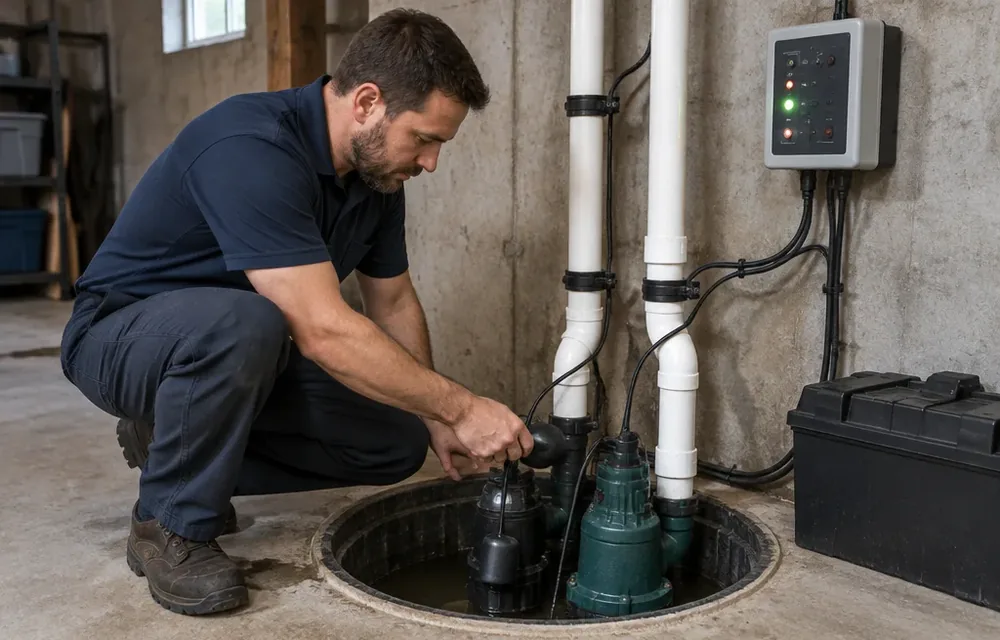
Primary plus backup: a battery or water-powered backup carries the pit through outages and primary faults, with an alarm that tells you it ran. Battery backup fits finished basements where even one miss ruins flooring, while water-powered backup fits homes with strong town pressure and code-allowed connections. Compare battery backup choices before storm season.
Pit, inlet, and discharge rework: enlarging the pit, adding sealed inlets, extending discharge well past the foundation, and adding freeze-resistant terminations fix collection rather than just lift. Grading and downspout extensions belong in the same plan because they cut inflow at the source. Read basement flooding guidance for the full sequence.
What moves the cost
Pit and access: a ready pit in an open basement keeps labor simple, while cutting a new pit through slab, working around finished walls, or hauling stone through tight stairs adds time and restoration. Sealed lids and radon-aware details add fittings where needed.
Pump type and backup: primary capacity, switch type, alarm, and battery or water-powered backup each change equipment and wiring. Long discharge runs, freeze guards, and exterior trenching for a proper outlet add material and digging factors.
Electrical and permits: a dedicated outlet with ground-fault protection where required, plus any plumbing changes to discharge, shape the scope under 248 CMR. Emergency flood response carries different labor factors than a scheduled dry-weather install. Our cost guide explains these drivers without promising a figure here.
When this is the wrong answer
A new pump is the wrong answer when roof water causes the wetting, with downspouts ending at the wall and grading pitched toward the house. In that case extensions and grading cut more water than a larger motor ever will. A plumbing leak from a washer hose or water heater can also mimic seep by pooling at the low corner.
It is also the wrong fix for storm drain flooding that enters through window wells or bulkhead doors above slab level. If water comes through the wall face rather than the floor joint, or the pit stays dry while walls wet, describe the entry path on the call and we will chase collection and drainage rather than pump size.
Standards that apply in Massachusetts
Sump discharge and check valve work in Massachusetts follows 248 CMR, the Uniform State Plumbing Code, with the Board of State Examiners of Plumbers and Gas Fitters governing connections to sanitary and storm systems. Discharge must go to an approved point and must not create a nuisance or freeze hazard across walks, and cross-connections with potable water need proper protection.
We fit check valves with the flow arrow correct, support vertical piping to limit hammer, seal lids where soil gas control matters, and place alarms where you will hear them. Electrical supply follows code for basement and damp locations, and we leave pit, valve, and backup test steps marked for you.
Signs you need this
Pit water that never drops
A pump that runs for hours after rain or a pit that stays near the rim points to inflow, check, or discharge trouble.
Pump that hums but moves nothing
A motor sound with no discharge often means a stuck float, clogged intake, or failed check valve rather than a dead motor.
Damp slab edge after storms
Water beading at the wall and floor joint after rain means the perimeter path overwhelms the current pit and pump.
What happens on a visit
We time pit cycles during wet weather, test the outlet, and check the breaker and float travel. We trace where water first enters.
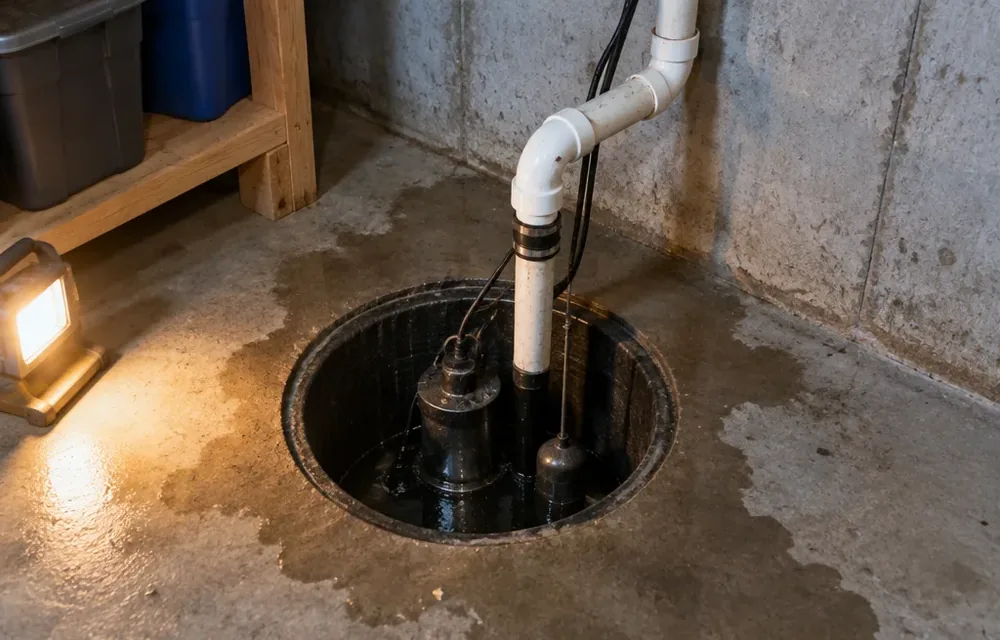
We clean the pit, intake screen, and check valve. We run a hose test to confirm the discharge carries outside without looping back.
We match lift height, run length, and inflow rate to a pump curve rather than box size. We confirm the pit volume supports the switch span.
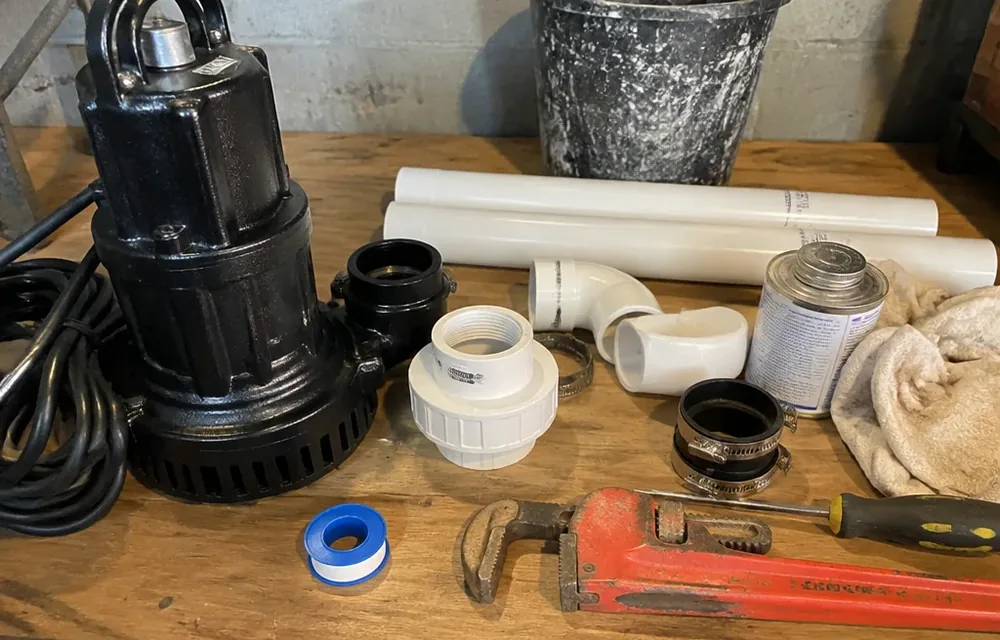
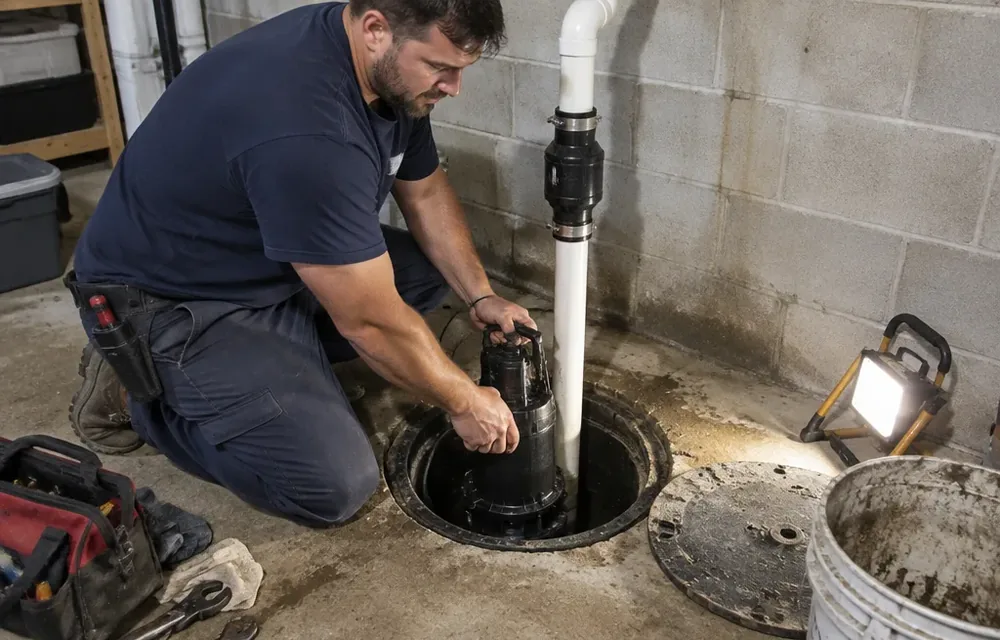
We set the primary with a new check, sealed lid, and alarm. We add battery or water-powered backup where the basement finish warrants it.
We fill the pit to prove on and off levels, verify outside discharge in freezing and thaw positions, and leave test and battery care steps.
When this is the wrong answer
Do not book a larger pump for a basement that wets from window wells, bulkhead doors, or downspouts ending at the wall, because lift is not the limit. Do not add backup power to a pit with a clogged intake or a discharge that ends at the foundation. If the pit stays dry while walls wet, or a washer hose is the source, ask for drainage and leak diagnosis first and we will point you to grading, discharge, or plumbing repair instead.
Related reading
Where it comes up
Related services
Frequently asked questions
Why does my sump pump run all the time?
Constant running usually means high inflow, a check valve letting water fall back, or a float set with too short a span. Watch whether discharge outside is strong and continuous or weak and recycling near the house. A pit that never drops after dry days points to groundwater or a stuck control rather than normal rain response. We time cycles and test the check first.
Do I need battery backup for my sump pump?
Backup fits finished basements, high water table lots, and streets where storms flicker power at the worst hour. Battery units carry the pit for hours with an alarm, while water-powered units use town pressure where code allows. Unfinished storage basements with rare seep may not need it. Compare battery backup and weigh flooring risk.
Why is water coming up through my basement floor?
Water at the slab edge or through cracks usually rises with groundwater after rain and melt rather than from a plumbing leak. The wall and footing joint weeps first, then low cracks. Plumbing leaks pool near the appliance and run regardless of weather. Mark where water first appears during rain, because that path tells whether the pit system or the plumbing needs attention.
Where should sump water discharge?
Discharge should carry well past the foundation to daylight or an approved storm point, never back against the wall or across a walk where it freezes. A freeze-resistant termination and a small relief opening prevent ice lock in Chelmsford winters. Short outlets that end at the mulch bed recycle the same water all night. We extend and support the run as part of the install.
Can a homeowner install a sump pump in Massachusetts?
Homeowners can test floats, clean pit debris, and check outlets and alarms. Cutting slab, altering discharge piping, and making electrical changes fall under 248 CMR and related codes and are best handled by qualified trades with proper permits where needed. If the pit needs cutting or the discharge ties toward town systems, call us for the plan.
How long does a sump pump last?
Service life rests on cycles, grit, and power quality rather than a fixed calendar. A pump that cycles every few minutes in spring wears faster than one that runs a few storms per year. Stuck floats and failed checks kill more pumps than motors do. Annual cleaning, check testing, and alarm checks do more for life than upsizing alone.
Need sump pump installation in Chelmsford?
Call now and describe what is happening. A local specialist takes it from there.