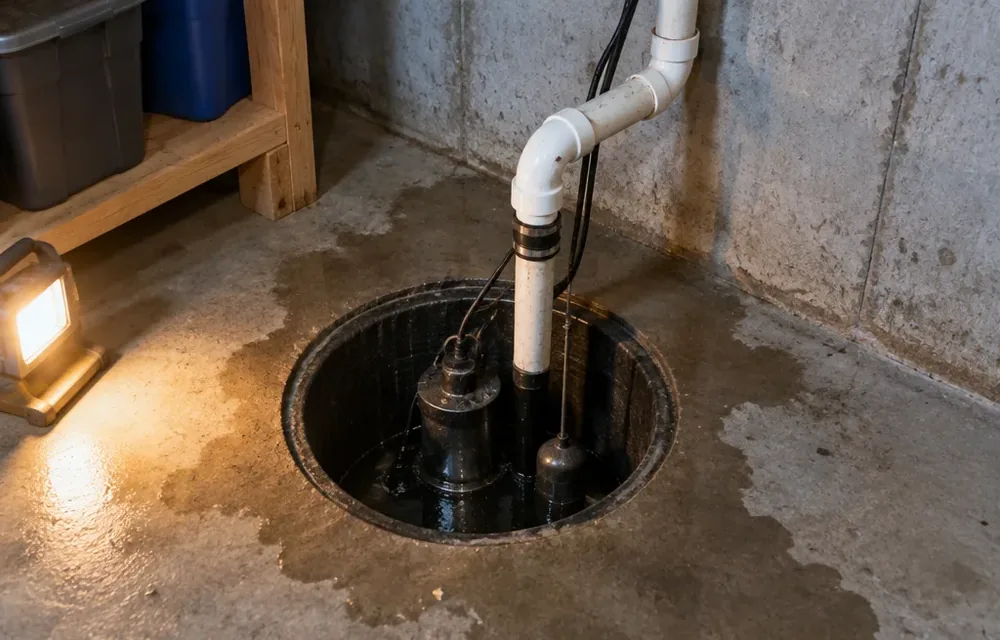
How does water reach a basement floor?
Water entry mechanism: Water reaches a basement floor through walls and joints, up through slab cracks, or back through floor drains when the drain path is blocked. Heavy rain and rapid thaw raise the water table so pressure pushes moisture through the smallest seam. Surface runoff adds load when gutters and grading send roof water toward the foundation rather than away from it.
Sump pit role in the path: A sump pit sits at the low point to intercept that arriving water before it spreads across finishes. Perforated collection piping or a gravel bed guides seepage toward the pit, where a float switch starts the pump and lifts water to a discharge line. A check valve on the discharge keeps lifted water from falling back into the pit when the pump rests. That small loop of pit, pump, switch, valve, and discharge forms the core to inspect first, as sump pump installation shows in how those parts stage together.
Discharge path matters as much as the pump: A pump that runs yet discharges against a frozen, crushed, or clogged outlet simply recycles the same water. Discharge should release well away from the foundation on a slope that carries water off, with an air gap and freeze aware routing where winters bite. When discharge ends beside the wall, water returns to the pit and short cycles the pump. Walk the outlet path in daylight as part of any wet floor review.
What causes flooding and how do you tell causes apart?
Flood cause groups: Flood cause groups divide into ground water seepage, surface runoff, sump system failure, and sewer or drain backup. Each group leaves a different mix of clarity, smell, location, and timing that helps you tell one from another. Placing your water in the right group keeps the next step correct.
Seepage versus runoff versus backup: Clear cool water along wall to floor joints after rain points to seepage under pressure, while water near doors, windows, or stairwells after downpours points to surface runoff finding an entry. Water that rises in floor drains or low tubs with odor and waste traces points to a drain or sewer backup rather than ground water. If stopping indoor water use halts the rise, the drain path is suspect, while steady rise with no indoor use points to ground water load. That distinction decides between sump review and drain review with sewer line repair and replacement.
Pump failure signatures: A silent pump with a high pit level during rain points to power, switch, or motor trouble. A humming pump with little discharge points to a stuck check valve, clogged intake, or blocked outlet. Rapid on and off cycling points to a misset float or water falling back through a failed check valve. Note sounds, pit level, and outlet flow before touching anything electrical, notes that speed diagnosis alongside drain cleaning history when backups overlap with storms.
What should you check in order when the floor turns wet?
Ordered wet floor checks: Ordered wet floor checks start with power and contact safety, then stop added water, then read the pit and discharge before calling. That order keeps you from stepping into water near live power to reach a pump that needs an electrician safe approach. Keep children and pets away from wet and waste areas throughout.
Safety and source pause: Stay clear of outlets, cords, and the boiler or heater area when water reaches them, and avoid the panel when standing in water. Stop washers, showers, and dishwashers when drains are suspect so you do not add to a backup. For clear seepage, move rugs and storage off the floor and set towels at the edge of spread to slow travel. This pause and protect stage mirrors triage in what counts as an emergency.
Pit, power, and outlet read: Look at pit level, listen for the pump, and check whether the outlet outside is flowing, frozen, or buried. Confirm the breaker serving the pump without standing in water, and note whether a battery backup is present and alarming. Photograph pit level and outlet conditions for the call. Call (978) 592-1168 with that account for homes in Chelmsford, Woburn, and Billerica.
Sump and flood choices compared side by side
Choice comparison: Sump and flood choices differ in power needs, maintenance, and whether they move ground water or address waste water. The right mix depends on storm behavior, outlet routing, and whether backups share the same wet events. The table below keeps those roles distinct.
Primary pump versus backup power: A primary pump handles routine seepage when power holds, while a battery backup or secondary power path carries the pit through outages that often arrive with the same storms that raise water. A backup does not fix an undersized pit or a blocked outlet, so those basics come first. Alarm alerts for high water add early warning when the pit rises faster than the pump clears it. Review sump pump battery backup once the primary path is sound.
Sump versus drain versus surface fixes: Sump work moves ground water that arrives through soil and seams. Drain and sewer work restores waste paths that back up through fixtures and floor drains. Gutter, grading, and outlet routing reduce surface load before it becomes ground load. Treating a sewer backup as a sump failure wastes a storm, as does treating runoff as a pump defect, a split that links this guide to sewer line repair and replacement and to hydro jetting where line scale and roots recur.
| Choice | What it handles | Power and upkeep | Limit to know |
|---|---|---|---|
| Primary sump pump with check valve | Routine seepage to pit | Needs steady power with periodic pit cleaning | Cannot overcome blocked outlet or no power |
| Battery backup and high water alarm | Outages and fast pit rise | Needs charged battery with test routine | Adds time, not unlimited run |
| Outlet routing and freeze care | Water leaving the home for good | Needs clear slope away from wall | Frozen or crushed outlet recycles water |
| Drain cable plus camera review | Waste backup through low drains | Needs equipment visit with diagnosis | Does not lower ground water pressure |
| Gutters and grading fixes | Roof and surface water near wall | Needs seasonal clearing and slope | Cannot seal a high water table alone |
Why Chelmsford basements take water the way they do
Chelmsford basement pattern: The Chelmsford basement pattern centers on finished lower levels where the heater, boiler, washer, and main share one room with storage and living space. That shared room means even shallow water finds finishes, equipment, and paper goods together. Early pit and outlet checks pay off more here than in unfinished cellars.
Rain, rivers, and housing stock: Spring rain and rapid thaw lift the water table near river lowlands, so sump calls cluster after storms that soak yards for days. Colonials near the center, capes with low pits, and subdivisions with long branch drains each show different first signs, from wall joint dampness to low shower backup. Much of Chelmsford draws town water through the Lowell Regional Water Utility system, which moves about four point six billion gallons per year for about one hundred thirty five thousand customers across Lowell, Dracut, Tyngsborough, and Chelmsford, while Billerica Water Works serves nearby areas from its Treble Cove Rd plant. Those supply facts sit beside storm load to explain why one wet week can bring both seepage and backup calls, as local notes for Dunstable and Groton reflect for similar lowland exposure.
Cost context without promises: One national cost guide reports sump installation around one thousand three hundred sixty three dollars alongside related drain figures such as sewer cleaning around two hundred fifty one dollars and camera work around three hundred seventeen dollars. Those figures come from the ProMatcher Massachusetts cost report as third party estimates for context, not our prices. Pit depth, outlet length, power needs, and finish protection move any real plan away from averages. Use that report to learn drivers to ask about, then rely on an on site look with sump pump installation in view.
Limits of pumps, sealers, and quick fixes
System limits: System limits show where a pump, sealer, or quick fix stops helping and a different trade path begins. A pump cannot lower the water table, seal wall cracks against pressure, or clear a blocked sewer. Paint on sealers cannot hold back sustained pressure through joints and slab seams.
What quick fixes miss: A larger pump on a blocked outlet only cycles harder against the same blockage. A new check valve on a misset float still short cycles when levels are wrong. Bleach and fans mask odor while damp insulation and subfloor hold moisture that feeds later trouble. Those misses explain why diagnosis should precede parts, while drying of finishes and camera review after backups form part of the real closeout with leak detection and burst pipe repair where supply is also suspect.
Permit and code edge: Sump discharge routing, new circuits for pumps and alarms, and any opening of drain piping can trigger permit and inspection needs through the town inspector. Plumbing work in Massachusetts falls under Two Forty Eight CMR, the Uniform State Plumbing Code, through the Board of State Examiners of Plumbers and Gas Fitters on mass dot gov. Confirm discharge and electrical plans before trenching or wiring. That boundary is explained further in homeowner plumbing rules.
When should you call about a wet basement or sump?
Wet basement call judgment: Wet basement call judgment rests on rise rate, water type, power safety, and whether the pit is gaining on the pump. Rising water near outlets, waste with odor, a silent pump with a high pit in rain, or a backup that grows with each flush all point toward help now. Slow dampness along one joint with a working pump and clear outlet often fits prompt daytime review.
What to report on the call: State where water enters, whether it is clear or carries odor and waste, how fast it rises, and what the pit and outlet show. Add power safety, backup battery state, recent rain, and which fixtures share trouble. Mention gutter overflow and grading that sends water toward the wall. That brief speeds triage for Chelmsford, Tyngsborough, and Concord.
How the visit proceeds: Call (978) 592-1168 and keep people clear of water near power while help is arranged. Keep fixtures off when waste is present and keep the path to the pit open and lit. The visit will confirm safety, separate seepage from backup, test pump, switch, valve, and outlet, and lay out next steps with sump pump installation or drain review where the evidence leads.
Near you
When to call
Related guides
Frequently asked questions
Why is my basement flooding when it rains?
Rain lifts the water table so pressure pushes seepage through wall joints and slab seams faster than the pit clears it. Blocked outlets, failed check valves, and power loss during storms add to the rise. Note entry points, pit level, and outlet flow for the call. Surface runoff from gutters and grading can add load that looks like pump failure.
How do I know if my sump pump failed?
A silent pump with a high pit in rain points to power, switch, or motor trouble. Humming with little discharge points to a stuck valve, clogged intake, or blocked outlet. Rapid cycling points to float setting or fallback through a failed valve. Note sounds and levels without standing in water near power. Call (978) 592-1168 when the pit gains on the pump.
Is basement water sewage or ground water?
Clear cool water along joints after rain usually means ground water seepage. Water rising in floor drains or low tubs with odor and waste traces usually means drain or sewer backup. Stopping indoor use helps tell them apart, since backup rise pauses while seepage continues. Keep fixtures off during suspected backup and keep clear of waste contact.
What does sump installation involve?
Installation centers on pit placement at the low point, collection paths that feed the pit, a sized pump with float control, a check valve, and discharge routed well away from the wall. Power, alarm, and backup needs shape the plan, as do finish protection and permit steps. One national cost guide reports a four figure third party estimate for context only, not our prices.
What should I do right now with water rising?
Stay clear of outlets and the heater area, stop washers and showers when drains are suspect, and read the pit and outlet without entering deep water. Move storage off the floor and photograph levels for the call. Keep the path to the pit open. Read what counts as an emergency while you wait for help.
Still stuck?
Describe what you see when you call and a local specialist will guide the next step.