How to tell what your gas line needs
New branch need: a new appliance location with no capped stub nearby needs a run sized from the meter or a sound manifold, with a shutoff in the same room and within reach. Note the appliance input rating on the plate and the run length through joists, because both size the pipe.
Correction need: a flexible connector through a wall, a shutoff hidden behind fixed panels, or a line with no sediment trap at a furnace or boiler should be corrected even when gas flows fine today. Corrugated stainless with missing bonding where required also belongs on the correction list.
Leak or odor response: a gas smell near piping, a hissing joint, or a carbon monoxide alarm with fuel equipment running is a utility and safety call first. Leave the building, avoid switches and phones inside, and call the gas utility and fire service. Piping work starts only after the scene is declared safe.
Why gas work needs care around Chelmsford
Chelmsford colonials and capes often hide gas branches in finished basement ceilings added long after the boiler and water heater were set. Later kitchen remodels tap those branches for ranges without rechecking total load, so a new cooktop starves when the boiler fires on a cold night. Long runs through cold rim bays and additions also collect low spots where moisture and debris settle at drip legs.
Oil-to-gas conversions leave mixed histories, with old oil lines abandoned and new gas siding entries sealed casually. Finished walls hide missing shutoffs and union placements that complicate the next appliance swap. That layered history is why we trace every branch to the meter before sizing anything new.
Options honestly compared
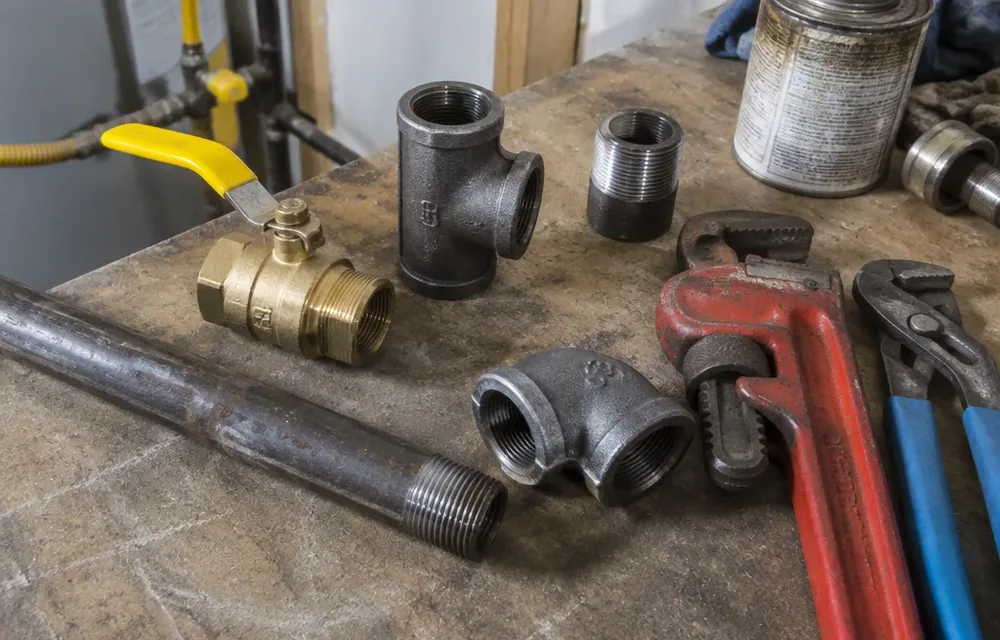
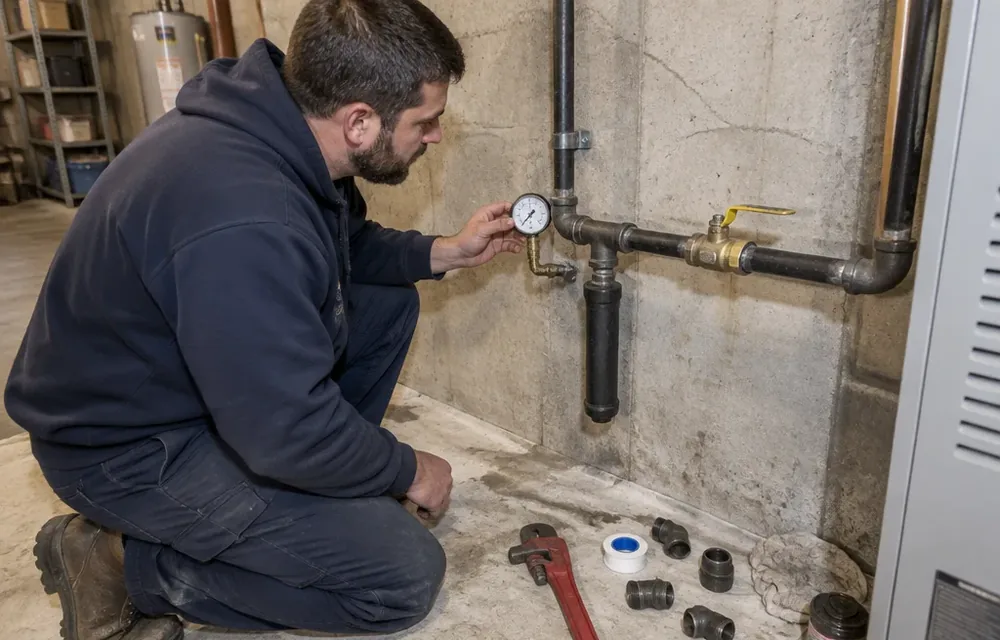
Black iron branch: traditional threaded steel with proper dope, support, and drip legs remains the baseline for many interior runs. It fits exposed basement work with room to thread and test, and it holds up well when sized and supported correctly.
Corrugated stainless tubing: factory-manifold tubing with listed fittings fishes through finished joists with fewer joints and suits remodels where opening ceilings is costly. It needs correct bonding, protection plates, and support to spec, and not every run allows it.
Appliance connectors and valves: a listed connector of correct length with a reachable shutoff and sediment detail at the appliance finishes either piping type. Reusing an old connector for a new appliance is a poor trade because liners fatigue. We show you shutoff reach and connector rating before firing the unit.
What moves the cost
Length, load, and access: a short branch in an open basement differs greatly from a long run fished through finished ceilings to a far kitchen. Total connected load with diversity, plus future appliance plans, changes pipe diameter and manifold needs.
Material and protection: threaded steel, listed tubing systems, bonding, sleeves through masonry, and protection where pipes pass framing each add parts and time. Sediment traps, shutoffs, and pressure-test points are separate details beyond footage.
Permits, testing, and inspection: gas piping in Massachusetts needs permits, pressure testing, and inspection before appliances are placed in service. Coordination with the gas utility at the meter and scheduling around inspections shape timing. Our cost guide explains these drivers, and we describe the test and inspection path before cutting pipe.
When this is the wrong answer
Gas piping is the wrong answer when the appliance itself has failed, with a dead igniter, a tired thermocouple, or a control that will not hold flame on a sound supply. Those need appliance service rather than new pipe. A boiler that locks out on a clean supply also points to burner and control work first.
It is also the wrong first call for active gas odor, which belongs to the gas utility and fire service before any contractor work. If an electric range or heat-pump dryer can meet the remodel without fuel changes, staying electric avoids gas work entirely. Describe the appliance plan and we will tell you honestly when piping is not needed.
Standards that apply in Massachusetts
Gas fitting in Massachusetts is governed through the Board of State Examiners of Plumbers and Gas Fitters with fuel gas rules alongside 248 CMR, the Uniform State Plumbing Code for related piping practice. Only qualified license holders may install, alter, and test gas piping, with permits and inspection through the local inspector and coordination with the serving gas utility.
We size to load and longest run, support and sleeve to spec, fit shutoffs within reach, place sediment traps where required, and pressure-test before appliances are connected. Bonding of listed tubing systems, combustion air verification, and carbon monoxide testing around fuel equipment complete the visit. For background, see hiring and license checks.
Signs you need this
New gas appliance planned
A range, dryer, fireplace, or generator needs a sized branch with its own shutoff and connector rated for the load.
Shutoff missing or stuck
An appliance with no reachable valve or a valve that will not turn needs correction before the next service.
Addition or remodel moving gas
A kitchen or basement change that shifts an appliance usually requires re-routing and retesting the branch.
What happens on a visit
We read appliance input ratings, trace branches to the meter, and measure the longest run. We confirm shutoff reach and vent paths.
We file the permit where required and note meter and utility needs so testing and inspection sequence correctly.
We cut, thread or fit listed tubing, support to spec, sleeve masonry passes, and fit shutoffs and sediment details at each appliance.
We isolate the new work, apply the required test pressure, and hold with gauge proof. We correct any drop before appliances connect.
We connect listed connectors, check for leaks with instruments and solution, fire each appliance, and verify draft and carbon monoxide readings.
When this is the wrong answer
Do not book gas piping for a strong gas odor, which needs evacuation and the gas utility first, or for a dead appliance igniter that only needs appliance service. Do not reuse an old connector through a wall or hide a shutoff behind fixed panels to save opening a ceiling. If heat is out with an odor or alarm activity, leave the house and call the utility, then ask for boiler service once the scene is clear.
Related reading

Where it comes up
Tewksbury
Crawl-space capes and additions over cold air.
Lexington
Large-house boiler winters.
Carlisle
Farmhouse voids that freeze.
Chelmsford
Chelmsford sits between Lowell and Westford where the Concord River joins the Merrimack along the North Chelmsford line, so river-low basements and town-center colonials share one dispatch map.
Westford
Westford sits west of Chelmsford in the Nashoba Valley, higher ground cut by ledge, hillside roads and the old mill villages of Forge Village and Graniteville.
Dracut
Dracut stretches along the Merrimack north bank northeast of Chelmsford across Lowell, with Beaver Brook cutting its low ground and wooded subdivisions climbing behind.
Related services
Frequently asked questions
Who can do gas piping in Massachusetts?
Gas piping in Massachusetts must be handled by a qualified license holder under the Board of State Examiners of Plumbers and Gas Fitters, with permits and inspection through the local inspector. Homeowners should not cut, thread, or alter gas branches or test joints. You can note appliance ratings and shutoff locations and keep the meter area clear for our testing.
What should I do if I smell gas?
Leave the building at once without operating switches, phones, or garage doors inside. Call the gas utility and fire service from outside, then stay out until the scene is declared safe. Do not relight pilots or search for the leak indoors. Piping inspection and repair start only after utility clearance.
How is gas pipe sized for a new range?
Sizing rests on total connected load, the longest run from the meter, and allowed pressure drop rather than the nearest branch size. A range added to a branch that already feeds a boiler and water heater may starve at peak fire. We trace to the meter, total the inputs, and size the branch and manifold so all appliances fire together.
Can I reuse the old gas connector?
Reusing an old connector for a new appliance is poor practice because liners and end fittings fatigue with age and movement. A new listed connector of correct length and rating with a reachable shutoff costs little compared with a leak call. We replace connectors with every appliance swap and show you the rating.
Do I need a permit for gas work?
Most gas piping alterations in Massachusetts need a permit with pressure testing and inspection through the local inspector, plus utility coordination where the meter is affected. Like-for-like appliance swaps with existing shutoffs still need code-correct connectors and leak checks. We file and sequence the permit so inspection passes before the appliance goes into service.
Gas or electric for a remodel?
Gas suits high-heat cooking and hydronic backup where the house already has sound gas service and venting. Electric and heat-pump options avoid fuel piping where panel capacity allows and simplify some remodels. Weigh panel space, vent paths, and cooking preference with us before opening ceilings for either path.
Need gas piping in Chelmsford?
Call now and describe what is happening. A local specialist takes it from there.