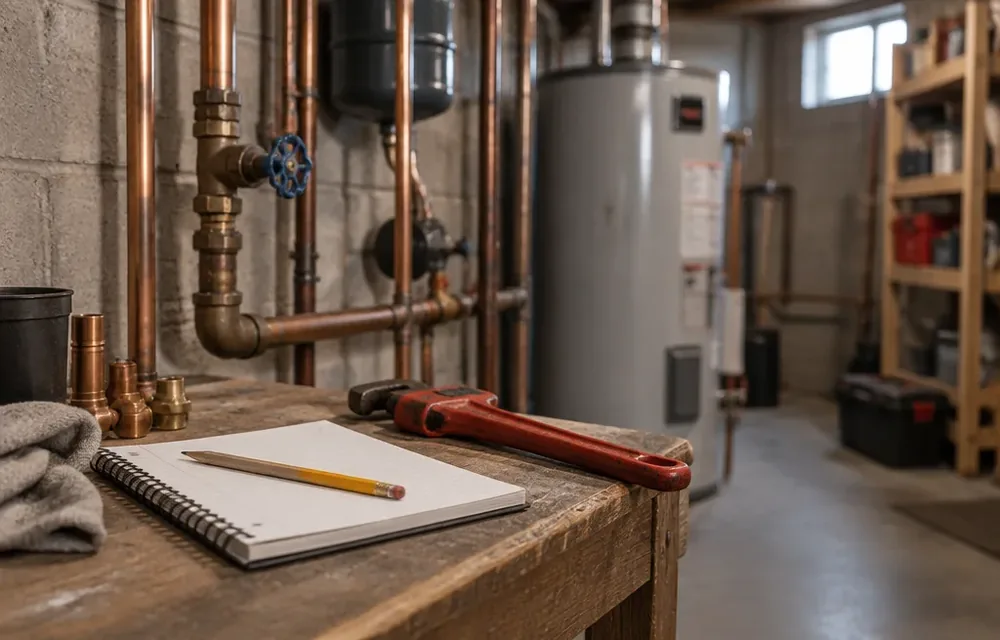
How does a billed hourly rate actually work?
Billed rate meaning: A billed hourly rate covers far more than wrench time on the joint. It carries diagnosis, protection of finishes, testing under pressure, documentation, travel between calls, tools and stock, insurance, and dispatch coverage across day and night. That bundle explains why a billed figure looks different from a wage figure even before parts enter the picture.
Diagnosis before repair: Much of the first hour goes to finding the source rather than fixing it. Tracing a leak path, testing fixtures in sequence, checking the water heater and boiler where affected, and confirming drains carry all sit inside billed time. That careful start prevents opening the wrong wall or replacing a part that did not fail. The same staged method appears in leak detection and burst pipe repair and in water heater installation and repair.
Testing and retest close the loop: Reopening valves slowly, checking joints under pressure, running nearby fixtures, and confirming heat where affected all take time after the new part is in place. Those checks catch weeps and air locks before the visit ends. When you review time on site, include this retest stage alongside the visible repair. Notes on hiring and license checks explain why that documented process matters for later resale and insurance questions.
What moves the rate up or down and how do you compare jobs fairly?
Rate drivers: Rate drivers are the job traits that separate light daytime work from heavy or urgent work. License level needed, timing of dispatch, work type, access difficulty, pipe material, and permit steps each move labor in a different way. Comparing jobs fairly means comparing those traits, not only the clock.
Timing and work type matter most: Daytime fixture work with clear access sits at the lighter end of labor, while night and weekend dispatch carries heavier labor factors for the same hands. Boiler controls, gas piping, and sewer excavation each add training, equipment, and crew factors beyond a simple swap. A main line backup that calls for cable equipment and a camera look differs greatly from a single trap clog cleared by hand. You can see that split in drain cleaning compared with hydro jetting and in boiler installation and servicing.
Access and material shape the hours: An exposed basement run allows direct work, while a leak inside a tiled wall or above a finished ceiling adds opening, protection, and careful patching coordination. Copper, PEX, galvanized, and CPVC each call for different fittings and methods, and mixed metal joints need proper separation to last. Street pressure from town water also matters, because strong pressure feeds more water through a failed valve before shutoff. Homes in Chelmsford and Acton share many of these basement and addition layouts.
What should you ask before any work starts?
Smart questions: Smart questions before work starts focus on findings, choices, and drivers rather than on a blind figure by phone. Ask what failed, what choices exist, what access is needed, whether permits apply, and what retesting will confirm. Those answers tell you more than any average pulled from many different homes.
Scope and choices in plain terms: Ask whether a temporary control overnight with a full repair by day could fit, or whether waiting would clearly allow more harm. Ask which parts are needed by brand and type, and whether supply house hours affect timing for special controls. Ask how finishes will be protected and who handles patching outside the plumbing fix. The cost background in emergency plumbing cost in Chelmsford shows how those choices shape scope without promising figures.
Documentation to keep: Ask for a written note of what was found, what was done, which valves were touched, and what to watch in the days after. Keep gauge readings for boiler work and camera notes for drain work, because those records guide later service. When sewage or gas was involved, confirm safety checks and what to avoid until retest is complete. That record habit aligns with shut off water main guidance and helps later visits start faster.
Labor paths compared side by side
Labor comparison: Labor comparison works best when you place common job paths beside each other by skill, equipment, and access needs. A short fixture visit and a main line excavation both involve plumbing skill, yet they differ greatly in crew, tools, and follow up. The table below keeps those trade offs visible.
Light versus heavy equipment: Hand tools, plungers, and small augers fit single fixture trouble with clear access. Cable machines, cameras, jetters, and excavation equipment fit main line and sewer work where length, depth, and soil enter the picture. Boiler work adds combustion and control testing that fixture work never touches. Those equipment tiers explain why time on site alone does not explain scope, a point sewer line repair and replacement shows in how line work stages diagnosis before any digging choice.
Permit and inspection layers: Work that opens walls, alters piping, or touches gas and boiler systems may need a permit and inspection through the town inspector under state rules. Permit steps add visits and coordination beyond wrench time, yet they protect you at resale and with insurance. Emergency control such as closing a valve is homeowner action, while opening piping generally calls for a license holder. That boundary is set out in homeowner plumbing rules.
| Work path | Typical skill and tools | Access pattern | Why labor differs |
|---|---|---|---|
| Fixture swap or toilet rebuild | Hand tools with supply and trap parts | Open cabinet or toilet base with clear room | Direct work with short test cycle |
| Single drain clear | Plunger or hand auger with basic protection | One fixture with no overflow elsewhere | Local clog with limited diagnosis |
| Main line cable plus camera | Cable machine plus camera and locator | Cleanout or pulled fixture with line length | Equipment time plus cause finding |
| Boiler control or circulator work | Controls testing with drain down and purge | Basement unit with zones and wiring | Safety testing plus water side balance |
| Sewer repair planning | Camera survey with excavation or lining plan | Yard or street line with depth and soil | Crew, equipment, permits, and restore |
Why rates read differently around Chelmsford and nearby towns
Local rate context: Local rate context around Chelmsford reflects housing mix, basement layouts, water source, and winter exposure rather than any town price list. Older colonials, capes with finished lower levels, and subdivisions with later additions each create different access puzzles. Those puzzles move labor more than street address alone.
Water and winter effects: Much of Chelmsford draws town water through the Lowell Regional Water Utility system, which moves about four point six billion gallons per year for about one hundred thirty five thousand customers across Lowell, Dracut, Tyngsborough, and Chelmsford. Billerica Water Works serves nearby areas from its Treble Cove Rd plant. Strong street pressure aids daily use but feeds more water through a failed valve before shutoff, which raises the value of knowing your main location. Winter adds freeze exposure in crawl spaces and garage walls, linking labor questions to frozen pipe prevention and thawing and winterize plumbing in Chelmsford, while area notes for Dracut and Billerica describe similar basement heavy layouts.
Travel and dispatch reality: Homes spread across town lines and river crossings shape travel between calls, and storm weeks cluster sump, basement, and drain calls together. After hours coverage must staff phones and trucks when most shops are closed, which changes labor factors compared with scheduled daytime routes. That is why the same leak can involve different timing choices by day versus by night. Reading emergency plumbing cost in Chelmsford beside this guide keeps timing and access effects in view.
Limits of averages and the wage versus bill gap
Average limits: Average limits appear as soon as one figure tries to cover many homes, materials, and timings at once. A national or statewide average blends simple swaps with night boiler work and sewer equipment jobs, so it cannot describe your access or your pipe. Treat averages as background for questions, not as figures tied to your home.
Third party figures with care: One national cost guide reports residential work around eighty nine dollars per hour plus parts, with a range around eighty four to ninety five dollars, along with related drain and sewer figures for context. Those figures come from the ProMatcher Massachusetts cost report as third party estimates for context, not our prices, and your access, material, and timing move any real plan away from averages. Drain clog clearing around one hundred fifty eight dollars, sewer cleaning around two hundred fifty one dollars, camera work around three hundred seventeen dollars, and sump installation around one thousand three hundred sixty three dollars appear in the same report. Use them to learn which drivers to ask about rather than as promises, since that careful reading fits drain cleaning and sump pump installation planning.
Wage is not a bill rate: The May twenty twenty five national median wage for plumbers, pipefitters, and steamfitters was thirty dollars and sixty seven cents per hour according to the Bureau of Labor Statistics. That wage is pay to the worker before trucks, tools, stock, insurance, dispatch, and after hours coverage are counted. Billed time must also cover diagnosis, protection, testing, and documentation that never show as wrench time. Holding a wage figure against a billed visit misses that full bundle and leads to unfair comparisons.
When should you call about rates versus when should you call for help?
Call purpose: Call purpose decides whether you need planning help by day or hands on help now. Rate and scope questions fit a calm daytime call with photos, model numbers, and a clear account of what you see. Active harm fits help now with shutoffs talked through while help is arranged.
Plan by day when harm is contained: A dripping faucet, a running toilet that stops at its valve, a slow sink with no overflow, or an aging heater with noise but no leak all fit daytime review. Gather where the main shutoff sits, which valves stick, and which fixtures share trouble, then read what counts as a plumbing emergency to confirm timing. That preparation shortens diagnosis across Chelmsford, Westford, and Concord.
Call now when harm is active: Call (978) 592-1168 now when water keeps spreading, sewage backs into living space, heat is out with freeze risk, or gas odor is suspected. Describe location of water, sounds and smells, fixtures in use, and power safety near standing water. Keep fixtures off during sewage backups and leave the area for suspected gas before any plumbing step. The visit will focus first on making the home safe, as with emergency plumber help.
Near you
When to call
Related guides

Frequently asked questions
What is a fair hourly rate for a plumber in Massachusetts?
A fair rate depends on license level needed, timing, work type, access, and permit steps, so no single figure fits every home. Daytime fixture work differs greatly from night boiler work or sewer equipment work. One national cost guide reports a mid level hourly figure plus parts as third party context only. Ask what failed, what choices exist, and what drives labor on your job.
Why is the billed rate higher than a plumber wage?
The billed rate carries trucks, tools, stock, insurance, dispatch, and after hours coverage beyond pay to the worker. The May twenty twenty five national median wage for plumbers, pipefitters, and steamfitters was thirty dollars and sixty seven cents per hour according to the Bureau of Labor Statistics. Diagnosis, protection, testing, and documentation also sit inside billed time. That full bundle explains the gap.
Do online cost guides set my total?
Online guides do not set your total because they blend many homes and timings into averages. One national cost guide reports drain, camera, and related figures as third party estimates, not our prices. Your access, material, and equipment needs move the plan. Use averages to learn which drivers to ask about, then rely on an on site look.
How can I keep labor time down without cutting corners?
Know your main shutoff location, keep access clear around the heater and boiler, and note which fixtures share trouble before the visit. Stop using backup fixtures, protect finishes near the work path, and keep model numbers handy. Those steps trim diagnosis time while leaving testing and code steps intact. Read how to shut off the water main to prepare.
Should I ask for choices or a single figure by phone?
Ask for choices and drivers rather than a single figure by phone. A careful visit can offer temporary control overnight versus full repair by day, plus access and permit effects in plain terms. Phone figures cannot see inside walls or lines. An on site account of findings with retest steps gives you a fair basis to decide.
Still stuck?
Describe what you see when you call and a local specialist will guide the next step.