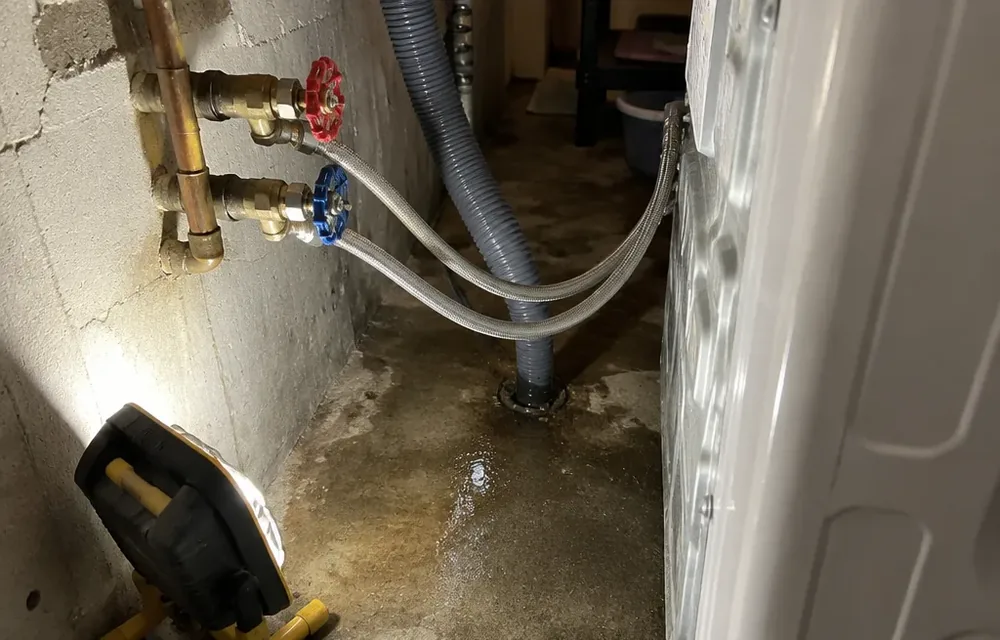
Signs
Water only while filling
Pooling that starts with fill cycles and stops between loads points to supply hoses, valves, or inlet screens rather than the pump.
Bulge or rust at the hose ends
A swollen jacket, crust at the coupling, or a kink behind the machine marks a hose near failure even when dry today.
Damp wall behind the machine
Swollen baseboard and soft drywall at valve height signals slow valve or connection weeps hidden by the machine.
Drain that overflows the standpipe
Water spilling from the top of the standpipe during pump-out points to a restricted drain rather than a supply hose burst.
What a washer hose leak is
Direct answer: A washer hose leak is pressurized water escaping from the hot and cold supply hoses, their valves, or the connections at the machine and wall. Rubber hoses age, braid jackets fatigue at bends, and couplings loosen with vibration until a pinhole or full burst opens under normal pressure. Because washer valves often stay open between loads, a burst can run long before anyone hears it.
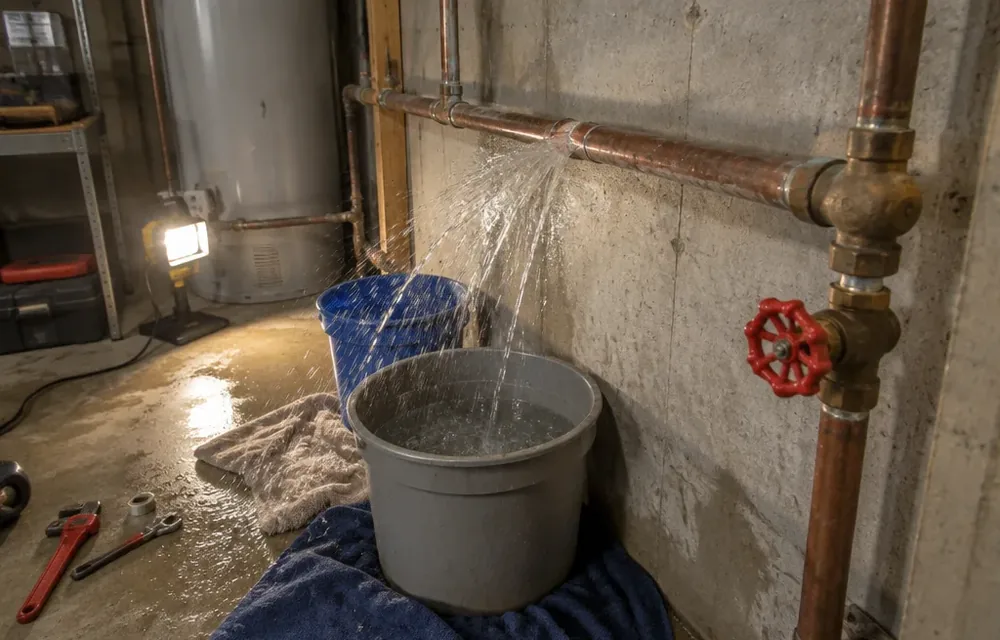
How failure shows: Supply failures spray or stream while valves stay open, soaking the wall and floor behind the machine in a widening fan. Drain-side failures spill only during pump-out, topping the standpipe or leaking at the pump and door seal. Inlet screens clogged with grit starve fill, lengthen cycles, and stress old hoses that already bulge at the ends. Note timing against fill, wash, and drain phases, because phase places the fault.
Why laundry rooms flood fast: Washers draw full-bore flow through narrow hoses, so even a small split delivers steady volume while valves stay open. Machines pushed tight to the wall kink hoses at the coupling where the jacket wears first. Upstairs laundry floods ceilings below within one cycle, while basement laundry pools across slab joints toward finished rooms. Valve location knowledge before laundry day matters more than hose brand after a burst. See washer hose patterns and wet basement entry for the checks we run.
What causes washer connections to fail
Direct answer: Washer connections fail from aged hose material, vibration, poor bends, and mineral grit working together. Plain rubber hoses harden and crack where heat and ozone reach them, then split along the bend behind the machine. Braided jackets resist bursts longer but still fatigue where couplings crimp and where the hose bends sharply to reach recessed valves.
Valve and setup factors: Old gate valves that no longer seat let water pass even when handles feel closed, which confuses shutoff tests during a leak. Single-lever washer valves with worn seats weep at the stem and drip down the wall plate. Machines without hammer arrestors slam stops with each fill close, stressing couplings and solder joints over time. Hoses longer than needed loop and rub, while hoses too short pull at couplings with every spin cycle.
Drain-side causes: Standpipes set too short or too narrow cannot take modern pump surges and spill at the top during drain phases. Lint, powder residue, and small garments lodge in the trap and slow the same standpipe the machine needs. Drain hoses shoved too far down seal the vent and siphon or gurgle, which looks like a pump fault. Keep the drain hose loop high with an air gap and confirm the standpipe height before blaming the pump.
Look-alikes worth ruling out
Direct answer: Pump, door, softener, and nearby plumbing leaks often mimic hose bursts and need different work. A front loader that drips at the door gasket during wash points to the seal and latch rather than supply hoses. A top loader that leaks only during drain points to the pump, tub seal, or standpipe restriction rather than pressurized supply.
Supply versus drain: Close both washer valves and watch. If flow stops with valves closed, the fault sits in hoses, valves, or machine inlets. If water keeps rising with valves closed, or spills only during pump-out, the fault sits in the pump path or the house drain. Water heater pans, softener drains, and basement seep that pool near laundry machines also mislead, especially where slab joints carry water from across the room.
Valve illusion: A valve handle that turns without seating still passes water that looks like a fresh hose burst after the hoses were just changed. Corroded stems snap when forced, turning a weep into open flow. If couplings drip only at fill hammer, arrestor and pressure behavior deserve a look before another hose set. Compare burst pipe signs and high bill from hidden loss for supply-side tells.
Where washer hose trouble comes up locally
Direct answer: Washer hose trouble clusters in tight laundry closets, in upstairs laundry over finished rooms, and where mineral grit wears inlet screens. Closets with machines pushed hard to the wall kink hoses at the coupling where bursts start. Upstairs machines over living space turn one split hose into ceiling damage below within a single fill cycle.
Tight closets and finished basements: Hall closets and basement corners across Chelmsford and nearby streets in Billerica leave little room for gentle hose bends and shutoff access. Valves buried behind stacked units stay open for years because they are hard to reach, which lets a burst run longer. Finished basement laundry with drywall tight to valves hides slow weeps until baseboards swell at the joint.
Grit and surge load: Homes through Tewksbury and nearby neighborhoods with mineral-heavy supply see inlet screens load with grit that lengthens fill and stresses old hoses. Long drain runs to the main let lint and powder coat the standpipe trap, so pump-out spills mimic supply bursts at the same machine. Lever valves left open between loads plus surge-prone branches make hose quality and shutoff habit matter more than machine age.
What a visit for a washer leak involves
Direct answer: A visit proves supply versus drain, replaces the weak link, and leaves shutoff use plain. We close washer valves and the main in sequence while watching flow, inspect hose jackets and couplings for bulge and crust, and check valve seating and stem condition. We run fill and drain phases separately with the machine pulled forward so each phase shows its own behavior.
How we test hoses and drains: Inlet screens come out for cleaning and inspection, drain flow gets timed at the standpipe with proper air gap confirmed, and moisture mapping traces wall and floor spread back to the source. Hoses that show age get replaced as a pair with proper bend radius and secured routing rather than a single swap that leaves the mate to fail next. This work follows emergency plumbing response when water spreads active, with leak detection and burst pipe repair methods where wall and valve paths hide the source.
What you receive: You receive a plain read on hose, valve, machine, and drain condition plus which shutoff stops what. We show valve seating results and drain timing so the household knows the safe pause steps for the next load. Where recessed valves, arrestors, or standpipe changes fit tight closets and upstairs rooms, we explain the options against flood risk without pushing extras the tests do not support.
Homeowner checks and damage risk
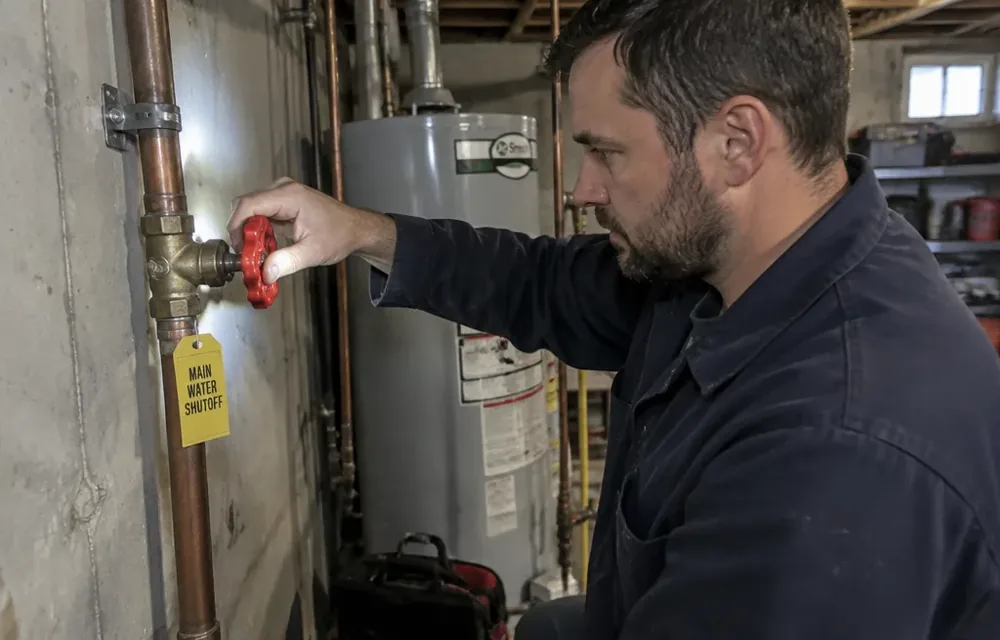
Direct answer: Homeowners can stop flow safely with valve order, power care, and phase notes. Close both washer valves first, then the main if flow stays, and pull machine power where water nears outlets. Note whether water runs with valves open and machine off, only during fill, or only during drain, because phase separates supply from pump and house drain faults.
Safe checks to try: Pull the machine forward enough to see hose bends without straining connections, look for bulge, cracking, and crust at both ends, and feel the wall plate for dampness at valve height. Clean inlet screens only with valves closed and a towel ready, and confirm the drain hose sits looped high with a loose air gap rather than sealed deep in the standpipe. Leave valve rebuilds, solder work, and standpipe opening to us, and never force a corroded stem that may snap open.
Damage risk if leaking stays: Supply bursts soak drywall, swell subfloor, and feed odor behind machines where airflow never reaches. Upstairs leaks stain ceilings below and loosen joint compound across wide areas. Slow valve weeps rot wall plates and invite surface growth that lingers after the floor dries. Closing washer valves between loads plus timely hose pair replacement costs less than opening a soaked wall, especially where bulge or crust already shows at the couplings.
The service that fixes it
Related services
Related problems
Frequently asked questions
Should I close my washer valves between loads?
Yes, closing both valves between laundry days removes pressure from hoses that otherwise stay charged around the clock. Use the valves weekly so they stay free, and confirm they truly seat by watching flow stop. Stuck valves that pass water need service before they are needed in a burst.
Which hoses hold up better behind a washer?
Braided stainless jackets over quality cores resist bursts longer than plain rubber where bends stay gentle and couplings seat clean. No hose lasts with kinks, rub points, or corroded couplings behind a tight machine. Replace hoses as a pair with proper bend radius and secured routing.
Why does water spill from the standpipe during drain?
The standpipe or its trap cannot take the pump surge, often from lint and residue narrowing or from improper height and venting. A drain hose sealed deep without an air gap worsens the spill. Time the drain phase and check hose placement before assuming the pump failed.
What should I note before calling about a washer leak?
Note whether water runs with valves open and machine off, only during fill, or only during drain, plus hose age and any bulge or crust. Note valve seating and standpipe spills. That phase record lets emergency help bring the right hoses, valves, and drain gear on arrival.
Seeing washer hose leak?
Call and describe the symptom. A local specialist will tell you the sensible next step.