Signs
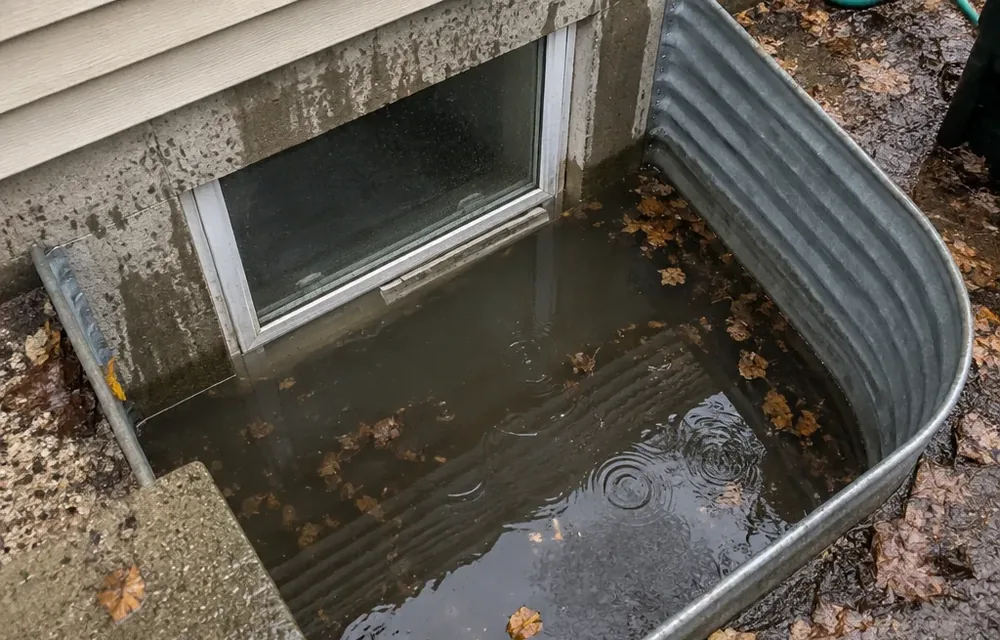
Water through wells and bulkheads
Flow over window sills and under bulkhead doors during downpours points to surface routing rather than rising groundwater alone.
Yard drains that pond and reverse
Grates that bubble or hold ponds around the foundation show the yard path cannot take roof and surface flow.
Pit that cannot keep pace
A pit that rises to the rim while discharge runs weak signals inflow beyond pump capacity or a blocked outlet.
Flooding tied to rainfall only
Basements that stay dry for weeks then take water in one storm point to storm routing rather than steady plumbing leaks.
What storm drain flooding is
Direct answer: Storm drain flooding is rainwater entering the house because roofs, yards, and street-side paths deliver more water than drains and pumps can carry. Gutters, wells, grading, and sump discharge form one chain, and the weakest link decides where water appears. Entry usually shows at window wells, bulkhead doors, and slab joints rather than at plumbing fixtures.
How overload moves: Downspouts dump roof water beside the foundation where grading should carry it away, but settled soil holds it against the wall instead. Window wells fill with leaves and let water stand against sills that were never made to hold ponds. Sump pits take groundwater plus that surface load at once, rising faster than the pump and discharge can lift. Each added downpour stacks on the last where discharge loops back to the house.
Why rainfall timing proves it: Flooding that starts with cloudbursts and eases after rain points to storm routing rather than supply piping. Plumbing leaks run in dry weather and sit near appliances, while storm entry follows radar and gutter overflow. Note start time against rainfall, first entry point, and pit behavior through the storm, because that timeline separates surface, groundwater, and sanitary causes. See storm flooding patterns and wet basement entry for the mapping we use.
What causes storm water to enter
Direct answer: Storm entry comes from roof concentration, yard grading, and restricted discharge combining in one storm. Short downspouts end at the wall where they add whole-roof flow to groundwater load. Patios, walks, and beds pitched toward the house guide surface sheets to wells and doors that cannot hold them.
Drain and pump limits: Yard grates and window well drains clog with leaves, mulch, and grit just when flow peaks. Sump discharge lines that end in mulch beds, freeze at outlets, or crush under settled soil recycle lifted water back to the pit. Perimeter drains silted with age carry less to the pit, so slab joints wet while the pit looks low. Power flickers during storms stall pumps at peak inflow where backup protection is missing.
Street and soil factors: Flat streets pond where curbs and swales cannot shed cloudbursts, pushing sheets across yards toward low foundations. Tight soils hold storm water against walls long after rain ends, extending pit cycling for days. Bulkhead seals and well covers aged by sun let wind-driven rain in above slab level. Clearing grates before forecast rain and extending outlets past the foundation cuts more water than a larger pump alone.
Look-alikes worth ruling out
Direct answer: Sanitary backup, supply leaks, and groundwater seep often look like storm flooding and need different work. Waste odor and backup tied to flushing mark the sanitary main rather than rain alone. Supply leaks run steady in dry weather near appliances, while storm entry follows rainfall and dries between events.
Waste versus rain: Gray or dark water with waste odor at floor drains during storms can still be sanitary backup surcharged by inflow rather than clean rain. Clear water at wells, doors, and slab joints without odor points to storm routing. If flushing upstairs raises low drains while rain falls, both systems need mapping rather than storm work alone. Stop water use where waste appears and note color and odor before assuming rain is the only source.
Seep versus surface: Groundwater seep beads at the wall and floor joint well after rain and keeps pits high for days, while surface entry pours over sills and under doors during the cloudburst itself. A dry pit with water through a well points to grading and well drainage rather than pump size. Describe whether water comes over the sill, under the door, or up at the joint, because direction decides the fix. Compare backed-up sewer signs for waste tells.
Where storm flooding comes up locally
Direct answer: Storm flooding clusters on flat lots, in river-low basements, and on streets where mature landscaping traps water at the wall. Flat yards hold cloudburst sheets where they fall instead of shedding to swales. River-low foundations meet high seasonal water table, so storm load joins groundwater already near slab level.
Flat yards and river bottoms: Low streets near the Concord and Merrimack bottoms around Chelmsford and across the line in Lowell take water from both sky and soil in the same storm. Short outlets that end beside the house recycle pump water through the next downpour. Wells without covers and bulkheads with worn seals let wind-driven sheets in above slab level where pumps cannot help.
Settled grades and beds: Subdivision lots through Billerica and nearby neighborhoods with settled backfill pitch walks and beds toward the wall over time. Mulch piled against siding holds damp at the wall face and clogs well drains with fines. Finished basements there hide early storm entry behind baseboards until the next cloudburst widens the stain, so pre-storm grate and outlet checks pay off most on those streets.
What a visit for storm flooding involves
Direct answer: A visit maps entry direction, tests the full roof-to-discharge chain, and separates storm routing from sanitary trouble. We walk grading, gutters, wells, and bulkheads in rain order, time pit cycles against inflow, and check discharge routing to daylight or approved points. We confirm whether low drains carry waste or clear storm water so sanitary backup is never missed.
How we test the chain: Hose testing traces each downspout path to the pit and yard outlet without waiting for the next storm. We clean pit intakes, confirm check valve hold, and prove discharge carries well past the foundation without looping back. Well drains get cleared and tested for fall, and bulkhead seals get checked for daylight gaps. This work follows sump pump installation practice for lift and collection, with sewer line repair and replacement planning where camera or flow tests show sanitary defects behind storm surcharge.
What you receive: You receive a plain read on entry points ranked by volume, pit and discharge capacity, and which grading or outlet change cuts the most water first. We show pit timing and discharge landing so the result is visible without jargon. Where backup protection fits finished space on flicker-prone streets, we explain battery and water-powered options against flooring risk so you can decide with the entry map in hand.
Homeowner checks and damage risk
Direct answer: Homeowners can cut storm entry safely with grate clearing, hose removal from wells, and power-aware pit checks. Clear leaves from window wells, yard grates, and gutter outlets before forecast rain, and extend downspouts past beds with temporary extensions. Keep clear of standing water near outlets and the panel, and never wade to reach a humming pump by its cord.
Safe checks to try: Watch which well or door takes water first and whether the pit rises, holds, or stays dry through the burst. Test the sump outlet with a lamp, confirm the float moves freely without lifting wiring, and listen for the check holding between cycles. Move stored goods off basement floors onto shelving and pull storage a hand width off walls for airflow. Leave discharge repiping, electrical changes, and bulkhead rebuilds to us.
Damage risk if flooding stays: Repeated storm entry swells doors and trim, lifts flooring adhesive, and feeds musty odor behind finished walls that lingers after fans dry the surface. Silt left by storm sheets grinds into flooring and clogs well drains tighter for the next event. Finished rooms suffer most where baseboards trap silt-laden water out of sight. Early grate and outlet care plus entry mapping costs less than repeated drying, especially where one well or door takes water every cloudburst.
The service that fixes it
Related services
Related problems
Frequently asked questions
Why does one window well flood while others stay dry?
That well usually sits at the low corner where grading, a nearby downspout, and clogged well drainage combine. Leaves and fines seal the well drain just when roof flow peaks. Clearing the well, extending the nearby downspout, and testing well drain fall usually ends single-well flooding.
Can a bigger sump pump stop storm flooding through doors?
No, pumps lift groundwater that reaches the pit, but they cannot catch sheets running over sills and under doors above slab level. Surface entry needs grading, gutter, well, and seal work that keeps water from reaching the opening. Pit capacity matters only after surface paths are controlled.
How do I tell storm flooding from sewer backup?
Use color, odor, and fixture ties, because sanitary backup carries waste odor and rises with flushing even between downpours. Clear water through wells and doors tied to rainfall alone points to storm routing. Waste at floor drains with flushing during rain needs sanitary mapping alongside storm work.
What should I note before calling about storm flooding?
Note rainfall start time, first entry point, and pit level through the storm with photos from safe footing. Note downspout outlets, grate ponding, and any waste odor at low drains. That timeline lets sump help rank surface, groundwater, and sanitary causes on arrival.
Seeing storm drain flooding?
Call and describe the symptom. A local specialist will tell you the sensible next step.