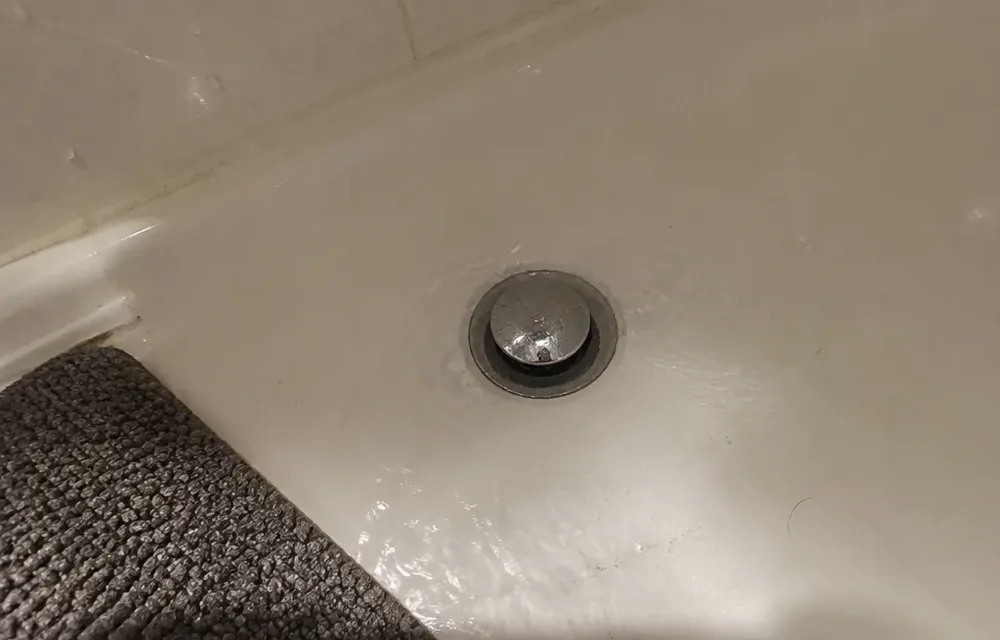
Signs
Ankle water that lingers
A tub that holds water through the shower and drains slowly afterward usually has hair and soap packed at the stopper and trap.
Gurgling from the toilet or sink
Bubbling elsewhere while the tub drains points to air trapped by a branch or vent restriction beyond the tub trap.
Drain that clears then slows again
A tub that runs fast for days after plunging then lags again often has wall buildup that a plunger cannot scour.
Odor from the overflow plate
Sour smell near the overflow with slow drainage signals biofilm on the overflow channel and trap walls that needs cleaning.
What a slow tub drain is
Direct answer: A slow tub drain is restricted flow through the stopper, trap, overflow channel, or branch serving the tub. Hair wraps the stopper post first, soap and conditioner coat the trap walls, and the narrowed bore drains clean shower water fine but stalls under full flow. The tub tells the story plainly by holding water that should leave as fast as the shower delivers it.
How restriction builds: Each shower adds hair and body oils that cling where flow turns sharply at the stopper and trap. Bath products leave waxy films that grab the next hair instead of rinsing through. Shaving and pet washing add dense loads that settle in the trap bend. Over weeks the opening shrinks from full bore to a finger width that still passes a trickle but not a shower.
Why the overflow matters: The overflow channel carries air and emergency water, and its inner walls grow the same biofilm that lines the trap. A tub that drains better with the overflow covered responds to pressure changes differently than one that stays slow either way. Note whether the toilet bubbles, whether the sink lags too, and whether the tub holds or fully stalls, because that pattern separates local hair from branch trouble. See slow tub patterns and clogged drain signs for the tests we run.
What causes tub drains to slow
Direct answer: Tub drains slow from hair mats, soap films, and branch buildup combining at tight turns. Pop-up and trip-lever stoppers catch hair with every shower and hide the mat just out of sight. Liquid soaps and conditioners coat pipe walls where hard water minerals already roughen the surface, which grabs more hair the next day.
Bath group factors: Long trap arms, flat branch pitch, and shared wet vents let several fixtures slow together when the common section narrows. Remodels that tie a new shower into an older branch without proper venting leave air nowhere to go, so water glugs and rises. Kids bath toys, cap liners, and cotton swabs slip past strainers and lodge at the trap crown where they snag hair into a mat.
Whole-house contributors: Homes with mineral-heavy water grow scale inside older metal trap arms that narrows the bore year by year. Laundry surges that share the branch push lint into the same section the tub uses. Chemical openers used repeatedly pit finishes and soften seals without scouring wall buildup, leaving the bore rougher and faster to clog again. A hand auger through the overflow finds the mat, while recurring trouble deeper down needs cable work with proper access.
Look-alikes worth ruling out
Direct answer: Main-line trouble, vent blockage, and failing stoppers often mimic a simple tub clog and need different work. A tub that fills while the washer runs, or a basement shower that backs up with the tub, points past the bath branch toward the main. A roof vent blocked by leaves and nests lets air lock the branch so water glugs without a full blockage inside the pipe.
Branch versus main: A single slow tub with normal toilets and sinks points to the stopper and trap serving that tub. Several fixtures slowing together, gurgling across the bath group, and waste odors from low drains point farther downstream. If plunging the tub moves water in the toilet, the connection sits in the shared branch or main rather than at the stopper. Stop chemical use at that point and test fixtures in sequence instead.
Stopper and seal tricks: A trip-lever linkage stuck half down throttles flow exactly like a clog while the pipe beyond runs clear. A worn stopper seal swells and seats too tightly, holding water that a quick linkage lift releases. Overflow gaskets that leak send shower water behind the tub where it mimics drain backup on the ceiling below. Lift, remove, and clean the stopper first, because that simple check resolves more slow tubs than any opener. Compare gurgling drain causes for vent-side tells.
Where slow tub drains come up locally
Direct answer: Slow tubs cluster in capes and colonials with shared bath groups, in homes with long branches to the main, and where mineral water roughens older trap arms. Upstairs baths that share a wet vent slow together when the common section coats with soap and scale. Long basement runs to the main let cooled water drop soap and lint where the tub branch joins.
Shared baths and remodels: Capes and colonials around Chelmsford and nearby streets in Westford often stack baths over a single branch that was added during a remodel. Hair from daily showers plus conditioner film coats that shared section, so the tub and nearby sink lag together while the kitchen runs fine. Cleaning the stopper helps for days, then the shared wall buildup slows the group again.
Mineral and laundry load: Homes through Tewksbury and nearby neighborhoods with mineral-heavy supply see older metal trap arms narrow steadily under scale. Laundry lint and powder residue that share the branch add sudden surges a narrowed tub line cannot pass. Strainer use plus regular stopper cleaning holds those tubs longer, while repeat branch trouble points toward cable and scour work rather than another bottle from the shelf.
What a visit for a slow tub drain involves
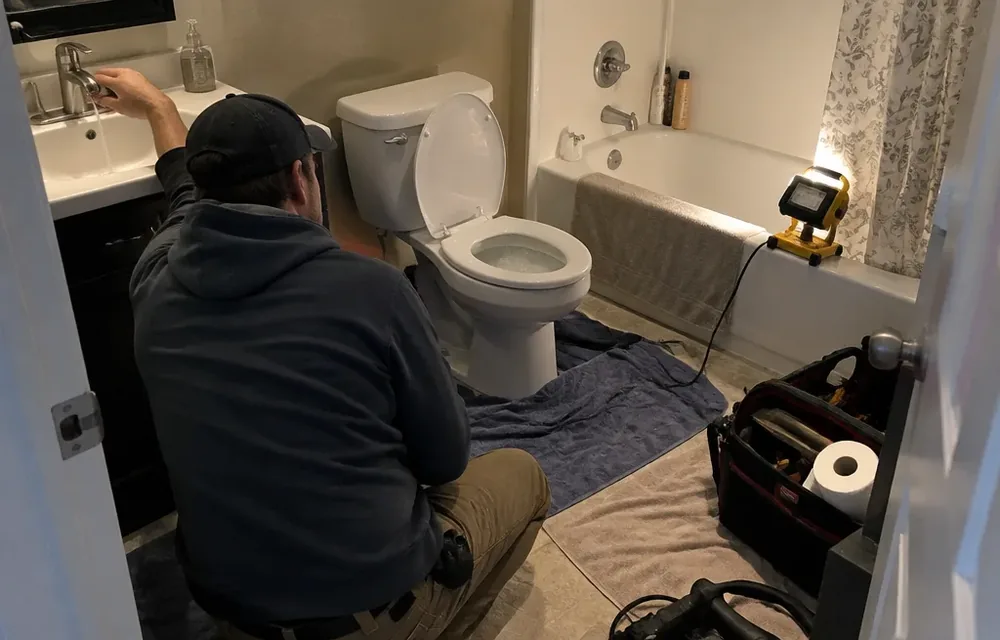
Direct answer: A visit clears the stopper path, tests the branch under load, and proves whether the bore will hold. We pull and clean the stopper and strainer, run a hand auger through the overflow where it fits, and watch tub flow with the shower running. We test nearby fixtures in sequence to see whether the toilet gurgles or the sink lags when the tub drains.
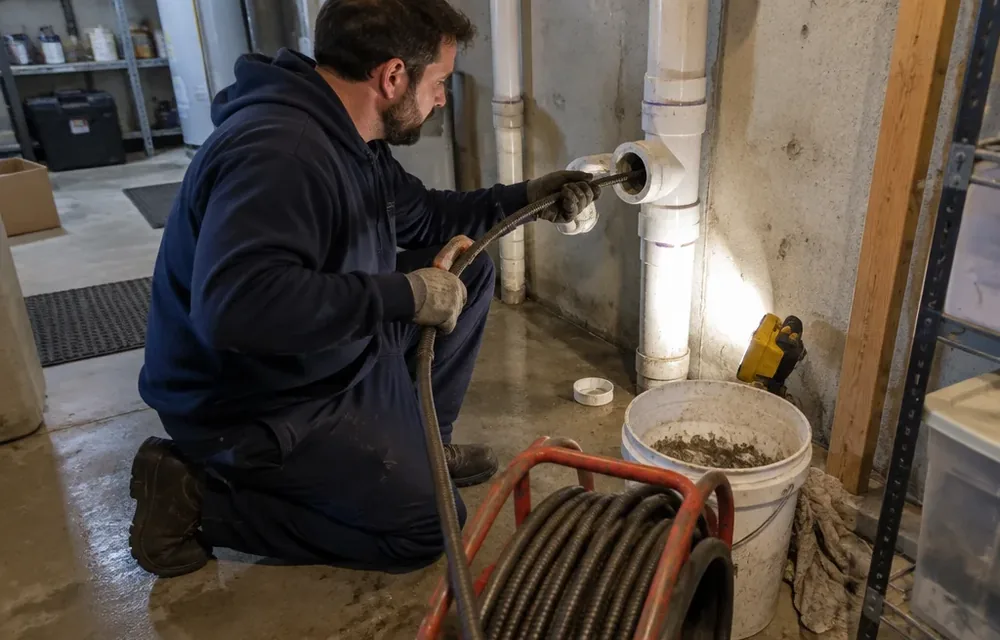
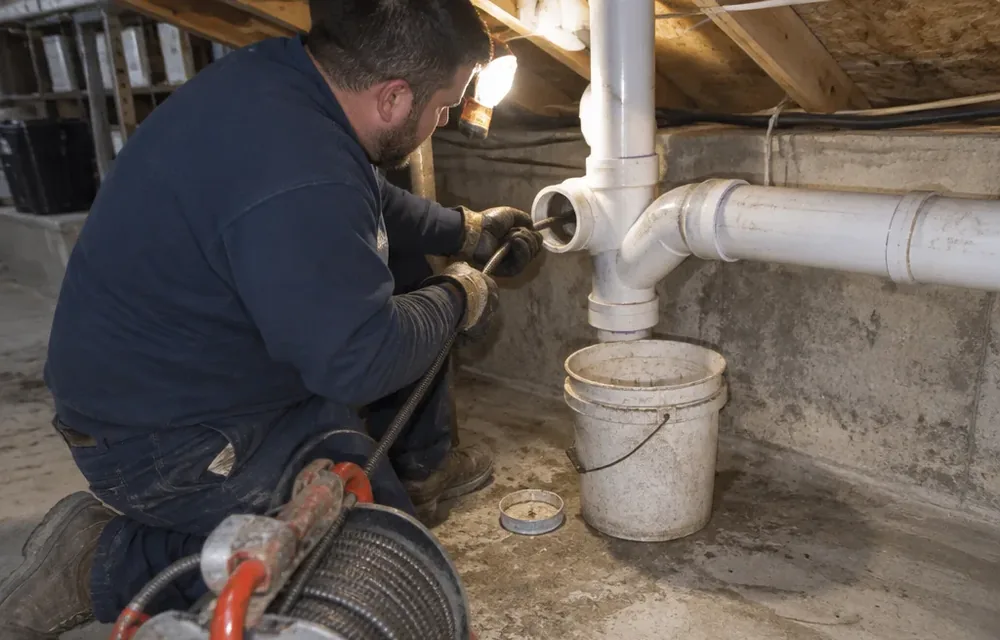
How we clear deeper buildup: A small cable through the overflow or cleanout retrieves hair mats without scratching visible finish. Where wall scale and soap line the branch, professional cable work with the right head restores full bore and lets us feel offsets and bellies that snag waste. Camera and scour planning follow only when trouble returns quickly to the same spot. This work follows drain cleaning methods, with hydro jetting where grease and soap coat long runs that snaking alone leaves rough.
What you receive: You receive the retrieved material shown plainly, flow results with several fixtures running, and a read on whether stopper habits or branch condition drive the return. We leave strainer and cleaning guidance that fits the household, including pet washing and long-hair routines that fill traps faster. Where the branch proves sound, simple habit changes hold without further equipment.
Homeowner checks and damage risk
Direct answer: Homeowners can clear stopper hair and test the pattern safely without opening piping. Lift out the stopper or strainer, remove the wrapped hair with a brush or plastic hair tool, and rinse with hot tap water while running the shower. Cover the overflow with a damp cloth for a few careful plunger strokes, then release and watch whether flow truly holds through a full shower.
Safe checks to try: Run the tub alone, then run the sink and flush the toilet while the tub drains to map shared trouble. Sniff near the overflow for biofilm odor and look for black slime on the stopper post that marks wall coating. Use a mesh strainer daily and wipe conditioner bottles before they drip into the tub. Skip chemical openers that burn skin and pit finishes, and leave trap removal, roof vent work, and powered cables to us.
Damage risk if slowness stays: Standing shower water seeps at the overflow gasket and tub shoe, wetting framing and staining ceilings below long before the trap fully blocks. Repeated plunging against a branch restriction pushes water into weak joints and wax seals elsewhere in the group. Biofilm odor spreads from the overflow into the whole bath as coating thickens. Early stopper cleaning plus branch testing costs less than opening a stained ceiling, especially where gurgling already links the tub to other fixtures.
The service that fixes it
Related services
Related problems
Frequently asked questions
Why does my tub drain fine some days and stall on others?
Load and shared flow explain the swing, because a hair-narrowed trap passes a quick rinse but stalls under a full shower or while laundry runs. Vent and branch restriction also varies with how many fixtures run together. Test the tub alone versus with other fixtures running to place the limit.
Are chemical openers safe for a slow tub?
They rarely clear hair mats and they leave caustic water sitting in the trap and overflow channel. The next hands that pull the stopper or open the trap meet that chemical, and finishes and seals suffer with repeat use. Manual hair removal plus cable work where needed clears the bore without the burn risk.
When does a slow tub mean main-line trouble?
When toilets gurgle as the tub drains, when sinks lag at the same time, or when low showers and floor drains back up with tub use. A single slow tub with normal neighbors points local, while group symptoms point downstream. Note which fixtures connect and call before repeated plunging pushes water elsewhere.
What should I note before calling about a slow tub?
Note whether water holds or fully stalls, whether the toilet or sink reacts, and whether cleaning the stopper helped even briefly. Note pet washing, recent remodels, and any chemical already used so we can handle the line safely. That pattern lets drain cleaning start at the stopper or the branch without guesswork.
Seeing slow tub drain?
Call and describe the symptom. A local specialist will tell you the sensible next step.