Signs
Meter that creeps with fixtures off
A meter that moves while no tap, toilet, or appliance runs points to pressurized loss often hidden under slab.
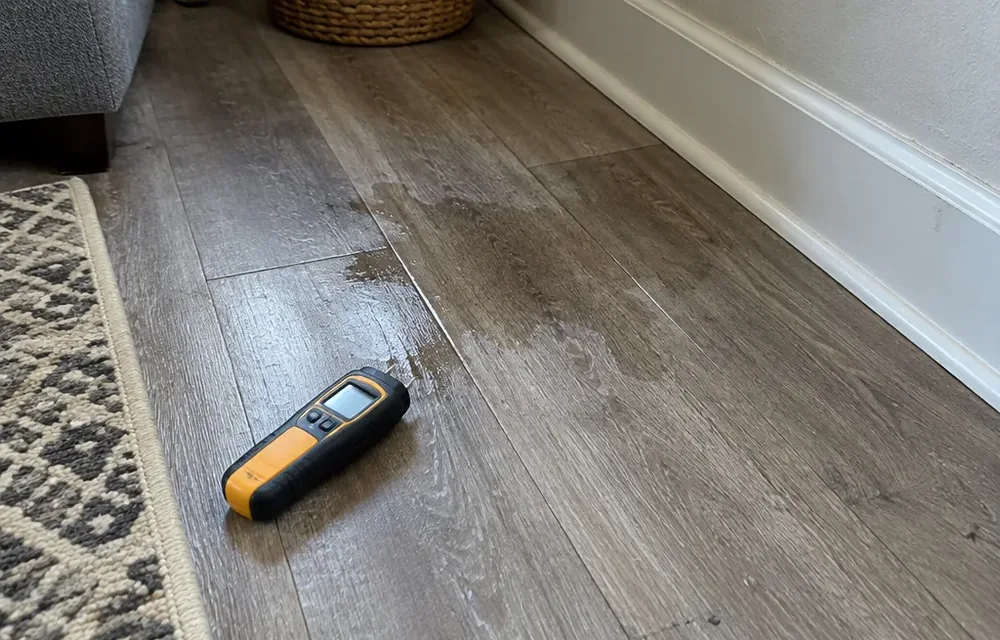
Warm patch on the floor
A floor zone that feels warm underfoot in dry weather can mark a hot line releasing water below the slab.
Damp flooring that never dries
Tile, vinyl, or carpet that stays damp at one area with dry walls above suggests moisture wicking up from below.
Hissing with taps closed
Faint hissing near the floor or at the meter with fixtures off signals movement that should rest quiet.
What slab leaks are
Direct answer: A slab leak is a pinhole, rub-through, or joint failure on a water line buried in or below the concrete slab. Water escapes under pressure into gravel and soil, then wicks upward through the slab where it damps flooring far from the actual hole. Hot-side leaks warm the floor above the path, while cold-side leaks cool and damp without warmth.
How water travels: Escaping water follows the easiest path along pipe trenches and slab joints rather than rising straight up. Flooring shows the symptom where vapor finds finish seams, while the break may sit several feet away under another room. Baseboards swell at the wet edge, tile grout darkens in patches, and carpet tack strips dampen where foot traffic never spills.
Why meters prove them: Fixture leaks stop when stops close, but slab leaks keep moving the meter with the house quiet. Hot-side slab loss also keeps the heater cycling without draws, warming the return path. Note meter creep, warm zones, and which fixtures isolate the movement, because that trio places the zone before any floor opening. See slab leak patterns and high bill from hidden loss for the checks we run.
What causes lines under slab to fail
Direct answer: Lines under slab fail from abrasion, chemistry, and movement working on copper and joints over time. Pipes rub where they pass through slab without proper sleeving, wearing thin with thermal expansion each cycle. Concrete contact and soil chemistry pit the outer wall where moisture rests against bare pipe.
Joint and layout factors: Elbows and couplings buried under slab concentrate stress where movement flexes the run. Mixed metals at transitions corrode at the joint where dielectric separation is missing. Long runs with tight bends kink slightly during pour and thin at the outer curve, opening later under normal pressure. Poor bedding with rocks pressing the wall dents the pipe where pitting starts.
Pressure and heat factors: Thermal cycling on hot lines expands and contracts the run daily, rubbing the same slab contact point with each cycle. Water hammer from fast-closing valves slams buried joints that cannot flex. Stray current in some soils speeds exterior pitting where bonding paths cross buried copper. Warm floor zones that grow through heating seasons deserve meter testing rather than longer watching.
Look-alikes worth ruling out
Direct answer: Spills, wall leaks, drain seep, and groundwater often look like slab failure and need different work. A refrigerator line, dishwasher supply, or toilet base weep can run along slab joints and surface far from the source. Shower pan and tub shoe leaks wet the slab edge only during use, while slab pressurized loss runs around the clock.
Use-tied versus constant: Wetting that appears only during showers or laundry points to drain and fixture seals rather than buried supply. Wetting that stays constant with fixtures off, with meter creep overnight, points toward pressurized supply below. Groundwater beads at wall and floor joints after rain and dries between storms, while slab supply dampness ignores weather and stays tied to meter movement.
Heater and condensation tricks: A heater relief discharge to a hidden drain mimics hot-side slab loss by cycling the burner without draws. Condensation on cold slab in humid months beads where air meets cool concrete and looks like wicking from below. Feel for warmth that marks hot lines, test meter isolation by closing fixture stops, and compare weather timing before assuming the slab must open. See wet basement entry for groundwater tells.
Where slab leaks come up locally
Direct answer: Slab leaks cluster in ranches and additions with slab-on-grade runs, in homes with buried hot loops, and where additions tie new baths into old slab piping. Slab additions hide pressurized runs where movement and concrete contact wear thin spots out of sight. Long hot runs to distant baths cycle daily against the same contact points.
Ranch and addition slabs: Ranch streets across Chelmsford and nearby neighborhoods in Billerica carry original slab runs beneath living rooms and halls where flooring changes hide early dampness. Additions that extend hot and cold under new slab without proper sleeving rub at the old-to-new joint. Warm vinyl seams and darkened grout patches in those rooms deserve meter checks before flooring repair.
Buried loops and settled soil: Split-level and colonial additions around Lowell with buried loops to remote baths show hot-side warmth along hall paths. Settled trench soil under additions shifts buried joints out of line where paper-thin walls open. Where the meter creeps with fixture stops closed and warmth maps to one hall or room, the zone narrows without opening floors across the house.
What a visit for a slab leak involves
Direct answer: A visit proves pressurized loss, isolates hot from cold, and maps the zone before any opening. We read meter creep with fixtures at rest, close fixture stops branch by branch while watching the meter settle, and listen acoustically along likely runs. We map warm and damp zones with moisture readings across flooring seams rather than single spots.
How we narrow the break: Pressure behavior on hot versus cold separates which line feeds the loss. Acoustic listening follows the loudest path along the slab, while moisture mapping outlines the wicking edge that points back toward the source. Small inspection openings come only after the zone is mapped, kept tight to the suspect run. This work follows leak detection and burst pipe repair methods that favor reroute and spot repair decisions on proof, with emergency plumbing when flooring lifts or water spreads active.
What you receive: You receive meter proof before and after isolation, a marked zone map, and repair options between spot opening and overhead reroute where access allows. We explain flooring, drying, and restoration sequence so the opening stays as small as proof allows. Where reroute above slab avoids future buried joints, we lay out that tradeoff plainly against spot repair.
Homeowner checks and damage risk
Direct answer: Homeowners can prove loss safely with meter reads, warmth mapping, and isolation notes without opening floors. Read the meter, pause all water use, then read again after quiet time to confirm creep. Walk barefoot or with a hand low over floors to map warm or damp zones room by room, and note which fixture stops were closed when creep changed.
Safe checks to try: Close individual fixture stops one at a time while watching the meter to separate fixture waste from buried supply loss. Listen at night at the meter and along warm zones for hissing with fixtures off. Photograph flooring changes with dates to show growth rather than lifting flooring to look underneath. Leave acoustic gear, pressure rigs, and slab opening to us, and keep clear of buckled flooring that trips and hides sharp edges.
Damage risk if loss stays: Steady under-slab flow keeps soil damp, wicks through flooring adhesive, and swells baseboards across widening areas. Hot-side loss keeps the heater firing without draws, adding operating waste to structural dampness. Prolonged wetting lifts tile, cups wood, and feeds musty odor that lingers after surface drying. Early meter proof costs less in flooring and drying than another billing cycle of quiet flow, especially where warmth already maps to one room. See high bill from hidden loss for how meter math exposes quiet flow.
Spot repair, reroute, or repipe: which fix fits
Direct answer: Slab zones resolve through spot opening, overhead reroute, or broader repipe, and the mapped zone plus pipe age decides among them. Spot opening cuts one tight window over a young line with a single rub-through and restores that span. Overhead reroute abandons the buried section and runs new pipe through walls or ceilings where access allows, leaving the slab untouched. Broader repipe replaces tired buried runs that keep opening at new points, trading one opening for lasting supply. This decision follows leak detection and burst pipe repair proof rather than habit.
Read the rows: Use the table below to match your evidence to the sounder fix. A tight acoustic mark on a young accessible run leans spot repair, while an aging line with prior patches or warmth across several rooms leans reroute or repipe. Flooring that cannot be patched invisibly, such as matched tile no longer made, pushes toward reroute even when the zone is tight. Pair the table with meter proof before and after isolation so the choice rests on which stops closed the creep.
Trade offs to weigh: Spot work opens the least flooring but leaves buried joints that can fail next season on old lines. Reroute avoids future buried joints at the price of longer exposed runs that need insulation and careful support. Repipe takes the most opening yet ends the cycle of patching one hole per year. Ask for the marked zone map, the hot-versus-cold isolation result, and the flooring and drying sequence in writing before authorizing any opening, and place the options beside emergency plumbing timing when water spreads active.
| Fix | What it does | Best fit | Trade off |
|---|---|---|---|
| Spot opening | Opens one tight window over the marked break | Young line, single rub-through, tight zone | Leaves other buried joints to age |
| Overhead reroute | Abandons buried span, runs new pipe above slab | Aging line or flooring that cannot patch clean | Longer run needing insulation and support |
| Partial repipe | Replaces tired buried runs to several rooms | Repeat slab events on one system | Most opening, ends the patch cycle |
| Monitor with proof | Meter reads and zone maps on a schedule | Faint signs with steady meter and no growth | Needs discipline, revisit at any change |
What shapes scope and which records help
Direct answer: Scope follows zone size, hot versus cold side, flooring type, access above the run, and whether drying and restoration join the plumbing fix. A tight cold-side mark under accessible vinyl scopes far below warmth spread across tiled halls with settled trench soil. Hot-side loss adds heater cycling waste to structural dampness, and prolonged wetting adds drying time that sits outside the pipe fix itself. No phone figure can see these traits, so meter proof and zone maps on site carry more weight than any average.
Records worth keeping: Dated meter readings with fixtures at rest, room-by-room warmth and damp maps, which fixture stops changed the creep, flooring change photos with dates, and heater cycling notes without draws together form the file that sizes the fix. Keep prior plumbing invoices that name buried materials and earlier patches, because a line patched twice argues reroute over a third opening. That file also settles later questions about when damage started, which matters when you review high bill from hidden loss and wet basement entry notes with the visit.
What to ask before authorizing: Ask what the meter showed before and after isolation, whether loss sits hot or cold side, how the acoustic path and moisture edge point to one zone, and what the flooring, drying, and restoration sequence involves. Ask why spot work suffices or why reroute avoids the next failure, in plain terms tied to your maps. Where water spreads active or flooring lifts underfoot, timing follows emergency plumbing judgment rather than watchful waiting.
The service that fixes it
Related services
Related problems
Frequently asked questions
How do I know a damp floor is a slab leak or groundwater?
Use meter and weather timing, because slab supply loss creeps the meter with fixtures off in any weather. Groundwater beads at wall joints after rain and dries between storms with a steady meter. Warmth underfoot and overnight creep point to buried hot supply rather than seep.
Does a slab leak always mean breaking the floor?
No, many zones resolve with overhead reroute that abandons the buried section without trenching living space. Spot opening fits where the zone is tight and flooring allows clean repair. Mapping with meter, sound, and moisture proof decides between opening and reroute.
Why does one room feel warm underfoot in dry weather?
A hot line below the slab releases heated water that warms the concrete path above the break. Heat spreads along the trench rather than straight up, so warmth may sit feet from the hole. Meter creep with fixtures off plus mapped warmth marks that path for listening.
What should I note before calling about a slab leak?
Note meter readings with fixtures off, warm and damp zone maps by room, and which stops changed the creep. Note flooring changes with dates and heater cycling without draws. That record lets detection help start at the right zone instead of retesting the whole house.
Spot repair or reroute: how do I choose?
Match the fix to zone proof and pipe age. A tight mark on a young accessible run fits spot opening, while an aging line with prior patches or warmth across several rooms fits overhead reroute that abandons buried joints. Flooring that cannot patch invisibly also pushes toward reroute. Ask for the marked zone map and the hot-versus-cold isolation result before authorizing either path.
How long can a slab leak wait once the meter creeps?
A creeping meter with mapped warmth or spreading damp should not wait through another billing cycle, because steady flow widens soil dampness, flooring damage, and heater waste on hot-side loss. Faint signs with a steady meter and no growth can be rechecked on a short schedule with dated reads. Where flooring lifts or water spreads active, timing follows emergency plumbing judgment the same day.
Seeing slab leaks?
Call and describe the symptom. A local specialist will tell you the sensible next step.