Signs
Unknown material in the supplier inventory
A listing that reads unknown or needs verification means the line age and material were never confirmed at your address.
Older house with original street connection
Mill-era and mid-century connections installed before current material standards deserve a records check even when water looks clear.
Recent street work letter about your line
Notices about inventory surveys and replacement programs often follow main work that exposes service materials.
Soft gray pipe at the entry wall
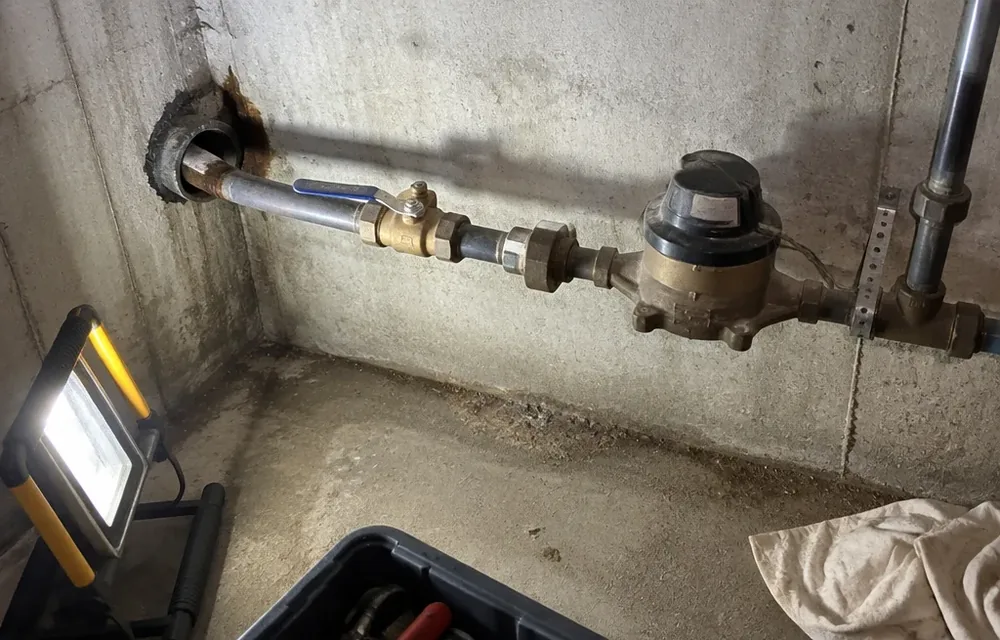
A dull gray service entering through the foundation wall with a bulb-shaped wiped joint suggests older material that needs pro identification.
What lead service lines are
Direct answer: A service line is the pipe that carries town water from the street main to the house shutoff and meter. In many New England neighborhoods some of those lines were installed generations ago in materials no longer used, including lead on certain street-side and house-side sections. The line usually runs under the yard and enters through the foundation wall near the main shutoff valve.
Why records matter more than looks: Pipe appearance alone cannot prove material, because paint, grime, and partial replacements hide older sections. Supplier inventories combine tap cards, main work notes, and field checks to list each address as known material or unknown needing verification. A house with newer indoor copper can still have an older yard service where only the visible basement section was changed.
How planning starts: Planning starts with the supplier inventory result for your exact address, plus the entry pipe location and shutoff access inside. Photos of the entry area without scraping or cutting help a specialist see routing and access. Note the inventory wording, any letters about surveys or replacement programs, and whether past street work touched your curb stop. See service line patterns and low pressure from old services for the mapping we use.
What causes service line concern
Direct answer: Concern comes from age, partial replacements, and disturbed scale combining along older yard piping. Older services corrode and collect scale where soil and water chemistry meet the pipe wall. Construction vibration, main work, and meter swaps can stir loose material that then moves toward house taps.
Partial replacement gaps: Many streets saw only the town-side or house-side changed during past main projects, leaving a mixed line with older material still in the ground. Indoor repipes that stop at the foundation wall leave the yard section untouched where records may still list unknown. Each joint between old and new material becomes a point to map carefully before any digging or lining discussion.
Disturbance triggers: Street main flushing, hydrant use, and nearby excavation change flow and pressure that stir settled material in older services. Long idle periods in vacant homes let water rest in the service where particulate gathers. Whole-house filter and softener changes after such events clog faster as loosened material reaches house screens. Gentle cold flushing at a hose bibb ahead of treatment gear, plus aerator cleaning afterward, keeps loosened material from lodging in faucet screens.
Look-alikes worth ruling out
Direct answer: Interior pipe scale, heater sediment, and solder joints often explain tint and specks without any yard service issue. Brown first draws that clear with running at one bath usually sit in that branch or the heater rather than the street service. Green crust at copper joints and white mineral at aerators mark interior chemistry rather than service material.
Branch versus service: Color across every tap at once after street work points toward the main and service path, while hot-only color points to the tank. Grit that gathers in one aerator after a faucet swap points to that branch rather than the yard line. If neighbors on the same main show the same tint at the same hour, let the main settle and flush gently rather than assuming the house service alone drives it.
Lead paint and dust confusion: Older homes can have several legacy materials, and tap water concerns sometimes mix with paint and dust questions that need different specialists. Service line planning stays focused on the buried water pipe route, inventory wording, and entry material clues. Keep paint, soil, and water questions with their own qualified pros, and avoid scraping or sanding any suspect pipe coating while checking. Compare rusty water from interior scale for branch-side tells.
Where older service lines come up locally
Direct answer: Older service lines come up most on mill-era streets, in early subdivisions with original street connections, and where town-side replacements already passed through. Homes near older mains carry the longest record gaps, with tap cards that predate current inventory methods. Streets with phased main work often show a patchwork where some addresses list verified material and neighbors still list unknown.
Mill-era and Center streets: Neighborhoods around Chelmsford Center and mill-era blocks across the line in Lowell hold many original street connections behind layered remodels. Basement entries there often hide behind finished walls where the visible copper starts past an older wall penetration. The Lowell Regional Water Utility publishes a lead service line inventory and replacement program, so addresses in its service area should check the current utility listing for their exact street status.
Subdivisions and town lines: Early subdivisions through Tyngsborough and nearby streets with town water ties show mixed records where builder-era services meet later main upgrades. Homes near supplier boundaries should confirm which supplier serves the address before searching, because inventories follow the supplier rather than the town line. Where letters about surveys arrive, respond with entry access details rather than opening walls or digging test pits.
What a visit for service line review involves
Direct answer: A visit maps the route, documents entry access, and lines up supplier coordination without disturbing suspect material. We locate the main shutoff and meter, trace the likely yard path from curb stop to entry wall, and note depth cues, access limits, and interior finishing that shapes any future work. We record inventory wording and help frame the right questions for the supplier program.
How we coordinate replacement: Replacement planning involves the supplier for the street-side portion and the property side work with proper permits and inspection, often staged to limit time without water. We map shutoff control, bypass needs, and restoration of walks and beds over the path. Pipe route proof comes from records, locates, and careful exposure by qualified hands rather than homeowner digging near utilities. This work follows leak detection and burst pipe repair routing methods for yard services, with water treatment and filtration guidance only as an interim measure while replacement is planned.
What you receive: You receive a plain read on inventory status, route and access, and which supplier program step fits next. We explain curb stop control, interior shutoff use, and how to use certified filters and flushing guidance from the supplier or a water specialist in the interim. Where records already list verified non-lead material, we say so plainly so planning can focus on interior piping instead.
Homeowner checks and damage risk
Direct answer: Homeowners can check records, entry access, and filter use safely without touching the pipe wall. Look up your exact address in your water supplier inventory and save the wording it shows today. Find the main shutoff and entry area, clear storage for viewing access, and take photos from a distance without scratching, scraping, or heating the pipe.
Safe checks to try: Ask the supplier how to verify unknown listings and what survey or replacement program steps cover your street. Use certified filters according to maker and specialist guidance for drinking and cooking while planning proceeds, and follow supplier flushing advice after long idle periods. Clean aerators gently after main work so loosened material does not lodge in screens. Leave material testing, excavation, and pipe cutting to qualified pros with proper utility locates.
Planning risk if review waits: Waiting leaves unknown listings unresolved through future main work and property sales where records get asked for first. Older services also leak at joints and where rocks press the wall, softening soil along the path and settling walks. Partial records slow emergency response when shutoff control is unclear. Early inventory lookup plus entry access photos cost little and keep replacement, filter, and shutoff planning ready before the next street project reaches your block.
The service that fixes it
Related services
Related problems
Frequently asked questions
How do I check my address for a lead service line?
Start with your water supplier inventory search for your exact address and save the wording it shows. The Lowell Regional Water Utility publishes a lead service line inventory and replacement program for its service area. If your supplier differs, use their inventory instead, because listings follow the supplier rather than the town line.
Can I tell lead pipe by scratching or looking at color?
No, visual checks alone cannot prove material, and scratching or heating suspect pipe risks exposure and damage. Paint, grime, and partial replacements hide older sections where they matter most. Use the supplier inventory plus pro identification with proper access instead of home scrape tests.
Do certified filters address service line concerns?
Certified filters selected with a water specialist can reduce particulate at drinking taps while replacement is planned, when matched and maintained to maker guidance. They do not change the buried pipe material or remove the need for inventory verification. Treat them as an interim step tied to supplier advice, not a final fix.
What should I note before calling about a service line?
Note the supplier inventory wording for your exact address, any program letters, and entry pipe location with shutoff access photos from a distance. Note past street work and whether indoor piping was ever repiped to the wall. That record lets service line help frame supplier coordination without repeat visits.
Seeing lead service lines?
Call and describe the symptom. A local specialist will tell you the sensible next step.