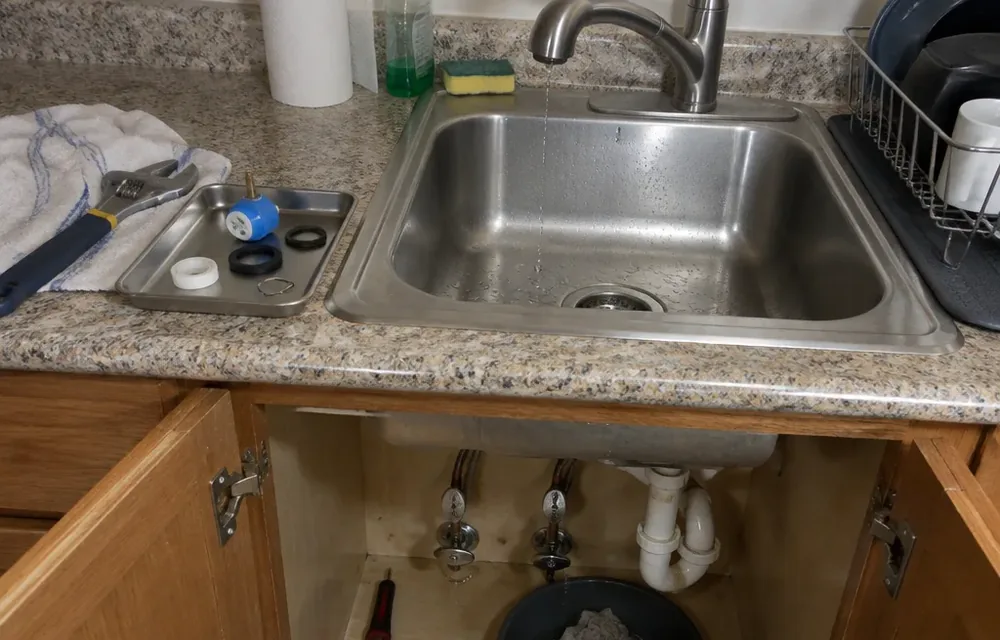
Signs
Steady drip after firm closing
A spout that resumes dripping within moments of closing often has a scored seat or worn cartridge that no longer beds fully.
Handle that needs extra force
A handle that only seals when muscled shut usually has a tired cartridge or swollen seal that should be renewed rather than forced.
Drip joined by weak flow
A tap that both drips and runs thin often shares one cause in scale and grit packing the cartridge and aerator together.
Base weep with spout drip
Water at the tap base plus the spout points to worn O-rings and seals beyond the closing parts alone.
A dripping faucet is a tap that no longer beds shut
Short answer: a dripping faucet is a valve whose closing surfaces meet with a gap, so line pressure pushes a steady bead through. A dripping faucet differs from a running toilet because the loss shows at the spout, and it differs from a supply seep because the cabinet below often stays dry while the basin wets. The handle type tells us which parts to expect inside.
What you are seeing: single-handle taps rely on a cartridge with ceramic discs, two-handle taps rely on stems and seats, and pull-down kitchens add hose, weight, and spray-head seals that can mimic a spout drip. Grit from upstream stops scores those surfaces, and overtight closing grinds the score deeper with every use. A drip that worsens after a washer-only change often means the seat itself is scored.
Why brand matters: correct factory cartridges, seats, and O-rings match the body within close tolerance, while near-fit parts rock and pass within days. Note the brand and model under the sink or on the escutcheon, and photograph the handle and spout before the visit. That detail lets the right kit arrive with the visit rather than after it.
Wear, scale, and gritty stops cause most drips
Short answer: most drips come from worn closing parts, mineral scale, and rust shed by old stops. Hard, mineral-bearing town water leaves scale on discs and seats across Chelmsford, and that grit scores ceramic faces so cleaning helps for a short while and then fails again. Each forced closing after scoring widens the path.
Part-side causes: cartridges with tired seals, stems with flattened washers, seats with pits and grooves, and O-rings that have taken a set each pass water along a different route. Spray heads with tired diverters dribble from the wrong outlet, and loose bonnet nuts let water track around sound cartridges. A faucet that drips from the base during use points to body seals rather than closing parts.
Supply-side causes: galvanized nipples and old stops corrode from the inside and shed rust that fouls new cartridges within weeks when those stops remain. Stops left half closed after service starve the tap and invite hammer that works seals loose. Steady street pressure that surges overnight finds the weakest seal first, which is why the most-used kitchen tap often leads the house into dripping.
Some spout water is not a faucet drip
Short answer: a weeping supply, a trap leak, and a shower mixing fault can all wet the same area while the cartridge tests sound. Water under the sink with a dry spout points to supplies, stops, or trap joints rather than closing parts. Warm water at a cold tap after still hours points to mixing elsewhere in the branch.
Cabinet-side look-alikes: a braided supply with a slow weep, a stop with a damp packing nut, and a P-trap with a loose slip joint each pool in the cabinet and can be mistaken for a spout path. Dry the cabinet fully, lay a dry towel, and run the tap without touching drains to separate spout from cabinet sources. A disposal flange that weeps during use adds a third path in kitchens.
Branch-side look-alikes: a single shower that runs cold while the sink drips hot points to a cartridge at the shower rather than the sink. A running toilet that passes continuously can raise use while the faucet drip looks like the whole story. When the meter moves with every tap closed at the stops, ask about a hidden supply path and high water bill from a hidden leak rather than another faucet washer.
Drips follow familiar Chelmsford-area water patterns
Short answer: mineral grit, older stops, and busy kitchens shape local drip calls. Scale-bearing town water around Chelmsford, older vanity stops in baths near Burlington and Bedford and hard-working kitchen taps in family homes all wear closing surfaces faster.
Where wear leads: kitchen pull-downs that serve cooking, rinsing, and pot filling cycle cartridges far more than spare baths, so the kitchen leads while guest baths stay sound. Bath lavatories with small cartridges pack with grit first, and laundry-adjacent slop sinks with hose threads collect sediment that migrates to the kitchen branch. Finished kitchens with stone and tile demand slower, cleaner removal when the time comes.
Where supply feeds the cycle: streets with steady pressure show drips first at taps with tired stops that shed rust, and softeners overdue for service send fines downstream that lodge in new discs. Addition kitchens with long branches receive the grittiest water, and basement bars with rarely exercised stops seize just when the drip needs isolation. Clearing aerators without renewing rusted stops often restarts the same drip within weeks.
A fixture visit matches parts and renews the water path
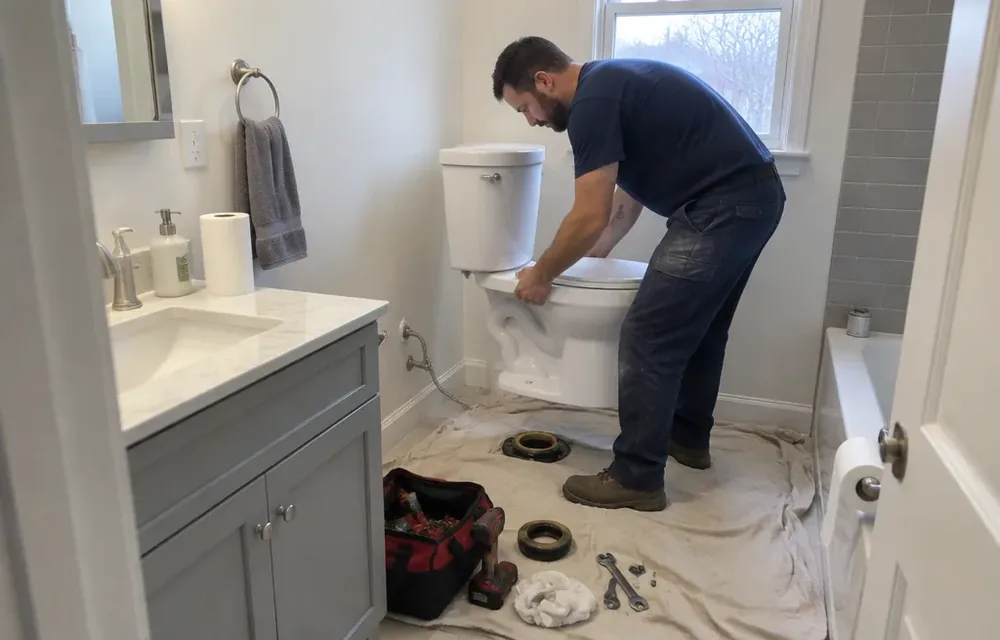
Short answer: a fixture installation, faucets and toilets visit tests stops and supplies, fits factory closing parts, and retests under pressure. We ease each stop gently, check supplies for bulge and rust, and confirm the main location before parts come out. You see the scored part before it is replaced.
How the work proceeds: the branch is flushed before new parts are fitted so grit does not score fresh discs on the first run. Cartridge, seat, and seals are renewed as a matched set where wear links them, and bonnet and base seals are dressed without overtightening. Where stops spin or weep, they are renewed with braided supplies as part of the same visit so isolation works next time.
How replacement is weighed: a sound body with available parts and intact finish returns with repair, while a pitted body, a finish that will not clean, or parts no longer made point toward a new tap. Swaps allow stops, supplies, and seals to be renewed together rather than layered on tired valves. We set handles to close with light pressure, confirm hot and cold orientation, and watch joints below while the spout runs.
Gentle homeowner habits help while force harms
Short answer: close taps lightly, rinse aerators, and note hot against cold without muscling handles or stops. Heavy closing grinds scored faces deeper and turns a light drip into a steady stream. Photograph the brand area and write down whether the drip persists with the stops eased closed.
What you can do safely: lift pull-down heads and check for spray-head dribble versus spout drip, dry the base and watch for tracking during use, and keep the cabinet dry with a towel test. Clean aerators by rinsing rather than picking at screens, and keep stone and tile around the base dry so seal paths stay visible. Leave stuck stops alone and use the next upstream valve when isolation is needed.
Waste and harm risk from delay: a steady spout drip wastes water around the clock and stains basins, while base weeps swell vanity wood and loosen mounting nuts over time. Forcing a seized stop often snaps the stem and turns a planned part swap into an open spray, and near-fit cartridges layered on rusted supplies foul again on a short cycle. Light handling plus a matched part set protects finishes and piping more than repeated tightening while the drip continues.
The service that fixes it
Related services
Related problems
Frequently asked questions
Why does my faucet drip after a new washer?
A returning drip usually means a scored seat, a near-fit cartridge, or grit feeding from an old stop upstream. Hard water scale scores discs rapidly when rust sheds from supply valves. Renewing stops and supplies with the cartridge, plus flushing the branch before fitting parts, breaks the cycle more reliably than another washer alone.
Is a dripping faucet wasting much water?
Yes, a steady bead that never pauses adds up continuously because the loss never rests. One tap can waste a notable volume over days while looking minor at the basin. Timing drips into a cup for a short while shows the rate plainly. Correct parts plus clean supply stops the loss at the source.
Should I repair the faucet or replace it?
Repair fits a sound body with available factory parts and intact finish. Replacement fits pitted bodies, finishes that will not clean, parts no longer made, or base damage that will not seal. We test stops and supplies first, because tired valves argue for a swap with renewed connections rather than another layer on old plumbing.
What should I avoid forcing myself?
Avoid muscling handles that only seal under heavy pressure and avoid forcing supply stops that spin or weep. Snapped stems and cracked bonnets turn a small drip into an open flow. Light aerator rinses and pattern notes help, while stuck valves and cartridges belong with proper tools and matched parts.
Seeing dripping faucet?
Call and describe the symptom. A local specialist will tell you the sensible next step.