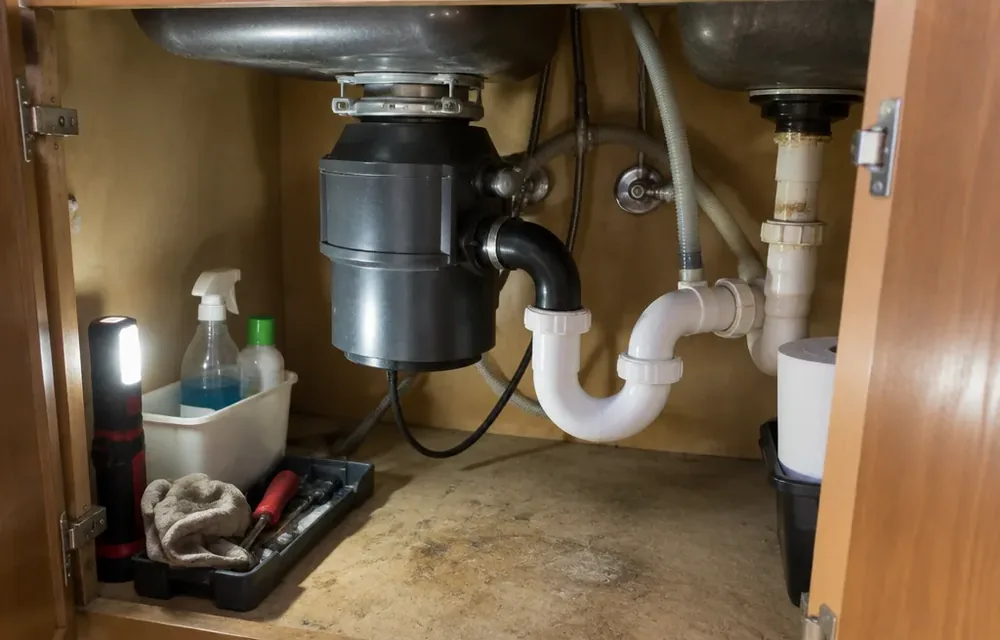
Signs
Humming with no grinding
A steady hum with standing water in the sink usually means the plate is wedged and the motor strains against the jam.
Dead unit after a hard load
Silence after bones, pits, or shells often means the overload tripped or the internal breaker opened to protect the motor.
Sink that drains slowly on both sides
Water rising in both bowls with the disposal off points to a shared trap or branch blockage beyond the disposal chamber.
Rattle that stops when off
A harsh rattle that follows the switch often means metal, glass, or bone lodged where the plate should spin free.
What a disposal jam is
Direct answer: A disposal jam is a wedged grinding plate or lodged object that stops rotation while power still reaches the motor. The unit hums, trips its reset, or sits silent depending on where the wedge sits and how long the switch stayed on. It differs from a dull unit that spins but grinds slowly and from a drain clog that backs up the sink while the disposal itself spins free.
How jams form: Fibrous peels wrap the plate edge, starchy foods swell into paste that locks the gap, and bones or pits wedge between plate and ring. Spoons, twist ties, and glass shards drop in unseen and catch at the first start. Running too little water while grinding lets waste pack the chamber instead of washing through the trap, which sets up the next start to jam.
Why sound matters: A low hum means the motor tries to turn against the wedge and should be switched off quickly. A rattle means a hard object bounces with the plate and may score the chamber if run longer. Silence with a warm housing means the overload opened and needs cool-down plus reset before any retest. Note the sound and the last load, because those two facts place the jam faster than repeated switch flips. See disposal jam patterns and clogged drain signs for the checks we run.
What causes disposal jams
Direct answer: Disposal jams come from hard objects, fibrous and starchy loads, and low-water grinding that packs the chamber. Bones, fruit pits, shells, and metal or glass pieces wedge the plate edge on contact. Celery, onion skins, corn husks, and potato peels wrap or paste the gap so the next start cannot break free.
Use habits that pack the trap: Grinding large batches at once, running hot water that melts grease into the trap, and shutting off fast without a rinse all leave waste sitting past the disposal. Grease cools in the shared trap and branch, where it grabs grounds and starch into a slow secondary blockage. Small loads with steady cold water carry waste through, while dry grinding lets it settle where the next load compacts it.
Age and setup factors: Older units with worn plates and loose splash guards pass less waste per start and jam on loads a newer unit clears. Shared traps with the second bowl, long flat trap arms, and dishwashers tied without proper knockouts slow the exit path. A unit wired without an air switch or wall switch within reach gets run longer than needed, which heats the motor and shortens the time before the overload opens.
Look-alikes worth ruling out
Direct answer: Drain blockages, dead power, and worn grinders often look like jams and need different work. A disposal that spins free while both bowls stay full points to a trap or branch clog past the unit rather than a wedged plate. A unit that stays silent with no hum often lost power at the breaker, the switch, or a loose cord connection rather than jammed.
Drain versus disposal: Run the disposal briefly with water and watch both bowls. If grinding sounds normal but water rises in both sides, the shared trap or branch holds the waste. If the unit hums without grinding and water stands only on the disposal side, the chamber wedge is the likely cause. Chemical openers do not free a wedged plate and they endanger the next hands in the trap, so skip them and test mechanically instead.
Power and wear tells: A tripped breaker, a switched outlet turned off at the wall, and a reset button still popped all mimic a dead motor. A unit that spins but leaves stringy waste and needs repeated runs has dull plates and worn rings rather than a single jam. If the housing leaks at the sink flange or the body seam, or the motor smells hot after short runs, repair planning beats another reset. Compare slow tub and sink drainage for branch-blockage tells.
Where disposal jams come up locally
Direct answer: Disposal jams cluster in busy family kitchens, in homes with long cool drain runs, and where holiday loads meet older units. Large meal prep sends peels, starch, and grease down together, which packs chambers and shared traps in one evening. Older disposals in capes and colonials grind slower and pass less per start, so the same load jams where a newer unit clears.
Family kitchens and cool runs: Kitchens across Chelmsford and nearby streets in Billerica feed long runs through cool basements where grease sets before the street. That cooled grease grabs grounds and starch just past the trap, so the sink behaves jammed even while the plate spins. Cold-water grinding in small batches plus sink strainers cuts more trouble there than a larger motor alone.
Older units and rentals: Rentals and busy households around Lowell see more utensil and glass drops plus batch grinding without rinse time. Worn splash guards let silverware slip in unseen, and shared double-bowl traps hide slow exit flow until both sides rise. Where jams return weekly despite careful loads, the exit path and unit condition matter more than the last meal that went down.
What a visit for a disposal jam involves
Direct answer: A visit frees the plate safely, proves the drain carries, and checks whether the unit should stay. We cut power, clear the chamber by hand tools without reaching inside, free the flywheel, and reset the overload after cool-down. We run cold water with small test loads and watch both bowls plus the trap for backup that signals branch trouble beyond the unit.
How we test repair versus swap: We check plate movement, grind sound under load, housing and flange leaks, and age wear at the splash guard and rings. A sound unit that frees cleanly and grinds test loads without rattle stays with use guidance. A unit that seizes again, leaks at the body, or needs repeated resets has reached the end of reliable service. This work lines up with fixture installation for faucets and toilets when a swap fits and with drain cleaning when the shared trap or branch holds waste past the disposal.
What you receive: You receive a plain read on jam cause, unit condition, and drain behavior under load, plus which loads and water habits keep it clear. We show what came out of the chamber and how the trap drains after clearing so the result is visible. Where a swap fits, we explain size, feed type, and trap changes without pushing power that the drain path cannot carry.
Homeowner checks and damage risk
Direct answer: Homeowners can check power and reset safely without putting hands inside the chamber. Switch the wall control off, look inside with a light for visible objects, and remove them only with tongs or pliers. Press the reset button on the housing bottom once after cool-down, run cold water, then flip the switch briefly to test for free spin.
Safe checks to try: Check the breaker and any switched outlet serving the unit before assuming motor failure. Clear standing water load by bailing rather than running a wedged motor against water weight. Use the manual hex slot underneath with the proper wrench to work the plate free only where the manual shows it and power stays off. Never reach inside, never run the unit with the splash guard lifted, and never pour chemicals that sit in the chamber and trap.
Damage risk if jams stay: Running a humming motor against a wedge heats windings and shortens motor service with each long attempt. Forced water through a packed trap pushes waste into dishwasher hoses and second bowls. Leaking flanges soak cabinet bases, swell particle board, and feed odor that lingers after the jam clears. Early shutoff and one careful reset cost less than a burned motor plus a soaked cabinet, especially where rattling signals metal or glass inside.
The service that fixes it
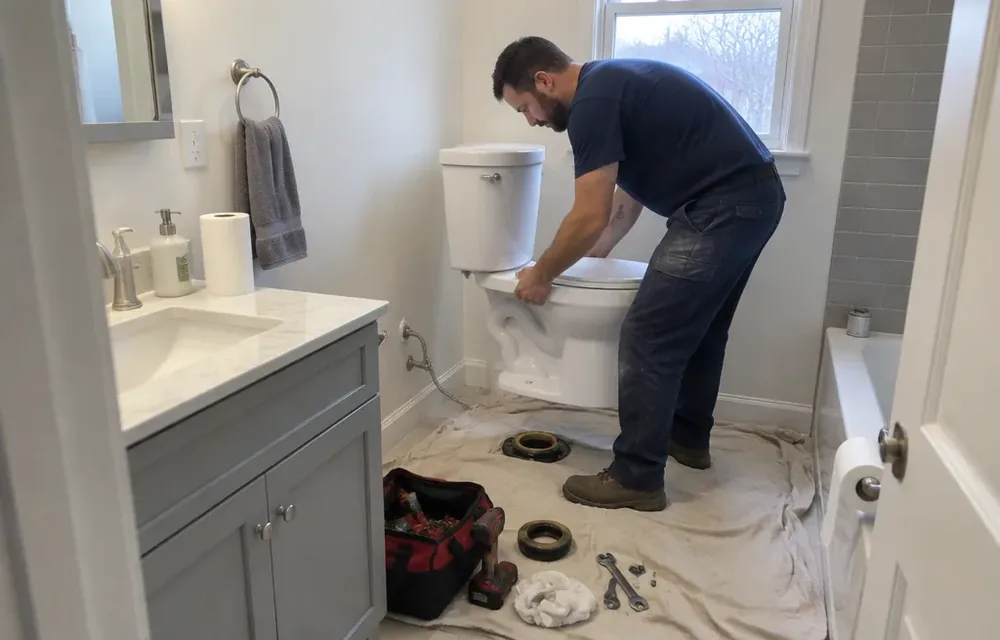
Related services
Related problems
Frequently asked questions
My disposal just hums. Should I keep flipping the switch?
No, switch it off and leave it off, because a hum means the motor strains against a wedge and heat builds with each attempt. Check for a tripped reset after cool-down and look for visible objects with a light. One brief retest after freeing and reset is enough, and continued humming needs hands-on help.
Can I use chemicals to clear a disposal jam?
No, openers do not free a wedged plate and they leave caustic water sitting in the chamber and trap. The next person who opens the trap or frees the plate meets that chemical. Mechanical freeing with power off plus a trap check clears the cause without the burn and splash risk.
When does a jam mean the disposal needs replacing?
When the plate seizes again after careful freeing, the housing leaks, or the motor needs repeated resets on normal loads. Spinning without grinding and hot smells after short runs also mark worn plates and tired motors. A sound unit frees cleanly and grinds test loads without rattle.
What should I note before calling about a jam?
Note the sound with the switch on, what went down last, and whether both bowls back up or only the disposal side. Note reset and breaker state and any housing leaks into the cabinet. That record lets fixture help separate a simple wedge from drain-side trouble on arrival.
Seeing garbage disposal jam?
Call and describe the symptom. A local specialist will tell you the sensible next step.