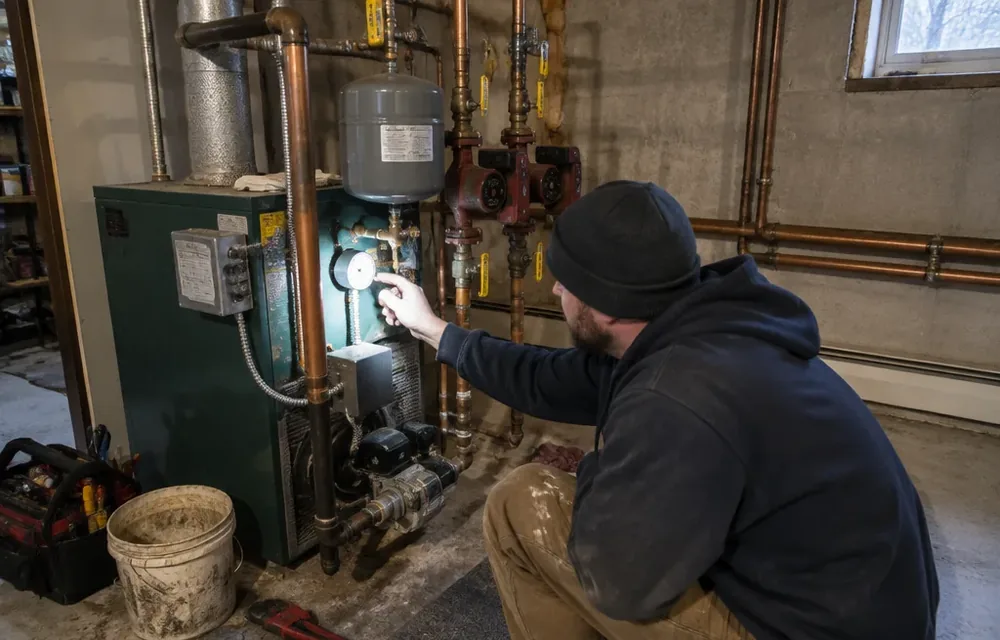
Signs
Cold rooms with calling thermostats
Zones that stay cold while thermostats show a call often have air, a still circulator, or a zone valve that never opens.
Gauge falling with relief damp
Pressure that drops daily plus moisture at the relief tube points to expansion, feed, or leak behavior rather than thermostat setup.
Lockout code with humming burner
A unit that attempts to fire then locks out often has ignition, airflow, or safety-limit trouble that needs testing before resets.
Banging with uneven upstairs heat
Kettling, banging, and cold upper radiators together often mean sludge, air, or pump flow favoring the short loop.
Boiler no heat is lost circulation or lost fire
Short answer: boiler no heat is heat made but not moved, or heat never made because a safety or control holds the burner off. Boiler no heat differs from a cold single radiator because several rooms or a whole zone stay cold together, and it differs from a dead thermostat because the unit itself shows pressure, code, or noise clues. Gauge plus code plus zone pattern names the side to test.
What you are seeing: air trapped high in radiators blocks flow so lower rooms warm while upper rooms lag, sludge settles low and starves far loops, and a tired circulator hums without moving water. On the fire side, ignition faults, blocked intake or vent paths, and tripped limits keep the burner off even though thermostats call. Relief damp and frequent feed hissing mark pressure-side strain that accompanies either side.
Why readings matter: cold pressure against hot pressure shows expansion behavior, bleed water color shows sludge load, and the exact code plus which zones call shows whether one part or the whole sequence is held off. Photograph the gauge and display before touching switches, because readings taken before resets guide testing far better than memory after several restarts.
Air, sludge, pressure, and controls cause most outages
Short answer: most outages come from trapped air, system sludge, expansion and feed faults, and single failed controls. Each makeup fill adds oxygen and minerals that settle in the lowest radiators first, so upstairs rooms often cool first as sludge builds. Air separators and vents that no longer pass air let bubbles collect high and block flow loop by loop.
Water-side causes: expansion vessels that lost charge let pressure swing wide so relief weeps on heat and feed hisses on cool, zone valves that stick shut starve one loop while others warm, and circulators with worn bearings move less water each season. Bleed valves that always spit air mark makeup and venting trouble rather than normal operation. Pumps sized for the original house often starve newer addition loops that were never balanced.
Fire-side causes: electrodes and sensors fouled by season buildup, filters and strainers loaded with debris, and intake or flue paths narrowed by nesting or corrosion each hold the burner off under safety logic. Thermostats set for the wrong heat type, switches left off after service, and low-water behavior after a slow seep each mimic a dead boiler while the block itself remains sound. Soot, scorch, or strong fuel odor moves the call to utility clearance before heating work.
Some cold rooms are not boiler failure
Short answer: a closed balancing valve, a wrong thermostat setting, or a frozen branch can keep rooms cold while the boiler tests sound. When the boiler gauge holds and the burner cycles normally yet one far room lags, distribution or settings deserve the first look. Bleeding one radiator that then heats for weeks points to air management rather than a new unit.
Setting and distribution look-alikes: thermostats left on cooling or set for forced air, balancing valves closed after a remodel, and furniture blocking fin baseboard each starve rooms without any burner fault. A single air-bound radiator that bleeds back to hot needs venting and balancing rather than burner parts. Where only domestic hot water fades, read no hot water and water heater leaking for tank-side paths.
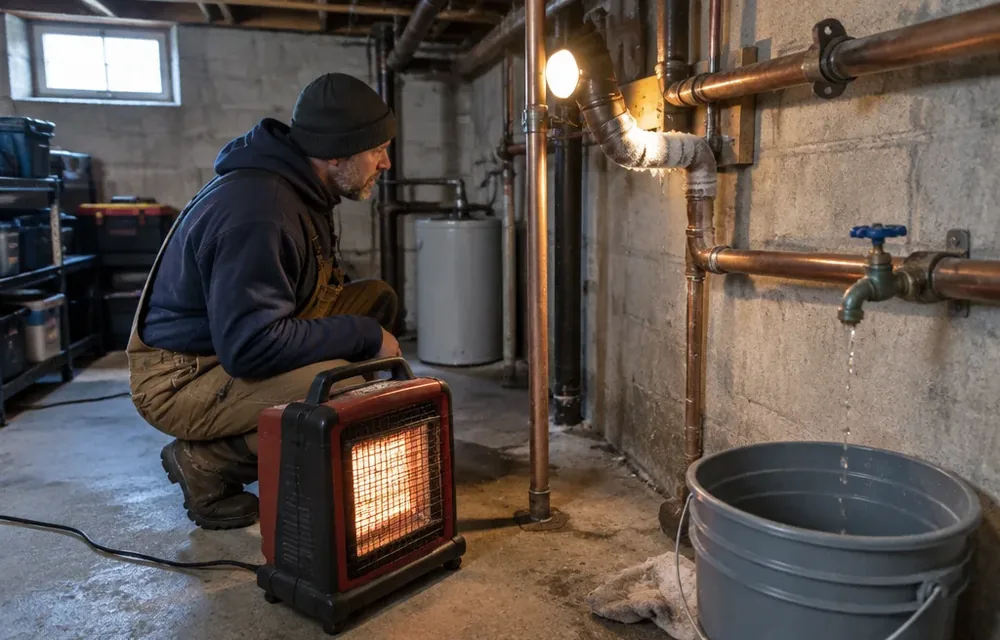
Freeze and power look-alikes: a branch through a cold chase that has iced slows one loop while the boiler runs, so read frozen pipes when that loop serves an addition over a garage. An outage that follows a power flicker may need only control setup rather than parts. When radiators gurgle with drains elsewhere, keep heating and drain searches separate rather than assuming one cause.
No-heat calls follow familiar Chelmsford-area systems
Short answer: hydronic colonials, capes with additions, and oil or gas basements shape local no-heat patterns. Single boilers feeding fin baseboard or cast radiators around Chelmsford, zoned systems with far addition loops near Westford and Acton and tight mechanical corners all show the same strain points.
Where flow lags: original pumps favor short loops and starve far addition zones, low radiators collect sludge while high units collect air, and basement headroom limits air-separator and expansion service. Finished basements hide manifold and valve locations behind panels, so far rooms are bled last and least. Cold snaps expose weak expansion charge with relief drips on the coldest nights.
Where fire lags: oil setups with filters and nozzles due for care lock out most often during sustained cold, while gas setups with long lateral vents spill or sense poorly under wind. Makeup chemistry from town water stays consistent here, so untreated fills show the same sludge tint house after house. Streets with many colonials and capes repeat the lesson that water treatment plus balancing does more than raising the aquastat.
A boiler visit proves safeties, flow, and controls in order
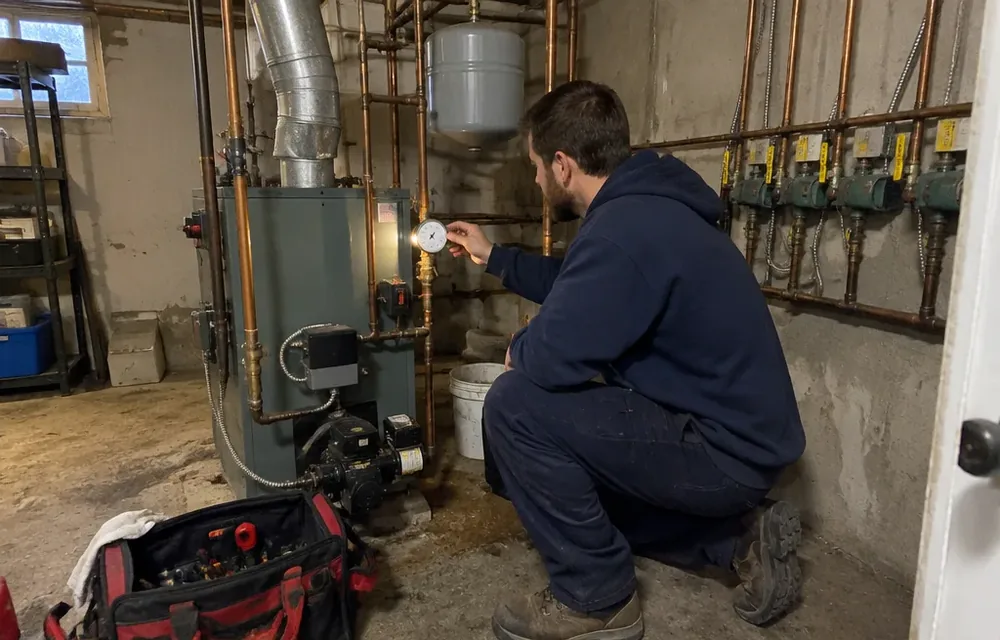
Short answer: a boiler installation and servicing visit checks gauges and codes, verifies venting and safeties, and cycles each zone before parts are named. We record cold and hot pressure, relief behavior, and which zones call, then test limits and low-water behavior with the burner observed. You see readings before any recommendation.
How testing proceeds: flue condition, combustion air, and relief discharge are checked first for safety, then circulators, zone valves, air elimination, and expansion charge are tested for movement. Burner, ignition, and fuel-side filters join the same pass where the fire side is held off, and system water tint guides flushing and treatment talk. Error codes are read as symptoms rather than verdicts until flow and safety tests confirm them.
How repair or swap is framed: a sound block with one failed circulator, tank, valve, or control returns with targeted parts and balancing, while section leaks, a compromised heat exchanger, parts no longer made, or venting that cannot be made sound move the talk toward a new unit. Near-boiler piping, condensate handling, and zone relay needs join the same explanation. We lay out permit and inspection steps where work is planned so sign-off holds no surprise.
Careful homeowner checks help while repeated resets harm
Short answer: note codes and gauges, confirm heat settings, and keep the area clear without repeated restarts. Check that the boiler switch is on, thermostats show heat with setpoints above room temperature, and the area has combustion air with the door unblocked. Write down pressure cold and hot plus the exact code wording.
What you can do safely: bleed only where you know the valve and can catch water without scald, keep the boiler front and vent terminal clear, and photograph gauge, display, and relief damp for the visit. Space heat calls across zones where possible and keep pipes in cold chases in view while rooms recover. Keep clear of soot, scorch, strong fuel odor, and carbon monoxide alarm activity, which need utility or fire clearance first.
Harm risk from force or delay: repeated resets on a locked burner mask the fault and can flood the chamber or overheat wiring while the house stays cold. Bleeding without watching pressure can drop the system low enough to trip low-water behavior and widen the outage. Water left weeping at relief or section joints wets nearby controls and framing, and rooms allowed to drift toward freezing invite split supply in cold chases. Steady observation with one careful reset attempt protects more than cycling the switch while the cause remains untested.
The service that fixes it
Related services
Related problems
Frequently asked questions
What should I check when the boiler will not fire?
Confirm the boiler switch is on, thermostats call for heat with setpoints above room readings, and the display code is written down with gauge readings. Keep the front and vent path clear and avoid repeated resets. We test safeties, flow, and ignition in order so a single control is not mistaken for a failed block.
Why are upstairs radiators cold while downstairs warms?
Upper cold with lower warmth often means air trapped high, sludge settled low, or flow favoring the short loop. Note bleed water tint and whether bleeding restores heat briefly or for weeks. Balancing, flushing, and air elimination often restore even heat without new equipment. Pump sizing for addition loops joins the same check.
Should I keep resetting a locked boiler?
One careful reset after noting code and gauges is enough while waiting for help. Repeated restarts hide the cause and can worsen burner and control strain. If soot, scorch, strong fuel odor, or alarm activity is present, leave the unit off and seek utility clearance first rather than attempting heat.
When does no heat point to replacement?
Replacement fits section leaks, a compromised exchanger, unavailable controls, or venting that cannot be made sound, while sound blocks with one failed moving part return with repair. Test results plus parts status decide more than unit age alone. We show gauge, leak, and safety evidence before recommending a new unit.
Seeing boiler no heat?
Call and describe the symptom. A local specialist will tell you the sensible next step.