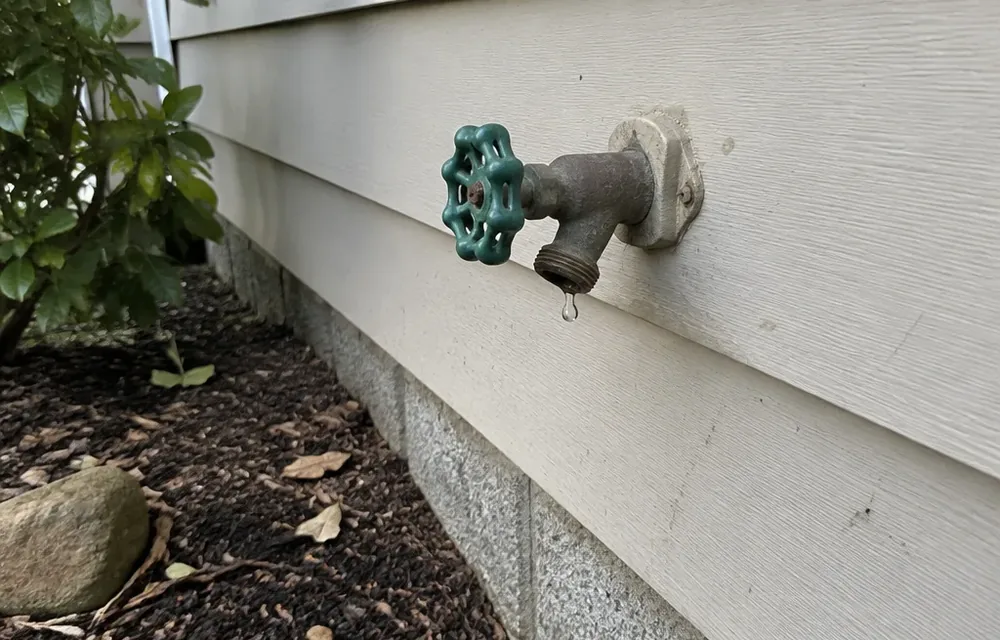
Signs
Drip that stays after firm closing
A spout that keeps dripping with the handle snug points to a worn washer or seat rather than a loose handle.
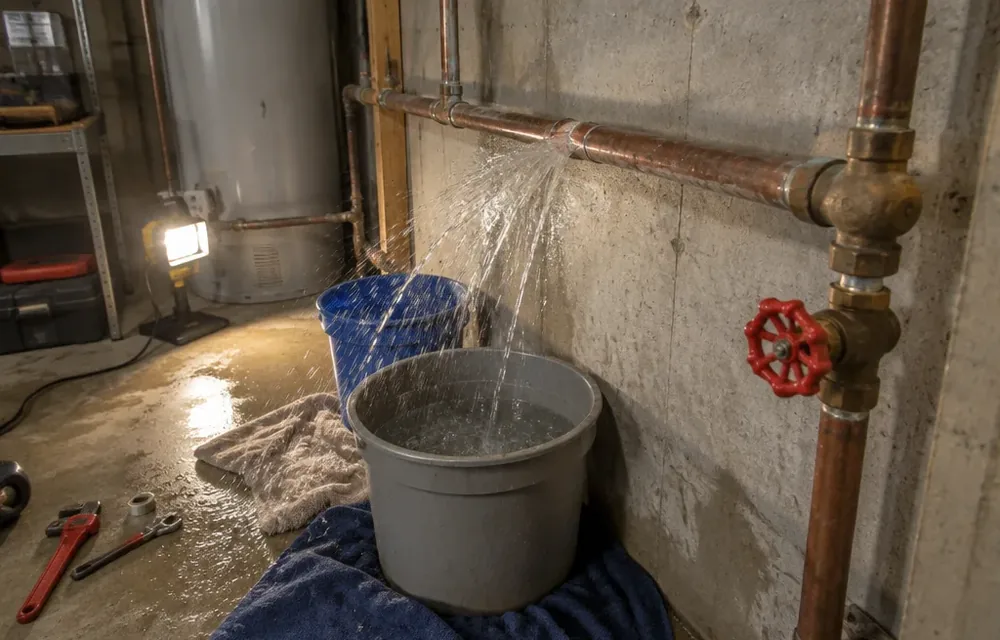
Spray at the handle or breaker cap
Water misting at the stem or the small cap on top signals packing wear or a vacuum breaker venting under pressure.
Wet basement wall when open
Dampness on the inside wall or ceiling below only while the faucet runs marks a split stem or joint inside the cavity.
Handle that spins without grip
A handle that turns without resistance often means stripped threads or a broken stem that cannot seat the washer.
What an outdoor faucet leak is
Direct answer: An outdoor faucet leak is water escaping at the exterior spout, at the stem and breaker, or along the pipe inside the wall that feeds the bibb. Standard bibbs seat near the outside wall where cold reaches them, while frost-free models seat deeper inside where warmth protects the washer. Both types drip at worn washers, mist at packing, and split along the stem when trapped water freezes.
How freeze splits hide: A hose left attached traps water in the stem through cold months, where it swells and splits the tube without visible change outside. The first spring opening then sends full pressure into the wall cavity while the spout looks almost normal. Inside dampness that appears only during hose use, with a dry wall at other times, marks that hidden split rather than siding or gutter trouble.
Why small drips matter: A steady exterior drip wastes water through the whole warm season and feeds algae and ice patches at the foundation. A stem weep inside the wall soaks insulation and plates where airflow never dries it. Note whether dripping runs with the handle closed, only while open, or only with a hose attached, because that timing separates washer, packing, breaker, and split-stem causes. See outdoor faucet patterns and frozen pipe signs for the checks we run.
What causes outdoor faucets to leak
Direct answer: Outdoor faucets leak from worn washers and packing, tired vacuum breakers, and freeze damage working alone or together. Washers harden with sun and cold, seats pit with grit, and packing dries until the stem weeps whenever open. Vacuum breaker caps that protect hose water crack with age and spray fine mist that looks like a stem failure.
Hose and pressure factors: Hoses left attached through cold snaps trap water where it freezes first and splits the stem. Splitters and timers left pressurized hold the bibb under load around the clock, which wears washers faster than hand watering. Nozzles closed at the spray end while the bibb stays open hold pressure in sun-warmed hoses that jerk the stem with each release. Removing hoses before cold weather and relieving splitter pressure between uses extends washer service noticeably.
Installation factors: Bibbs pitched level or inward hold water in the stem instead of draining after closing, which invites freeze splits even on frost-free models. Pipes without an accessible inside shutoff and drain leave the stem charged all winter. Siding and trim sealed tight around the flange hide small weeps until the wall below softens. Gentle closing without wrench force protects seats better than overtightening that crushes washers out of shape.
Look-alikes worth ruling out
Direct answer: Siding, gutter, and interior plumbing leaks often look like bibb drips and need different work. Overflow at the eave drops water down siding that exits at the bibb flange and mimics a stem leak. A nearby laundry or kitchen supply weep that runs along the sill plate can surface at the bibb opening where the wall is already pierced.
Breaker versus stem: A vacuum breaker sprays upward in a fine fan only while a hose runs and stops with the hose removed, while a split stem wets inside the wall whenever open with or without a hose. Packing weeps at the handle nut ease with slight nut tension and fresh packing, while seat drips need washer and seat service. If the inside wall stays dry with the bibb open and no hose, but wets with a hose and nozzle, check breaker and hose backpressure before opening the wall.
Seasonal tricks: Spring startup drips after winter idle often come from dried washers that reseat after gentle cycling rather than burst pipe. Condensation on cold supply piping in humid basements beads near the bibb penetration and mimics a slow weep. Mark whether dampness follows bibb use exactly or stays constant through humid days, because constant dampness points away from the faucet. Compare burst pipe behavior for split-line tells.
Where outdoor faucet leaks come up locally
Direct answer: Outdoor faucet leaks cluster on shaded north walls, at kitchens and laundries added without inside shutoffs, and where hoses stay attached through shoulder seasons. North and east walls hold cold longer into spring, so stems there freeze first and thaw last. Additions with bibbs tied to nearby branches often lack a dedicated inside valve and drain, leaving the stem charged through every cold snap.
Cold walls and garden use: Garden walls around Chelmsford and nearby yards in Westford keep hoses attached for late watering and early spring cleanup, which traps water across the first hard freeze. Shaded bibbs behind shrubs stay damp and cold where packing ages faster. Splitters feeding drip lines hold pressure for weeks, so washers wear without visible use at the spout.
Additions without shutoffs: Bay and kitchen additions through Carlisle and nearby streets often feed bibbs from finished ceiling runs with no accessible inside stop. Those runs split inside joist bays where the first sign is a basement ceiling stain below the bibb line rather than an exterior drip. Hose removal before cold weather plus an inside stop with drain where it fits prevents most of those hidden spring surprises.
What a visit for an outdoor faucet involves
Direct answer: A visit proves washer, packing, breaker, or split stem without opening more than needed. We test the bibb with and without hose load, check the inside shutoff seating, and map inside dampness along the feed run. We inspect stem packing, breaker cap, seat condition, and wall penetration flashing to place each drip at its true part.
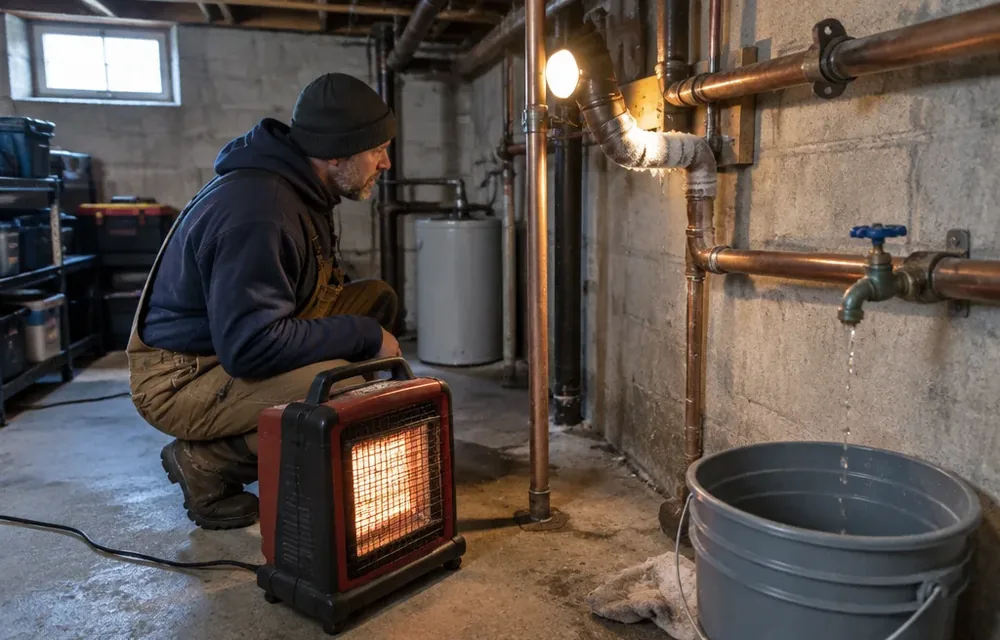
How we repair and protect: Washer and seat service plus fresh packing ends most exterior drips where the stem tube proves sound. Breaker caps swap quickly where misting follows hose use. Split stems and frost-free units with burst tubes get replaced with proper pitch outward and an accessible inside shutoff and drain where the run allows. This work follows frozen pipe prevention and thawing practice for freeze exposure, with emergency plumbing when wall cavities run active and ceilings sag.
What you receive: You receive a plain read on bibb type, stem condition, shutoff state, and hose habits that caused the wear. We show seating results with and without hose backpressure so the cause is visible. Where a frost-free upgrade and inside valve fit the wall depth and run access, we explain the freeze protection gain in plain terms without pushing wall opening the tests do not support.
Homeowner checks and damage risk
Direct answer: Homeowners can isolate the bibb safely with hose removal, inside shutoff tests, and timed observations. Remove hoses, splitters, and timers, close the inside shutoff where one exists, then open the bibb briefly to drain the stem. Watch whether the spout drip stops, whether inside dampness follows bibb use, and whether the handle seats with normal hand force.
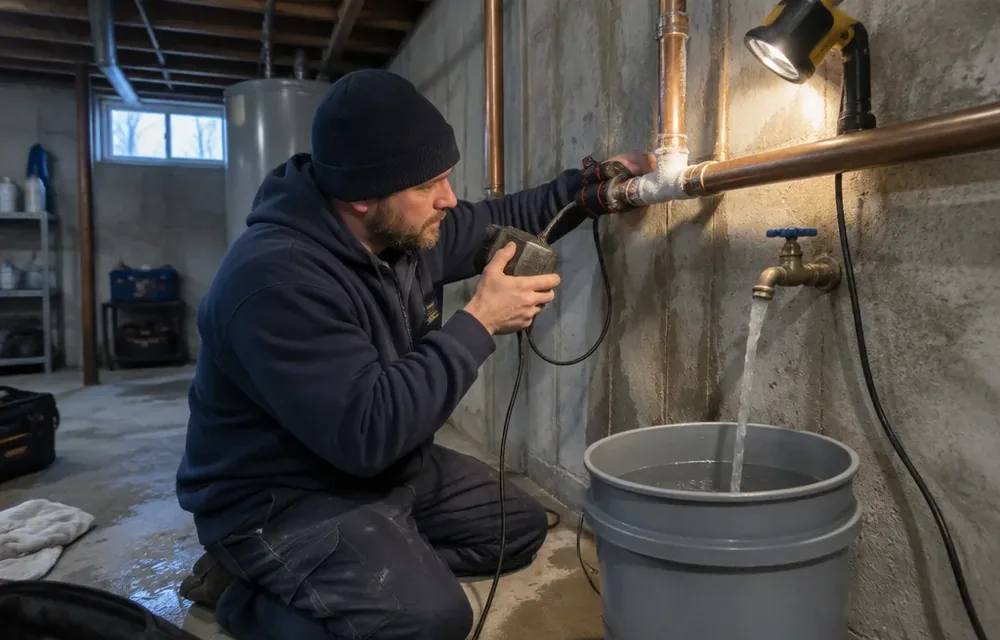
Safe checks to try: Snug the packing nut slightly where stem misting appears, cycle the handle gently a few times to reseat a dried washer, and swap a cracked breaker cap where mist follows hose use. Keep a light on the inside wall below the bibb during a short test run to catch hidden wetting early. Leave stem replacement, soldering, and wall opening to us, and never wrench a frozen handle that may snap the stem inside the cavity.
Damage risk if leaking stays: Exterior drips feed foundation damp, siding film, and winter ice sheets across walks where the bibb faces paths. Hidden stem splits soak insulation, soften drywall, and feed musty odor inside finished basements through the warm season. Pressurized splitters left on tired washers turn a slow drip into wall-cavity flow during vacations. Early hose removal plus shutoff use costs less than opening a stained wall, especially where spring startup wets the inside wall on first hose use.
The service that fixes it
Related services
Related problems
Frequently asked questions
Why does my outdoor faucet leak only with a hose attached?
Backpressure from nozzles, splitters, and kinked hoses lifts worn washers and vents tired vacuum breakers that seal fine without load. Test the bibb open with no hose to separate base washer condition from load behavior. Persistent inside wetting with a hose points toward stem or breaker service.
Should I leave the outdoor faucet dripping in winter?
No, remove hoses and drain the stem through the inside shutoff where one exists rather than leaving flow that ices the wall and walk. A frost-free bibb needs pitch outward plus hose removal to drain as designed. Hoses left attached defeat that drain path and invite stem splits.
When does a dripping bibb mean a split inside the wall?
When the inside wall or ceiling below wets only while the bibb runs, with the spout flow looking almost normal. Packing drips wet the outside handle area instead. That use-tied inside dampness deserves shutoff now and hands-on testing before spring watering resumes.
What should I note before calling about an outdoor faucet?
Note whether dripping runs closed, open, or only with a hose, plus breaker spray and handle feel. Note inside shutoff presence and whether inside dampness follows use. That record lets freeze protection help bring the right bibb, breaker, and valve parts on arrival.
Seeing outdoor faucet leak?
Call and describe the symptom. A local specialist will tell you the sensible next step.